Author: رسانه‌ای گوهر شاد

4 weeks ago - 93 Visits

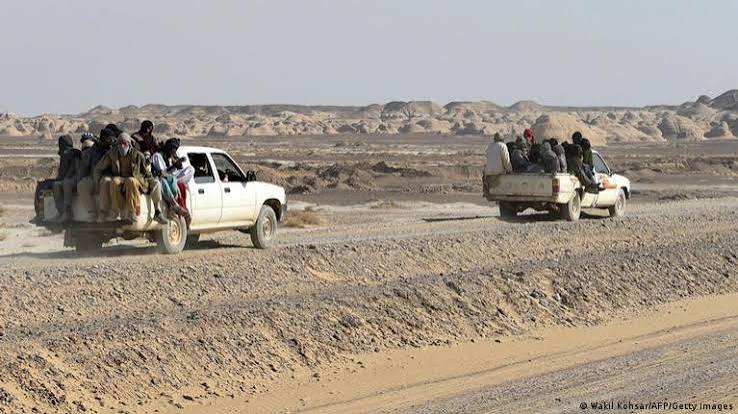
The United Nations Women’s Organization has announced that out of every five migrant women returning to Afghanistan, fewer than one can earn an income, which constitutes only 17% of the total number of returning migrant women. In a published report, the organization stated that this situation could exacerbate food insecurity among returning families, especially those headed by women. The report indicates that despite many women having worked in other countries and acquiring skills, upon returning to Afghanistan, they face a near-total collapse of job opportunities. Nearly 40% of these women reported having skills but are unable to utilize them, including professional, technical, and digital skills. Findings from the UN Women’s Organization reveal that more than three-quarters of women who worked in Iran and nearly two-thirds of women who worked in Pakistan are unemployed after returning to Afghanistan. The organization stated that this survey was based on data collected from 700 returning women and local stakeholders, including phone surveys, in-depth interviews, focus group discussions, and workshops in the provinces of Herat, Nangarhar, and Kabul. Additionally, the report titled "After Return: Rebuilding Afghan Women's Livelihoods" from the UN Women’s Organization highlights that the main barriers include employment and mobility restrictions for women in Afghanistan, limited access to capital and tools, and weak market opportunities. More than three-quarters of returning women have no tools or capital to earn an income. This comes at a time when over 5.5 million migrants have returned from Iran and Pakistan to Afghanistan since 2023, placing unprecedented pressure on local economies that were already fragile.

Read More


4 weeks ago - 108 Visits

The funeral ceremony for the victims of the attack on Shia civilians in the Injil district of Herat was held with the participation of thousands of residents from both Sunni and Shia communities. The ceremony began on Tuesday, April 14, from the Sadqiyeh Grand Mosque in the center of Herat, and then eight of the victims were buried at the "Sultan Aqa" shrine. According to available information, three other victims of this attack, who were residents of the "Deh-Miri" village in the Injil district of Herat province, were buried in that village. This comes after armed assailants targeted civilians near a shrine dedicated to "Sayed Mohammad Aqa Sabzpush" in the "Deh-Miri" village of the Injil district on Friday. According to statistics from UNAMA, the United Nations Assistance Mission in Afghanistan, 11 people were killed and 11 others were injured in this attack. The Herat Department of Information and Culture has also reported that 11 people were killed in this attack, but announced the number of injured as eight. It is noteworthy that no individual or group has claimed responsibility for this attack so far. It should be mentioned that Shia and Hazara communities in Herat province have repeatedly been targeted by armed attacks in recent years. In some cases, ISIS has claimed responsibility for these attacks.

Read More


4 weeks ago - 86 Visits

UNICEF, the United Nations Children's Fund, has recently stated that there is no cure for polio, but it can be prevented through vaccination. In a message posted on its X account, the organization emphasized that as long as the polio virus is circulating in Afghanistan, every child under five years old must receive two drops of the vaccine. The United Nations Children's Fund further stressed the importance of ensuring that no child is left out of the vaccination process to prevent the spread of this disease. UNICEF also called on "parents, caregivers, and community leaders" to cooperate in this regard and ensure that all children are vaccinated. The organization added that the collaboration of families and communities alongside health teams can help end and eradicate polio in Afghanistan. This is the first campaign to administer the polio vaccine in Afghanistan for the year 1405 in the Afghan calendar, targeting 12.6 million children under five years old. Currently, Afghanistan and Pakistan are the only countries in the world where polio has not been eradicated. It is worth mentioning that nine positive cases of polio were recorded in Afghanistan in 2025, but so far this year, no new cases have been reported. The World Health Organization has also warned that until polio is completely eradicated globally, Afghanistan remains at risk of international virus transmission, making cooperation with global programs and coordination with Pakistan essential for vaccinating populations in border areas. This agency has raised concerns about the increased risk of vaccine-derived viruses (cVDPV) in certain regions of the world and emphasized that widespread vaccination and continuous monitoring are the only ways to prevent further outbreaks of the disease.

Read More


1 month ago - 67 Visits

The United Nations Development Fund for Afghanistan has recently announced that the economic empowerment of women is one of the most effective ways to enhance resilience in Afghanistan. In a message posted on its X account day (Sunday, April 13), the organization stated that small-scale interventions can play a significant role in improving family livelihoods and developing communities. The UN Development Fund shared the story of a woman named Bibi Nuriyeh, who, after losing her husband, turned to raising birds at home with the support of this fund and was able to create a source of income for her family. It further noted that bird farming not only helps meet the nutritional needs of families but also provides a sustainable income. The UN Development Fund emphasized that it supports such initiatives in collaboration with its partners and considers these efforts part of the drive to strengthen family self-reliance in Afghanistan. This comes at a time when Afghan women are facing extensive restrictions in the workplace following the return of the caretaker government. Women's work has been banned in many formal sectors, and some have been forced to engage in informal sectors and domestic work to meet their living expenses. Alongside these restrictions, some local and international organizations have attempted to facilitate continued work and income opportunities for women through small-scale programs and supportive projects.

Read More


1 month ago - 91 Visits

UNICEF, the United Nations Children's Fund, recently announced that millions of children around the world are at risk of forced labor, with some being trafficked and coerced into dangerous work. This organization published a report stating that economic problems are causing children globally to be subjected to labor. UNICEF emphasized that in the latest statistics collected in 2024, approximately 138 million children worldwide were engaged in work, with more than one-third involved in hazardous jobs that directly threaten their health and development. Part of the report states: "Forced labor can lead to severe physical and psychological harm and even death for children. Children may be exploited for slavery and sexual or economic abuse. In almost all cases, children are deprived of education and health services, and their fundamental rights are restricted." UNICEF further added that trafficked children are often exposed to violence, abuse, and human rights violations. For girls, the risk of sexual exploitation is particularly high. The United Nations Children's Fund indicates that globally, boys in all age groups are more involved in child labor than girls. Among children aged 5 to 17 years, 9% of boys and 7% of girls are engaged in work. UNICEF stated that labor deprives children of their fundamental rights. Many are denied education and health services at a time when they need them the most. Additionally, this organization and the International Labour Organization have urged governments to end child labor worldwide by providing cash assistance to needy households, supporting child protection systems, ensuring universal access to education, and creating job opportunities for adults.

Read More


1 month ago - 101 Visits

A meeting titled "Women's Solidarity for Education and the Right to Self-Determination in Afghanistan" was organized to support women and girls in Vienna, the capital of Austria. This meeting was held on the occasion of the thirtieth anniversary of the activities of the cultural association "AKIS" and the twenty-sixth anniversary of the publication of the magazine "Banu," with the participation of cultural, social, and political figures from Afghanistan in exile in Europe and America, as well as several Austrian officials. The statement mentioned that the aim of this conference is to draw attention to the situation of women and girls in Afghanistan following recent political developments, strengthen solidarity among Afghan citizens in exile and European institutions, and create a platform for dialogue among activists, experts, and policymakers. The organizers of this meeting emphasized: "In this context, two specialized workshops were held on supporting girls' education and integrating Afghan women into the diaspora job market." This meeting comes at a time when the current government has deprived girls above the sixth grade of education for nearly five years. Since taking control of Afghanistan, the current government has denied women and girls access to education. Furthermore, in its latest restriction, it closed the doors of medical institutes to girls and women, while the health sector across Afghanistan is facing a shortage of personnel. This government's action has resulted in millions of female students being unable to pursue their education. In addition, women have been prohibited from going to sports clubs, restaurants, public baths, being examined by male doctors, traveling without a male guardian, and working in domestic and international NGOs, as well as even in UN offices in Afghanistan.

Read More


1 month ago - 60 Visits

UN Women has recently announced that ongoing conflicts in the Middle East have placed women and girls in extremely vulnerable conditions, resulting in the deaths of hundreds of women and the displacement of millions more. In a statement, the organization said that since the escalation of conflict in Iran on February 28, 204 women have been killed in the country. Additionally, during intense Israeli bombardments in Lebanon on April 8 alone, 102 women were killed. The statement added that hundreds of women and girls have also been killed in Bahrain, Iraq, Israel, Kuwait, the Occupied Palestinian Territories, and the United Arab Emirates. UN Women further emphasized that as a result of attacks by the United States and Israel on Iran, millions of women and girls have been forced to flee their homes, including 1.6 million in Iran and 620,000 in Lebanon. According to the statement, displacement has exposed women and girls to increasing risks, particularly in overcrowded and unsafe conditions. This situation has limited their access to healthcare, support services, and livelihoods, while also increasing the burden of unpaid care work. The statement also noted that in conflict-affected countries—including Syria, Yemen, Lebanon, the Occupied Palestinian Territories, and Iraq—24 million women and girls are facing growing food insecurity. This is driven by price fluctuations, supply chain disruptions, and declining purchasing power in a region heavily dependent on imports. UN Women stated that it is present across the Middle East and is expanding its provision of protection and livelihood support, while working to ensure that women’s voices play a central role in response and recovery efforts. The organization called for a sustainable and just peace in the region—one that guarantees the rights, safety, and dignity of all women and girls.

Read More


1 month ago - 95 Visits

A young man in Herat province has launched a mobile bookstore called “Book Messenger” (Payk-e Ketab) in an effort to promote a culture of reading and make access to books easier for the public. Ghulam Farooq Mahmoudi has invested 500,000 Afghanis and collected around 2,000 books to establish a mobile library named “Book Messenger.” Through this initiative, he delivers books directly to readers’ homes, aiming to encourage reading and provide easier access to books. In a video shared online, he can be seen transforming his vehicle into a mobile library, equipping it with shelves similar to those found in public libraries. This mobile library not only accepts book orders online but also travels to different neighborhoods across the city, delivering books right to people’s doorsteps. Mahmoudi says that people visit public libraries less frequently, and his method helps make reading more accessible. Meanwhile, a number of cultural figures in Herat emphasize the importance of supporting booksellers and describe this initiative as an effective step toward promoting a reading culture among the public. Officials at the Herat Department of Information and Culture also state that they support cultural initiatives and are working to promote reading, especially among young people. Abdul Mateen Adel, Head of Culture and Arts at the Herat Department of Information and Culture, says: “One of our ongoing efforts is to promote and expand a culture of reading among the people, and we always support individuals who strive in this direction.” According to booksellers, in recent years, the widespread use of the internet and social media, economic challenges faced by families, and difficulties confronting young people have led to a decline in book sales in Herat. There is no comprehensive data available on reading rates in Afghanistan. UNESCO reports that Afghanistan’s literacy rate in 2022 was approximately 37.3 percent; this figure was 22.6 percent for women and 52.1 percent for men. Additionally, since returning to power, the de facto authorities have closed girls’ secondary schools, leaving around 2.2 million girls deprived of secondary education.

Read More


1 month ago - 82 Visits

Pakistani media recently reported that Farishta Khani, a female athlete from Afghanistan in the sport of boxing, has become the champion of Pakistan's national boxing competitions. Reports indicate that these competitions were recently held in Hyderabad, Sindh province, with the participation of athletes from various provinces of Pakistan. The national boxing competitions in Pakistan lasted for about a week and featured athletes from over 20 provinces and regions of the country. Farishta Khani announced her achievement of winning the gold medal in these competitions by posting several photos on her Instagram account. In her message, she stated that she participated in the 50 kg weight category and successfully defeated all her opponents to secure the gold medal. This athlete triumphed over three opponents to ultimately claim first place and wear the gold medal for herself and Afghanistan. Additionally, Farishta Khani was also crowned champion of the mixed martial arts competitions in Pakistan last summer after achieving four consecutive victories. She competed in the 47.6 kg weight category in those events. Farishta Khani trains at the Fajr Boxing Academy in Quetta, Pakistan, under the guidance of renowned boxing coach Bismillah Nasir. It is worth noting that the caretaker government in Afghanistan has banned the participation of women and girls in all sports disciplines. Following this restriction, all women's sports teams in the country have been dissolved.

Read More


1 month ago - 60 Visits

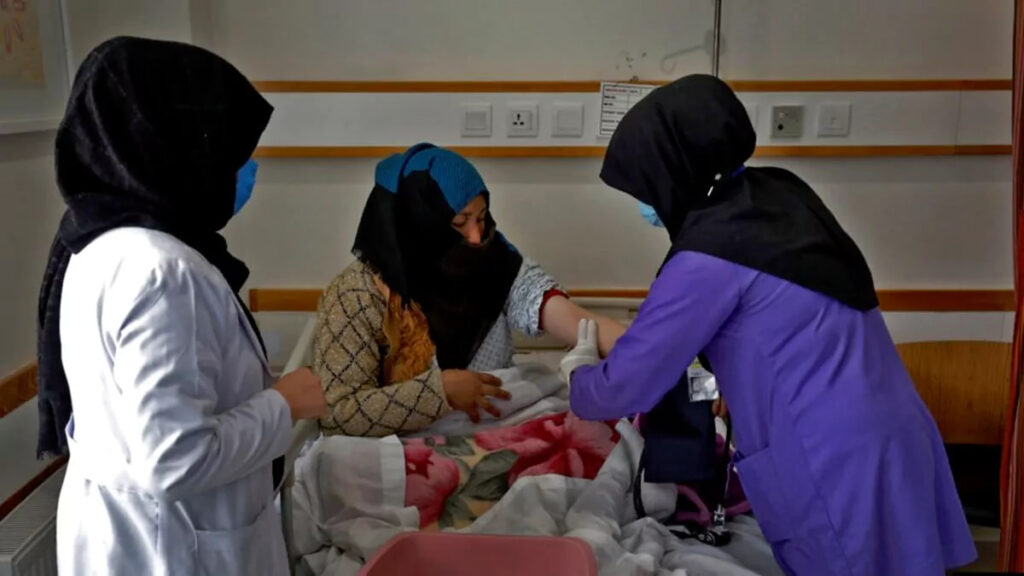
Richard Lindsay, the UK’s Special Representative for Afghanistan, has recently stated that the country is striving to enhance access for women, children, and persons with disabilities to health and nutrition services in Afghanistan. On the occasion of World Health Day, Mr. Lindsay expressed his appreciation for the vital role of partners in delivering health services in Afghanistan through a message posted on his X account. He emphasized that under the leadership of World Vision Afghanistan and with the support of the UK, comprehensive and safe health and nutrition services are being provided to the most vulnerable groups. In part of his message, the UK Special Representative added that these efforts aim to increase access to health and nutritional care for vulnerable individuals in Afghanistan. It should be noted that access to health services in Afghanistan has been restricted in recent years due to various limitations, and many individuals, including women, face significant health challenges. Afghanistan is among the countries with a high maternal and neonatal mortality rate. The lack of health facilities, limited access to specialized training, and the considerable distance from villages to treatment centers pose serious challenges in providing services to pregnant mothers. In many areas, women give birth at home or in small clinics, and midwives often work with minimal resources and without immediate access to specialized guidance.

Read More