Author: رسانه‌ای گوهر شاد

3 weeks ago - 76 Visits

Amnesty International has recently called for the reopening of schools for girls above the sixth grade and an end to human rights violations in Afghanistan. On the occasion of the start of the new academic year in Afghanistan, the organization published a statement on its X account, noting that women and girls in Afghanistan have been deprived of education for over four years. The statement emphasized that the caretaker government of Afghanistan must end its discriminatory policies and allow girls to return to school. Amnesty International added that since the current government regained power in August 2021, Afghanistan has been on a downward spiral of human rights violations. The organization stated: "Afghanistan remains a hub of human rights violations. Women have been deprived of all aspects of life, and abuses such as torture and mistreatment, arbitrary detentions, enforced disappearances, censorship, and more continue with complete impunity." Tarina Wadud, a human rights advocate, also expressed her astonishment at how the international community still expects human rights to be respected in Afghanistan. Amnesty International emphasized that while the people of Afghanistan remain trapped in this endless nightmare, the international community has taken no meaningful action. The organization stated: "Strong words will not stop these crackdowns and restrictions; decisive actions will. Governments and the global community must take steps to end this cycle of repression in Afghanistan." While Amnesty International defends the rights of women and girls in Afghanistan, the current government has deprived them of education since taking control. In its latest restriction, it closed the doors of medical institutes to girls and women, even as the healthcare sector across Afghanistan faces a shortage of personnel. This action by the current government has resulted in millions of girls being unable to access education.

Read More


4 weeks ago - 78 Visits

Nasir Ahmad Faiq, the acting representative of Afghanistan at the United Nations, has recently stated that the ban on education for girls above the sixth grade is a national betrayal and irreparable. Mr. Faiq, coinciding with the start of the new academic year in Afghanistan, posted a message on his X account stating: "For the fifth year, contrary to humanitarian principles, Islamic directives, and Sharia law, the doors of secondary and higher education institutions have been kept closed to girls and women in Afghanistan." The acting representative of Afghanistan at the United Nations emphasized that these policies have exacerbated poverty and increased Afghanistan's dependency on neighboring countries and the international community. The new academic year in Afghanistan officially began yesterday, but the current government has not allowed girls above the sixth grade to attend school for the fifth consecutive year. The start of the academic year in the country without reopening schools for girls above the sixth grade has sparked significant reactions among international organizations and political figures in the country. Dr. Tajuddin Owaisi, UNICEF's representative in Afghanistan, wrote on his X account at the same time as boys' schools reopened in Afghanistan: "The message is simple: every girl has the right to go to school." He emphasized the right to education for girls in Afghanistan, stating that "when girls learn, communities become stronger, and the future becomes brighter for everyone." Sanjee Vijayshankar, UNICEF's regional director, also mentioned on his X account that many girls in Afghanistan are waiting for schools to reopen. Richard Lindsay, the UK representative for Afghanistan, also wrote on his X account a few days ago that "depriving women and girls of education harms the country's future and holds back Afghan society."

Read More


4 weeks ago - 52 Visits

Sanjeev Vijesekera, the regional director of UNICEF (the United Nations Children's Fund) for South Asia, has stated that it is time for schools across Afghanistan to reopen their doors to girls. Mr. Vijesekera posted a message today (Thursday, March 26) on his X account, expressing that girls in Afghanistan have waited long enough, and the reopening of schools should bring hope to everyone. In part of his message, he emphasized: "It is time for schools to reopen because hope, dignity, and the future begin with education." UNICEF has previously stated that education is fundamental to building the future of children and that reopening schools is not only their right but also a necessity for the development and progress of society. Meanwhile, international organizations have consistently warned that prolonged deprivation of education can have long-term consequences for the health, security, and job opportunities of girls. It should be noted that the current government, after taking control of Afghanistan, has deprived women and girls of education. In its latest restriction, it closed the doors of medical institutes to girls and women, while the health sector across Afghanistan is facing a shortage of personnel. This government's action has resulted in millions of female students being unable to pursue their education. Additionally, women have been banned from going to sports clubs, restaurants, public baths, being examined by male doctors, traveling without a male guardian, and working in both domestic and international NGOs, as well as in UN offices in Afghanistan.

Read More


4 weeks ago - 52 Visits

Tajuddin Owaiali, a representative of UNICEF (the United Nations Children's Fund), has recently stated that every girl in Afghanistan has the right to attend school. Mr. Owaiali posted a message today (Thursday, March 24) on his X account, emphasizing that when girls are educated, society becomes stronger, and the future becomes brighter for everyone. He further stressed that this message from UNICEF is simple yet important, aiming to keep hope alive for girls across Afghanistan. Additionally, Sanjeev Vijesekera, the regional director of UNICEF for South Asia, had previously stated that it is time for schools in Afghanistan to reopen their doors to girls. He mentioned that girls in Afghanistan have waited long enough, and the reopening of schools should bring hope to all. In part of his message, he emphasized: "It is time for schools to reopen because hope, dignity, and the future begin with education." This comes as after the takeover of the interim government in Afghanistan, schools have been closed to girls above sixth grade, depriving them of education until further notice. Moreover, in its latest restriction, the government has closed the doors of medical institutes to girls and women, while the health sector across Afghanistan is facing a shortage of personnel. This action by the current government has resulted in millions of female students being unable to pursue their education.

Read More


4 weeks ago - 82 Visits

The interim government has started the new academic year in Afghanistan for the fifth consecutive year without reopening schools for girls above the sixth grade. The new academic year officially commenced today (Thursday, March 24) in a ceremony attended by several officials from the current government in Kabul and some provinces of the country. As in previous years, there was no mention of reopening schools for girls above the sixth grade at the beginning of this academic year. This marks the fifth consecutive year that the school year in Afghanistan begins without the presence of girls above the sixth grade. The Ministry of Education of the interim government had stated that the curriculum for schools and educational institutions has been changed from the first to the sixth grade, and its publication is underway. After regaining control over Afghanistan, the interim government prohibited girls above the sixth grade from attending school until "further notice." The current government has also banned education for women and girls in universities and higher education institutions, including medical institutes. According to United Nations statistics, with the prohibition on girls above the sixth grade attending school imposed by the current government, more than 2.2 million girls in Afghanistan have been deprived of education. The United Nations, international human rights organizations, and Afghan citizens have repeatedly called for the lifting of the ban on girls' education, but this government has not yet agreed to allow girls to return to schools and universities. The start of the academic year in the country without reopening schools for girls above the sixth grade has sparked significant reactions among international organizations and political figures in the country. Dr. Tajuddin Owaiali, a UNICEF representative in Afghanistan, wrote on his X account coinciding with the reopening of [boys'] schools in Afghanistan: "The message is simple: every girl has the right to go to school." He emphasized the right to education for girls in Afghanistan, stating, "When girls learn, communities become stronger, and the future becomes brighter for everyone." Sanjeev Vijesekera, UNICEF's regional director, also mentioned on his X account that many girls in Afghanistan are waiting for schools to reopen. Richard Lindsay, the UK representative for Afghanistan, also wrote on his X account a few days ago that "depriving women and girls of education harms the country's future and holds back Afghan society."

Read More


4 weeks ago - 58 Visits

Hamid Karzai, the former President of Afghanistan, recently stated that the prohibition of education and work for girls and women has weakened society and will bring irreparable harm to Afghanistan's stability and progress. Today (Wednesday, March 25), on the occasion of the new educational year, Mr. Karzai published a message on his X account, calling for the reopening of schools and universities to girls. In part of his message, he urged the caretaker government to create opportunities for the active participation of women in society so that Afghanistan can be on the path to progress. The former President views the education of the country's children, both girls and boys, as vital for the advancement, strength, self-reliance, and dignified life of the nation. Karzai further emphasized that depriving girls of education and banning women's work makes our nation increasingly vulnerable and weaker, and the continuation of this situation will cause irreparable damage to the stability and development of the country. He once again congratulated all students on the new academic year and encouraged them to pursue knowledge in every possible way and achieve high academic standings. The caretaker government banned education for girls beyond the sixth grade in the summer of 2021, and a year later, they also prohibited the education of girls and women in universities and women's work in international organizations. Since taking control of Afghanistan, the current government has deprived women and girls of education and study. Additionally, in its latest restrictions, it has closed the doors of medical institutes to girls and women, while the health sector across Afghanistan is facing a shortage of personnel. This action by the current government has left millions of female students unable to receive an education. Moreover, women have been banned from going to sports clubs, restaurants, public baths, being examined by male doctors, traveling without a male guardian, working in domestic and international NGOs, and even in UN offices in Afghanistan.

Read More


4 weeks ago - 50 Visits

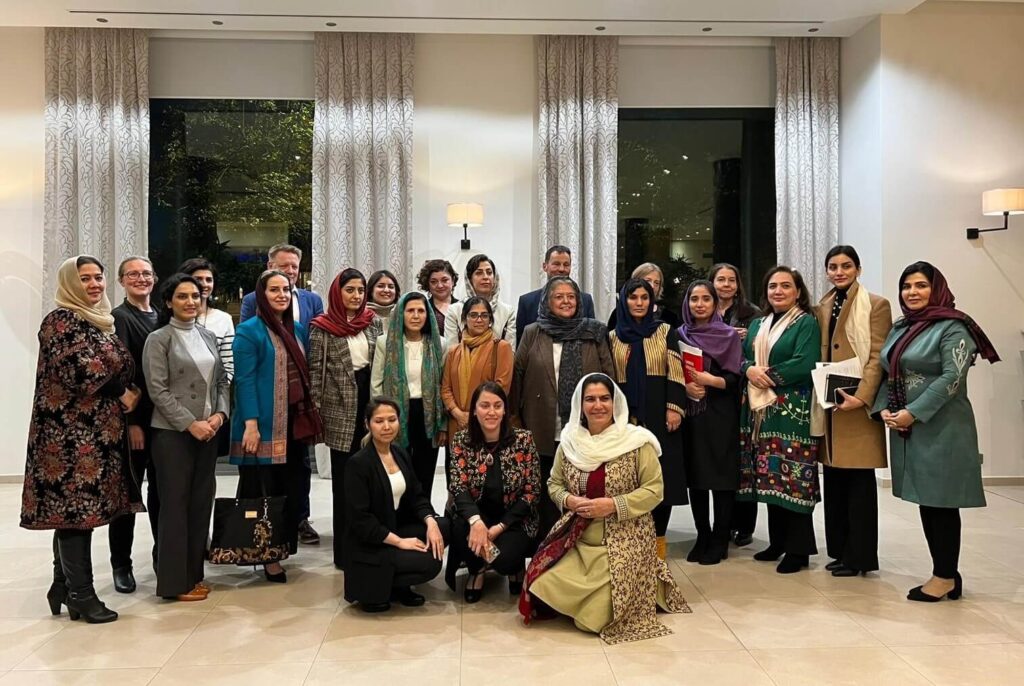
Isabelle Rome, the French Ambassador for Human Rights, has recently stated that her country rejects any dialogue with the current government of Afghanistan and condemns restrictive laws targeting the fundamental rights and access of women to public spaces. In a message posted on her X account, Ms. Rome emphasized that women and girls in Afghanistan must be present at the decision-making table. She also expressed gratitude to Viviane Teitelbaum, a member of the Belgian Senate, for organizing a meeting in the Senate of Belgium in support of Afghan women and girls. Previously, several Afghan activists gathered during a two-day session in the European Parliament and the Belgian Senate. The French Ambassador for Human Rights further stated, "Afghan women are not victims. They are survivors and fighters. We stand with them. They must be present in every decision." Isabelle Rome also reminded that France, along with five other countries, was among the initiators of the arrest warrant for the leaders of the current government issued by the International Criminal Court's prosecutor and has supported the establishment of a research mechanism to document crimes. While the French Ambassador for Human Rights supports the rights of women and girls in Afghanistan, the current government has deprived them of education since taking control of Afghanistan. In its latest restriction, it closed the doors of medical institutes to girls and women, even as the health sector across Afghanistan faces a shortage of personnel. This government's action has resulted in millions of schoolgirls being unable to pursue their education. Additionally, women have been banned from going to sports clubs, restaurants, public baths, being examined by male doctors, traveling without a male guardian, and working in domestic and international non-governmental organizations, as well as even at United Nations offices in Afghanistan.

Read More


4 weeks ago - 31 Visits

The International Labour Organization (ILO) has recently stated that social health support plays a key role in enabling effective access for women and girls to quality health services, as well as ensuring their income security during illness and pregnancy. In a report published today (Tuesday, March 24), the organization emphasized that social support and health policies should focus on gender equality to protect women's rights and achieve real outcomes for women and girls worldwide. The report from the United Nations organization notes that even in countries where laws guarantee equal access to health services for women and men, labor market inequalities prevent women from benefiting equally from social advantages and health services. It further states that many women are employed in informal jobs and receive lower wages, which limits their effective access to social health support. The ILO added that social support policies should assist women at all stages of life, from pregnancy to old age, and align these policies with income security and health care to ensure their dignity and well-being. It is worth mentioning that Afghanistan is among the countries facing a high rate of maternal and neonatal mortality. A lack of health facilities, limited access to specialized training, and the great distance from villages to medical centers pose serious challenges in providing services to pregnant mothers. In many areas, women give birth at home or in small clinics, and midwives often work with minimal resources and without immediate access to specialized guidance.

Read More


1 month ago - 177 Visits

The UN Women section has announced that despite widespread restrictions and instability across Afghanistan, it will continue to provide services to the women and girls of the country. Susan Ferguson, the UN Special Representative for Women in Afghanistan, stated in a press release that this organization operates in the most critical situation for women's rights in the world and is striving to reach hundreds of thousands of women and girls in need. Ms. Ferguson emphasized, "Despite the restrictions on women and girls and the ongoing conflicts, regardless of the circumstances, the UN Women section remains in Afghanistan and continues to provide its services." She called on the international community to continue supporting Afghan women and girls and to prevent the "normalization" of this situation. According to reports, following recent attacks, over 64,000 individuals have been affected during the escalation of conflicts with Pakistan, more than half of whom are women and girls. Many women have been forced to flee for the second or third time in the past year. The UN Women section also reported a serious funding shortfall, stating that nearly $500 million is needed to continue its programs in Afghanistan in 2026. This organization has called for immediate support from the global community to address the needs of Afghan women. Furthermore, the current government has deprived women and girls of education and training since taking control of Afghanistan. In its latest restriction, it closed the doors of medical institutes to girls and women, while the health sector across Afghanistan faces a shortage of personnel. This action by the current government has resulted in millions of schoolgirls being deprived of education and training.

Read More


1 month ago - 175 Visits

The United Nations Human Settlements Programme (UN-Habitat) has recently stated that women and girls in Afghanistan are more affected by issues of displacement and climate change than others. In a published report, the agency noted that since 2023, between 600,000 and 1 million people have been forcibly returned to Afghanistan from neighboring countries. The report indicates that many of those forcibly returned are living in informal settlements. UN-Habitat emphasized that women and girls in these settlements face greater pressures during climate change events such as floods, droughts, and the diseases that arise from them. The agency also added that women during periods of climate change face increased risks, including exposure to harassment and violence while traversing long distances to obtain water. The report highlighted that insecurity regarding housing, land, and property rights, along with ongoing threats of eviction from their residences, has made life more difficult for women in informal settlements. It further stated that access to housing and land is the most fundamental need for internally displaced persons and returnees from neighboring countries.

Read More