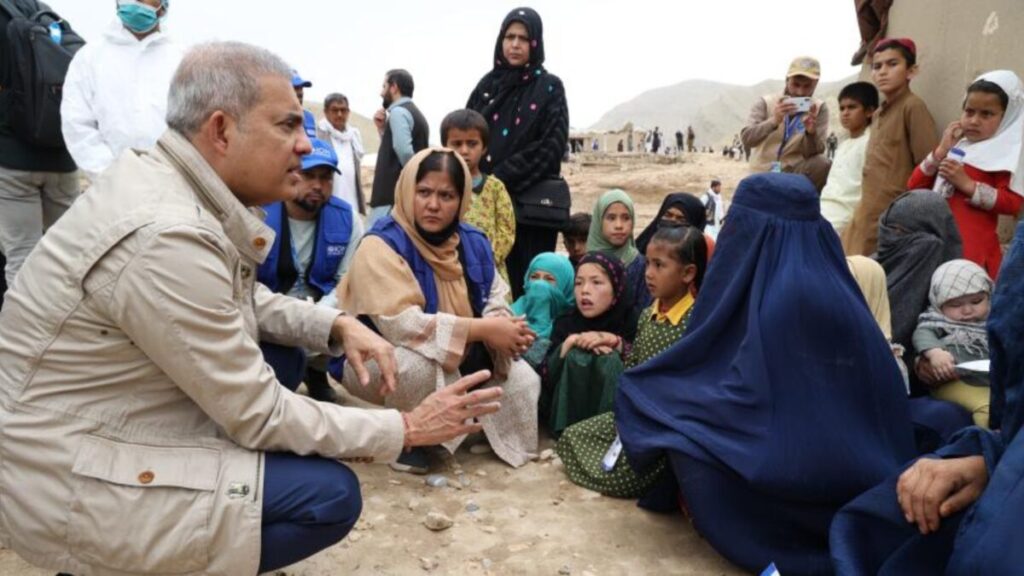
Andrika Ratwatte, the former Deputy Representative of the United Nations in Afghanistan, has stated that one of the “most severe and complex” protection crises in the world is unfolding in Afghanistan.
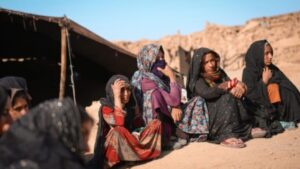
Mr. Ratwatte, who recently concluded his mission in Afghanistan, wrote in an article for the United Nations publication “Chronicle” that alongside other crises, “gender-based restrictions” have severely limited women’s and girls’ access to education, employment, public participation, and essential services, exacerbating the country’s critical situation.
He emphasized that these restrictions have weakened the resilience of half of Afghanistan’s population and significantly limited the capacity of humanitarian actors to provide principled and inclusive assistance.
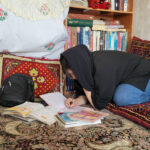
He added: “The ban on secondary and higher education for girls, the prohibition of women’s employment in key sectors, and ongoing restrictions on female staff in humanitarian aid have all contributed to increased protection risks. In such a fragile environment, geopolitical tensions and regional instability also exert additional pressure.”
Moreover, he noted that at the same time, Afghanistan is experiencing one of the largest waves of return of migrants in its contemporary history, with approximately 5 million people returning from neighboring countries over the past two years, equivalent to an almost 10 percent increase in the country’s population.
The former UN Deputy Representative specified that in 2025 alone, 2.8 million Afghan citizens returned, marking the highest annual figure in recent years.
In part of his article, the former UN Humanitarian Coordinator in Afghanistan mentioned that Afghanistan is also facing a series of climate-related disasters. Years of drought have depleted groundwater resources, destroyed crops, and weakened agricultural systems, while floods, landslides, and recurrent earthquakes continue to devastate homes, livelihoods, and critical infrastructure.
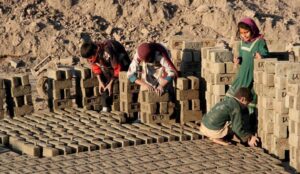
He added that these environmental shocks are intertwined with socio-economic fragilities, with over 70 percent of households reporting insufficient food consumption. Many resort to critical survival strategies such as selling productive assets, early marriage, or reducing access to health and education services.
The article stated that collectively, these factors have created a multi-layered crisis in protection that places millions at risk of severe deprivation.
Mr. Ratwatte served as the Deputy Head of UNAMA for Humanitarian Coordination in Afghanistan from 2024 to 2026.
The United Nations announced yesterday that Bruno Georges Lemercier, a French official of the organization, has been appointed as the new Deputy Special Representative of the United Nations in Afghanistan and the new Humanitarian Coordinator for this organization.