UNICEF, the United Nations Children’s Fund, has recently warned that ongoing restrictions on girls’ education and women’s work in Afghanistan could lead to a shortage of over 25,000 female teachers and health workers in the country by 2030.
In a report published today (Tuesday, April 28), the organization stated that these restrictions are currently depriving children of education and health services and negatively impacting the economy and essential services.
The report noted that over one million girls have been deprived of their right to education since the ban on secondary education was imposed by the interim government in 2021, and if this situation continues, this number could rise to over two million by 2030.
The report highlights that Afghanistan is facing a dual crisis; on one hand, it is losing skilled female professionals, and on the other hand, the opportunity to train a new generation to replace them is limited.
UNICEF further stated that by 2030, approximately 20,000 female teachers and 5,400 female health workers may be lost.
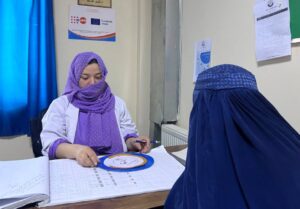
The report also mentioned that the reduction in the number of female health workers could limit women’s access to healthcare services, particularly in maternal and child health.
UNICEF emphasized that the restrictions on women’s education and work are causing an annual loss of about $84 million to Afghanistan’s economy.
While UNICEF criticizes the current government’s restrictions, it is important to note that since taking control of Afghanistan, the government has deprived women and girls of education and schooling. In its latest restriction, it closed the doors of medical institutes to girls and women, even as the health sector across Afghanistan faces a personnel shortage.
This government’s action has resulted in millions of female students being unable to continue their education.
Additionally, women have been banned from going to sports clubs, restaurants, public baths, being examined by male doctors, traveling without a male guardian, and working in domestic and international NGOs as well as in UN offices in Afghanistan.