Author: رسانه‌ای گوهر شاد

2 months ago - 101 Visits

Peel Regional Police in Canada have announced that the case of Mojgan Aini — the wife of a former United Nations diplomat who was last seen nearly four years ago in Mississauga — is now being investigated as a homicide. In a statement, Peel police said that Mojgan Aini, 38, who was also known by the names “Sara” or “Sarah,” was last seen in June 2022. Her family in Afghanistan was unable to contact her until June 2025 and subsequently reported her missing to the police. The statement emphasized that a suspect has been identified in connection with the case, but authorities have declined to release further details. It is worth noting that Mojgan Aini migrated to Canada in 2017 along with her three children and her husband, Mohammad Yama Aini. Mohammad Yama Aini had previously been investigated on allegations of serious assault and was dismissed from his position at the United Nations, although no formal charges were filed against him. Mojgan Aini’s name first made headlines in August 2017 in American and Afghan media when she was reportedly subjected to domestic violence by her husband, Mohammad Yama Aini, a counselor at Afghanistan’s Permanent Mission to the United Nations. In 2017, the New York Post reported that around noon on Saturday (July 22, 2017, local time), Mohammad Yama Aini allegedly beat his wife, Mojgan Aini, so severely that she was hospitalized. Citing U.S. police, the New York Post wrote that the 46-year-old diplomat allegedly pulled his 30-year-old wife by the hair and struck her in the face and head with slaps and punches, leaving her face and right eye swollen and bruised. Hospital staff in New York reported the incident to the police; however, at the time, authorities were unable to arrest Mr. Aini due to diplomatic immunity. At that time, the Afghan mission adviser to the United Nations in New York denied the assault allegations in an interview with the New York Post, stating: “Nothing happened.”

Read More


2 months ago - 90 Visits

UNAMA, the United Nations Assistance Mission in Afghanistan, has stated that women farmers are not only the breadwinners of their families but also strong pillars of the local economy and key supporters of the sustainability of food systems. In a message published today (Monday, 2 March) on its official Facebook account, UNAMA wrote that the activities and efforts of women farmers support communities and help create a more sustainable and resilient future for all. It is worth noting that the year 2026 has been declared by the Food and Agriculture Organization of the United Nations (FAO) as the “International Year of the Woman Farmer.” The Food and Agriculture Organization of the United Nations also stated that the aim of this designation is to raise awareness and promote practical actions to reduce gender gaps and improve women’s livelihoods worldwide. The organization added that this year will focus on the essential roles of women and girls across agricultural and food systems — from production to trade — roles that are often overlooked. The FAO further emphasized that women farmers play a central role in ensuring food security, improving nutrition, and strengthening economic resilience. Although there are no precise statistics on women farmers in Afghanistan, millions of women in rural areas of the country are engaged in agriculture and livestock farming.

Read More


2 months ago - 99 Visits

Richard Bennett, the United Nations Special Rapporteur on Human Rights for Afghanistan, has recently stated that the international community has a responsibility toward Afghan women and girls and must not abandon them. In a message posted on his X account, Bennett wrote that the restrictions imposed on women—particularly the denial of the right to education and freedom of movement—may amount to international crimes and must be revoked. He further emphasized that his recent report on women’s access to healthcare services in Afghanistan, which was presented at the sixty-first session of the United Nations Human Rights Council, provides an in-depth examination of the right of women and girls to access healthcare services in the country. It is worth noting that Bennett’s report, presented on Thursday (February 29) at the session of the United Nations Human Rights Council, addresses various aspects of women’s access to healthcare and highlights the barriers preventing them from receiving medical services. The report states that women with disabilities face discrimination in accessing healthcare services. Similarly, women in rural areas experience greater limitations in access to medical care, with poverty further exacerbating the situation. According to Bennett’s report, Afghanistan’s health sector is facing a severe shortage of female staff and is at risk of collapse.

Read More


2 months ago - 94 Visits

The International Organization for Migration (IOM) has recently announced that around 8,000 people died or went missing along dangerous migration routes last year. Approximately 3,000 migrant deaths were recorded in Asia, more than half of whom were Afghans. In a newly published report, the organization warned that the reduction of legal migration opportunities is pushing more people into the hands of smugglers and toward deadly journeys. According to the report, most asylum seekers lost their lives along migration routes in the Mediterranean Sea, particularly from departure points in African countries. The organization emphasized that due to funding shortages, it is unable to document all cases of migrant deaths, and the actual number of victims is likely higher. The report further noted that the United States and the European Union—two major destinations for asylum seekers—have adopted stricter migration policies, which have left many migrants trapped in dangerous situations. Amy Pope, Director General of the International Organization for Migration, stated in a statement: “The continued deaths and disappearances of migrants along migration routes represent a global failure that we cannot normalize.” She added that these deaths are not inevitable; when safe pathways are unavailable, people are forced to undertake dangerous journeys. The IOM Director General stressed that countries must take steps to expand safe and regular migration pathways to ensure that asylum seekers are protected regardless of their country of origin or beliefs. According to the organization, sea routes remain among the deadliest migration pathways. Last year, at least 2,108 people were killed or went missing in the Mediterranean Sea. Additionally, 922 people died while crossing from the Horn of Africa toward Yemen and the Gulf countries. The International Organization for Migration stated that this trend has continued into the current year, with 606 migrants losing their lives in the Mediterranean Sea during the first two months alone.

Read More


2 months ago - 76 Visits

Richard Lindsay, the United Kingdom’s Special Representative for Afghanistan, has recently announced that his country will continue supporting Afghan women and girls. In a statement published on his X (formerly Twitter) account, Mr. Lindsay wrote that an important discussion was recently held on the humanitarian crisis in Afghanistan with several international organizations and the Afghanistan Women and Girls Support Forum. He added that a meeting was organized to discuss the impact of the humanitarian crisis on Afghan citizens, attended by the British Red Cross, the International Federation of Red Cross and Red Crescent Societies, and the Afghanistan Women Support Association. The UK Special Representative further emphasized that the courage of Afghan aid workers is inspiring, and that the United Kingdom will continue to support those who tirelessly work to ensure women’s access to humanitarian assistance. It is worth noting that women and girls in Afghanistan have faced numerous restrictions since the return of the current authorities to power and have lost a significant portion of their fundamental rights. Since taking control of Afghanistan, the current authorities have deprived women and girls of education and learning opportunities. In their most recent restriction, they closed the doors of medical institutes to girls and women, despite the healthcare sector across Afghanistan facing a severe shortage of personnel. This decision has left millions of female students deprived of education. In addition, women have been banned from attending gyms, restaurants, and public bathhouses, being examined by male doctors, traveling without a male guardian, and working in domestic and international non-governmental organizations, as well as even in United Nations offices in Afghanistan.

Read More


2 months ago - 182 Visits

Human Rights Watch, while welcoming the special report by Richard Bennett on the situation of women and girls in Afghanistan, has called on United Nations member states to listen to Afghan women and girls and place their voices at the center of international attention. The organization made these remarks today (Thursday, February 26) during the 61st session of the United Nations Human Rights Council, stating that member states must take stronger measures to protect the rights of Afghan women and girls. Human Rights Watch further emphasized that UN member states should recognize gender apartheid as a crime against humanity. The organization also urged countries to support the efforts of the International Criminal Court to prosecute those responsible for gender-based persecution and other serious international crimes in Afghanistan. These statements come as, over the past more than four years, the rights of women and girls have been severely violated, depriving them of their most basic rights, including the right to education and employment. Richard Bennett, the UN Special Rapporteur on the situation of human rights in Afghanistan, also stated in his latest report that the rights of women and girls are being violated widely and systematically, and that they face discrimination, repression, and restrictions in all areas of life. It should be noted that after taking control of Afghanistan, the current authorities barred women and girls from education. This action has resulted in millions of schoolgirls being deprived of learning opportunities. In addition, women have been banned from attending sports centers, restaurants, and public baths, from being examined by male doctors, from traveling without a male guardian, and from working in domestic and international non-governmental organizations as well as even UN offices in Afghanistan.

Read More


2 months ago - 83 Visits

The Child Protection Organization has recently announced that 25,000 children are still living in tents six months after the powerful earthquake in Kunar. In a message posted today (Thursday, February 26) on its X account, the organization stated that many of these tents were damaged during the recent rainfall. The organization further emphasized that many of the homes and schools destroyed in Kunar province have not yet been rebuilt. The report states: “The earthquake completely or partially destroyed more than half of the nearly 1,300 assessed classrooms. Even before the earthquake, nearly 50,000 primary school-aged children in Kunar—who were most affected by the disaster—were already out of school.” According to the report, the reconstruction of schools has not yet begun, and 17,000 children are currently studying in open spaces. Additionally, Bojar Hoxha, Country Director of Save the Children for Afghanistan, said: “Families in Kunar are worried about being forgotten. They depend on assistance from Save the Children and other humanitarian organizations, and this situation will not change anytime soon.” This comes as a powerful earthquake struck Kunar province and several eastern provinces of Afghanistan six months ago, leaving more than 2,000 people dead in Kunar alone.

Read More


2 months ago - 68 Visits

United Nations Assistance Mission in Afghanistan (UNAMA) has recently announced that nearly one-third of Afghan migrants returning to the country are women and girls. In a newly published report, the organization stated that children under the age of 17—particularly unaccompanied and separated children—are in urgent need of protection support as well as psychosocial services. The report notes that returnees without official documentation face serious obstacles in accessing basic services, livelihood opportunities, and legal assistance, leaving them in a highly vulnerable situation. UNAMA further emphasized that immediate priorities include providing shelter, strengthening food security, supporting livelihoods, and implementing sustainable reintegration programs. The international body warned that the absence of long-term support could heighten the risk of increased vulnerability and social instability, stressing that sustained funding for humanitarian assistance is essential. Some time ago, the United Nations Development Programme (UNDP) announced that, according to available data, more than 2.8 million migrants returned to Afghanistan from neighboring countries in 2025. In its report, UNDP stated that this influx—largely from neighboring countries such as Iran and Pakistan—has added further strain to a country already in a fragile condition and grappling with the consequences of decades of instability and recent natural disasters.

Read More


2 months ago - 81 Visits

Richard Bennett, the United Nations Special Rapporteur on human rights, has recently stated that Afghanistan’s health sector is facing a severe shortage of female doctors. Today (Wednesday, February 25), in his report on the status of Afghan women’s and girls’ access to healthcare services, Bennett said that women make up only 27 percent of general physicians, 18 percent of specialist doctors, and 29 percent of nurses. In his report, he emphasized that the policies of Afghanistan’s de facto authorities, which target women’s education, employment, mobility, and participation in public life, are inflicting deep and lasting damage on the country’s healthcare system. The report states that the ban on medical education in 2024 has not only disrupted current service delivery but has fundamentally undermined the future sustainability of the health sector. This comes despite the fact that medical institutes were open to women and girls until last year, but were closed by order of the leader of the current authorities. Bennett further added that by restricting access to medical, nursing, midwifery, and other health-related education, the de facto authorities are effectively dismantling the system. The report also notes that women working in the health sector are retiring, migrating, or being forcibly dismissed, leaving entire communities—especially in rural and underserved areas—without trained personnel capable of providing safe and acceptable care. It is worth mentioning that after taking control of Afghanistan, the current authorities deprived women and girls of education. This action has left millions of schoolgirls out of school. In addition, women have been banned from going to gyms, restaurants, and public baths, being examined by male doctors, traveling without a male guardian (mahram), and working in domestic and international NGOs, as well as even in United Nations offices in Afghanistan.

Read More


2 months ago - 87 Visits

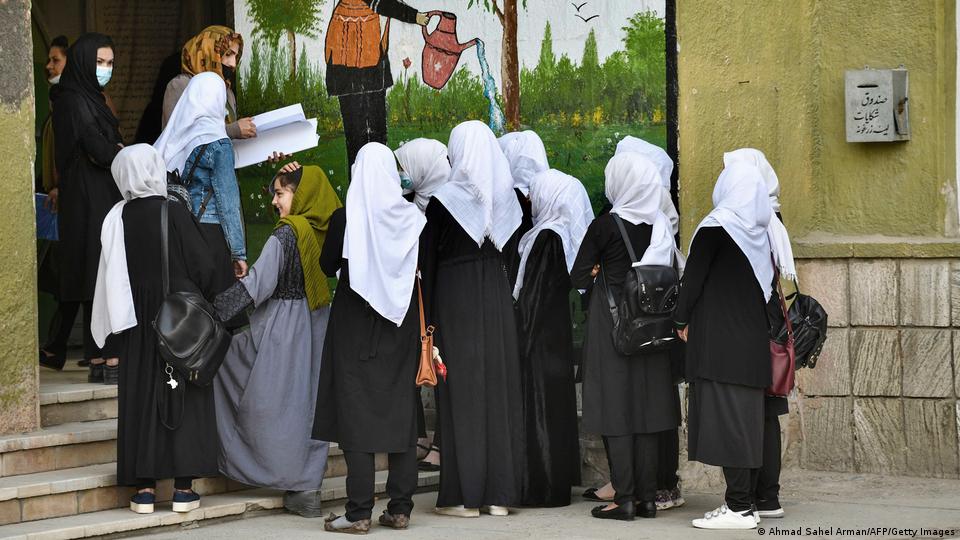
Afghanistan Human Rights Watch, in its latest statement as part of a campaign calling for the reopening of schools to girls above the sixth grade, has declared that justice begins at the school gates. In a statement published on Tuesday (25 February), the organization said that 1,620 days have passed since schools and education beyond the sixth grade were closed to girls—days that represent thousands of buried dreams and a future taken away from a generation. Afghanistan Human Rights Watch further emphasized that silence in the face of the ban on girls’ and women’s education amounts to accepting injustice. In another part of its statement, the organization called for broad public support for girls’ right to education and for lifting the ban on education beyond the sixth grade for girls in Afghanistan. This call comes as the current authorities, after taking control of Afghanistan, deprived women and girls of education. In their latest restriction, they also closed the doors of medical institutes to girls and women, despite the fact that the healthcare sector across Afghanistan is facing a shortage of personnel. This action by the current authorities has left millions of female students deprived of education. In addition, women have been banned from going to gyms, restaurants, and public bathhouses; from being examined by male doctors; from traveling without a male guardian (mahram); and from working in domestic and international non-governmental organizations, as well as even in United Nations offices in Afghanistan.

Read More