Author: رسانه‌ای گوهر شاد

5 months ago - 237 Visits

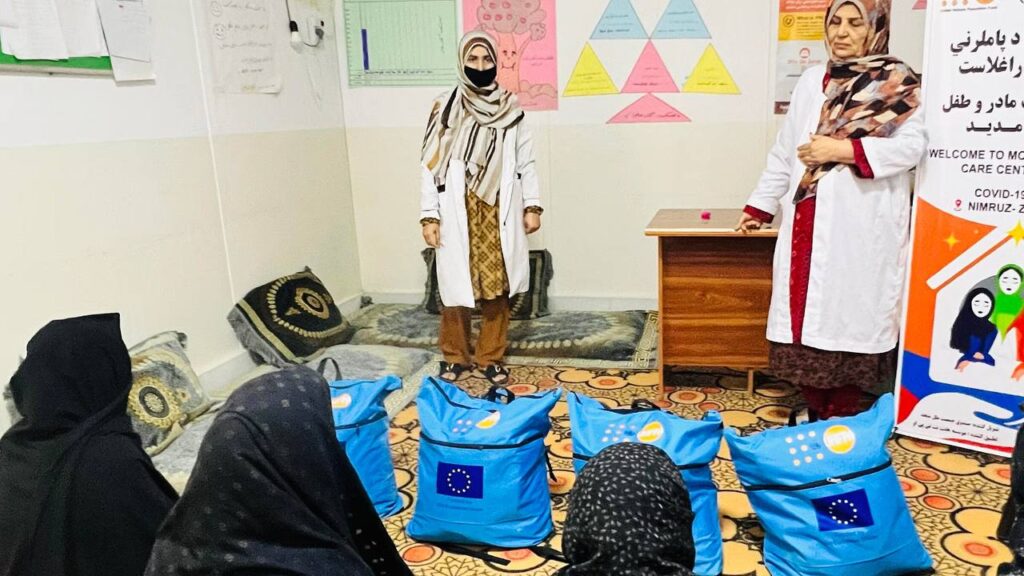
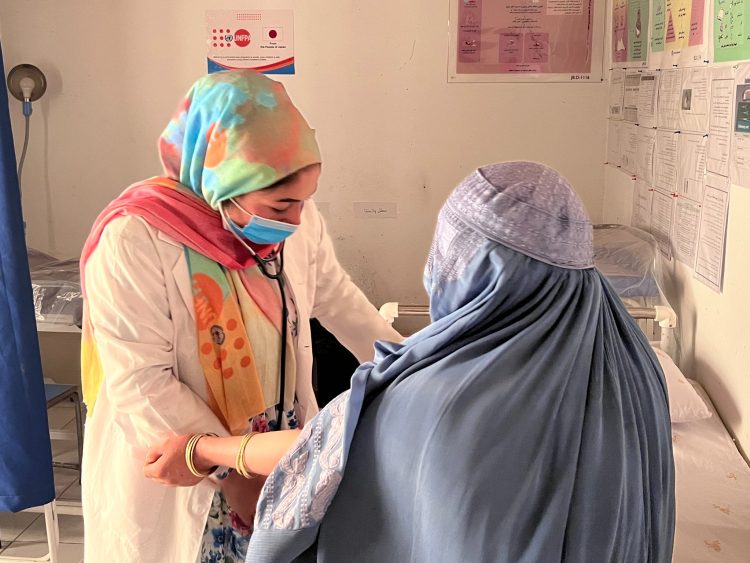
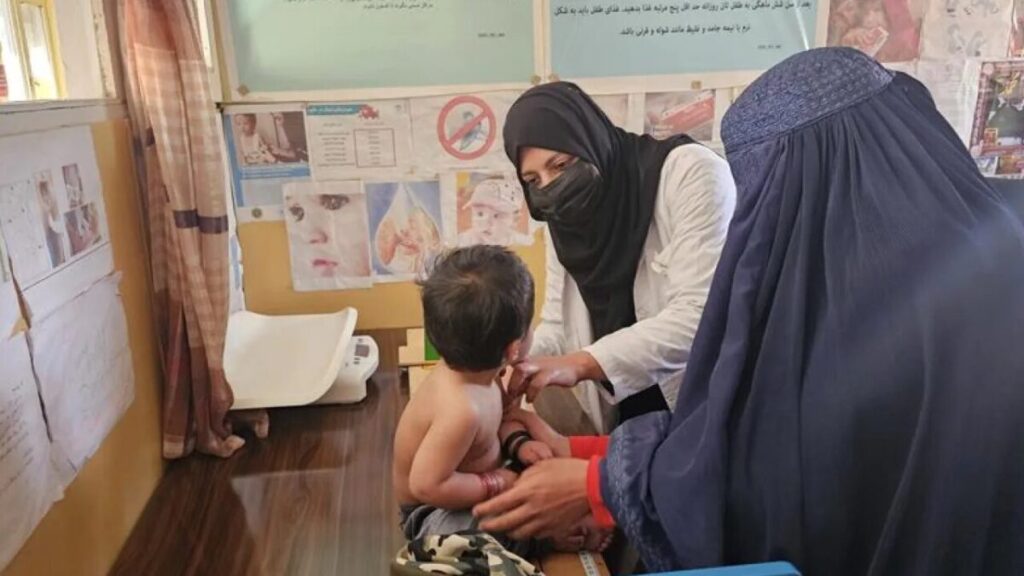
The United Nations has recently announced that 12.9 million children across Afghanistan are at risk of measles, diarrhea, and other diseases. In a newly released report, the organization stated that its volunteer teams, along with partners from other organizations, are working to confront this crisis by providing healthcare services to vulnerable children throughout Afghanistan. The UN volunteer team in Afghanistan, which officially operates under the United Nations Volunteers (UNV) program, emphasized that access to healthcare services is vital for Afghan children. This warning about the risk of outbreaks of various diseases — including measles and diarrhea — among Afghan children comes as the World Health Organization announced on November 8 that more than 55,000 suspected cases of measles have been reported in Afghanistan since the beginning of this year, with 357 people — mostly children — losing their lives due to the disease. Doctors Without Borders had also previously reported that one child in Afghanistan dies every day from measles. Additionally, UNICEF had earlier stated that by July of this year, a total of over 100,000 cases of acute watery diarrhea and 48 related deaths had been recorded. UNICEF added that more than half of those infected are children under the age of five.

Read More


5 months ago - 343 Visits

International media have reported that Dawood Helmandi, an Afghan writer and director, has won the Best First Feature Award at the International Documentary Film Festival Amsterdam (IDFA), along with two other awards, for his 97-minute film Pekar. The film tells the story of several generations who experience displacement and their efforts to find belonging, security, and freedom. According to international media reports, the winners of the 38th edition of the International Documentary Film Festival Amsterdam (IDFA) received their awards on Thursday evening (November 20) in the Netherlands, where Helmandi’s documentary Pekar attracted attention by earning multiple awards. Helmandi emphasized that Pekar narrates the story of several generations of the Helmandi family, who have experienced different forms of migration and separation from their homeland, and who struggle to regain a sense of belonging, security, and freedom. The film portrays Helmandi’s relationship with his elderly and strict father after years of living away from Iran and Afghanistan, providing a profound depiction of family bonds and resilience in the face of hardship. Pekar, produced in Persian and Dutch, won awards including Best First Feature, a Special Mention for Best Dutch Film, and the FIPRESCI Prize at IDFA. The IDFA jury stated in a released announcement that Pekar is a “broad and courageous film that deeply explores the complexities of a family shaped over generations by war and displacement.” They stressed that “the filmmaker’s vulnerability allows us to enter an intimate, highly sensitive portrait of his own family—one told with honesty, subtlety, and emotional depth.” The announcement added that this year’s winner of the Best First Feature Award at IDFA is “a work told with cinematic courage and maturity, one that lingers in the mind; a film that reveals the enduring impact of history on individual lives and the true meaning of ‘home.’” The film premiered in IDFA’s “Luminous” section and won all three categories in which it was nominated.

Read More


5 months ago - 242 Visits

OCHA, the UN Office for the Coordination of Humanitarian Affairs, has stated in its latest announcement on the occasion of World Humanitarian Day that women and girls in Afghanistan, after more than four years, continue to face oppressive restrictions. In a newly released report, the agency said that women and girls in Afghanistan are still deprived of education, work, and public life. The UN Office for the Coordination of Humanitarian Affairs further emphasized that providing humanitarian assistance to women and girls under these circumstances is vital. World Humanitarian Day arrives as half of Afghanistan’s population depends on humanitarian aid for survival. A part of OCHA’s report states: “On this day in particular, the people of Afghanistan are facing multiple and complex crises. In recent months, geopolitical developments and regional tensions have led to the return of nearly two million Afghan citizens from Iran and Pakistan, many of whom have returned involuntarily.” OCHA has also warned about the reduction in humanitarian aid and the ongoing droughts in Afghanistan. This comes as, following the return to power of the current government in Afghanistan, women and girls have been deprived of their most fundamental rights, including education, employment, and individual freedoms. As a result of the current administration’s actions, millions of schoolgirls have been prevented from accessing education. In addition, women have been banned from going to gyms, restaurants, public baths, being examined by male doctors, traveling without a male guardian, and working in national and international NGOs, including UN offices in Afghanistan.

Read More


5 months ago - 193 Visits

Georgette Gagnon, the acting head of the UN Assistance Mission in Kabul, says that Afghanistan’s future is linked to ensuring education for everyone, as the ban on girls’ education beyond grade six has entered its fourth year. Ms. Gagnon made these remarks during her visit to community-based classes for girls in Kapisa, which are supported by UNICEF. The acting head of UNAMA emphasized the importance of supporting education for all in Afghanistan. It is worth noting that currently, schools for girls are only open up to grade six. Since taking control of Afghanistan, the current government has deprived women and girls of education. Most recently, it closed the doors of medical institutes to women and girls, even though the health sector across the country is facing a shortage of personnel. This action by the current authorities has left millions of school-aged girls without access to education. In addition, women have been banned from going to gyms, restaurants, public baths, being examined by male doctors, traveling without a male guardian, and working in domestic and international NGOs, as well as UN offices in Afghanistan.

Read More


5 months ago - 410 Visits

Roya Karimi, an Afghan female bodybuilder, has secured third place in the global “Wellness Natural” competition. Karimi announced her achievement in a post on her Instagram account, stating that the international event took place in Santa Susanna, near Barcelona, Spain. She dedicated her victory to the women of Afghanistan who have been deprived of basic freedoms. She emphasized that the competition included the IFBB Pro World Championships, covering categories such as Body Fitness and Wellness Fitness. Roya Karimi competed in the professional (Pro) division of bodybuilding and earned her position from among approximately 45 participants. In part of her message, she wrote: “On the global stage, I stand free; but I dedicate this top-three victory to the Afghan women who have been denied freedom. You are my strength, and my spirit stands alongside every woman in Afghanistan whose wings have been constrained. Your strength brought me here. This victory belongs to you.” In recent years, Roya Karimi has emerged as one of Afghanistan’s most successful figures in bodybuilding, earning several high-ranking titles at both amateur and professional levels in prestigious European competitions. Before participating in the “Wellness Natural” competition, she had already appeared in several international contests, and due to her remarkable progress, discipline, and consistency in training, she has become a well-known athlete among Afghan migrants. Her achievement on the world stage comes at a time when women and girls in Afghanistan face extensive restrictions and are banned from participating in sports.

Read More


5 months ago - 230 Visits

The United Nations Development Programme (UNDP) has announced that Japan has contributed 864 million yen, equivalent to $5.6 million, to improve livelihoods and support economic opportunities for women and girls in Afghanistan. In a statement released on Tuesday, November 27, the agency said that a memorandum of understanding was signed between Kenichi Masamoto, Japan’s Ambassador to Afghanistan, and Stephen Rodriguez, UNDP’s Representative for Afghanistan. With this contribution, a two-year project titled “Enhancing Women’s Livelihoods through Promoting Economic Activities in Border Areas” will be launched. According to the statement, the project will utilize 73 small-scale initiatives to improve access to community-based productive infrastructure, financial resources, and markets for 2,100 women-led small and medium enterprises, thereby promoting inclusive local economies. The statement also quoted Ambassador Masamoto as saying: “Japan stands with the people of Afghanistan—especially women—in their pursuit of economic independence and human dignity.” He added: “This project will help create safe and effective opportunities for women so they can support themselves and their families.” Meanwhile, Stephen Rodriguez emphasized that this initiative builds on the previous project aimed at strengthening the economic engagement of women and girls in the private sector, which demonstrated that investing in women-led businesses is essential for a prosperous Afghanistan. In the previous project, UNDP supported 1,260 women-led businesses and created more than 2,500 jobs, 87% of which were filled by women. Nearly 90 infrastructure projects under this framework are also nearing completion. This development comes as the interim Afghan government has imposed widespread restrictions on the economic and social activities of women since regaining power, banning women and girls from working in government offices, domestic and international NGOs, and forcing the closure of several women-led businesses.

Read More


5 months ago - 170 Visits

AMSO, the Afghanistan Media Support Organization, has recently reported the arrest of four Afghan journalists and media workers in Pakistan. In a statement posted on its X account, the organization wrote that the arrest of Afghan journalists by Pakistani police is a direct blow to freedom of expression. The statement emphasizes that journalism is not a crime; rather, it is the voice of the people, a reflection of events, and a fundamental tool for conveying the truth. The Afghanistan Media Support Organization further stressed that any form of pressure, threat, or arbitrary detention seriously undermines the safety and independent work of journalists. The organization also called on the Pakistani government and security agencies to immediately release the detained journalists and to respect the safety of journalists who fled the critical situation in Afghanistan. According to the statement, the closure of visa extension pathways for Afghan refugees in Pakistan, along with the continued arrests, has created a concerning situation. The Afghanistan Media Support Organization urged media-supporting institutions and civil society organizations to take urgent and effective action regarding the deteriorating situation of Afghan journalists in Pakistan. Meanwhile, AMSO had recently sent a letter to the United Nations and human rights organizations—signed by 300 Afghan journalists and media workers—calling for support and protection for Afghan journalists in Pakistan. RSF in Exile had also called on the Pakistani government to halt the persecution, arrest, and deportation of Afghan journalists and media workers as soon as possible.

Read More


5 months ago - 269 Visits

Coinciding with International Students’ Day, the Alliance of Human Rights Activists has warned that policies depriving women and girls of education constitute one of the most unprecedented and systematic attacks on the right to education in the contemporary world. In a statement published on its X account, the organization wrote that denying girls access to education destroys the awareness, identity, and intellectual capacity of Afghanistan’s future generation, and that this project, within the framework of international law, can be considered an “act of cultural genocide, gender apartheid, and a crime against humanity.” The statement further notes that educational restrictions on women are neither scattered nor accidental. By eliminating women from education, these measures deprive half of society of economic, social, and intellectual participation. The statement adds that actions taken against women and girls clearly constitute “cultural genocide.” The Alliance of Human Rights Activists has called on the international community, the United Nations, global educational institutions, and universities around the world to recognize the suppression of women in Afghanistan as “cultural genocide and gender apartheid.” They emphasize that Afghanistan’s future is impossible without women’s education, and that global silence in the face of “the most systematic educational oppression of the present era” paves the way for this crisis to expand. These criticisms arise as the current authorities, since taking control of Afghanistan, have barred women and girls from education. In their latest restriction, they closed the doors of medical institutes to women and girls, even as the health sector across Afghanistan faces a shortage of personnel. This action has left millions of school-aged girls deprived of education. Additionally, women have been banned from going to gyms, restaurants, public baths, receiving medical examinations from male doctors, traveling without a male guardian, and working in domestic or international NGOs—even in UN offices within Afghanistan.

Read More


5 months ago - 266 Visits

Doctors Without Borders (MSF) has announced that a new restriction imposed in Herat on November 5 — requiring women, including patients, caretakers, and female health workers, to wear a burqa in order to enter medical facilities — has led to a significant decrease in the number of people seeking healthcare. In a report published by the organization, it stated that statistics show a 28% decrease in patient admissions in the pediatric department of the Herat Regional Hospital in just the first three days after the directive was implemented. The report adds that this local restriction, suddenly enforced across all public medical centers including Herat Hospital, has created new barriers for women and further disrupted their daily lives. Sarah Chateau, MSF’s program manager, emphasized: “With this decision, the entry of women patients and caretakers into hospitals is now determined by their clothing, not their medical needs. Any restriction on women seeking healthcare means delays in receiving services and even being deprived of treatment. This will have dangerous consequences for mothers and children who are already facing serious challenges in accessing healthcare.” The organization also expressed concern that these restrictions have affected service delivery in other parts of the province as well. A similar situation has been reported at the Islam Qala border crossing with Iran. According to humanitarian organizations, out of more than 100 female employees who previously worked at this crossing point, only three — a midwife, a doctor, and a nurse — are currently allowed to continue working, and only on the condition that they wear a burqa throughout their shift. This comes as many women recently deported from Iran are arriving in the country in fragile health conditions and are in urgent need of care. Doctors Without Borders has warned that “the cumulative impact of these restrictions — both in Herat’s medical centers and at the Islam Qala crossing — is alarming.” It is worth noting that since 2021, women in Afghanistan have been increasingly removed from public life.

Read More


5 months ago - 347 Visits

Stephane Dujarric, spokesperson for the UN Secretary-General, has recently stated that lifting all restrictions on women and girls in Afghanistan is essential. Dujarric made these remarks during a press briefing, referring to a new UN Development Programme (UNDP) report on the living conditions of Afghan citizens. He said that the restrictions imposed on women and girls in Afghanistan prevent women from working and moving freely outside their homes. He further emphasized that these restrictions on women’s work have also affected the implementation of humanitarian operations and reconstruction efforts. The UN spokesperson also criticized the ongoing ban on the education of girls above the sixth grade in Afghanistan, calling the situation “unacceptable.” The United Nations added that without guaranteeing the rights of women and girls, humanitarian and reconstruction efforts in Afghanistan cannot be fully carried out. According to the UNDP report, the return of millions of people to Afghanistan’s returnee areas is happening under severe economic pressure, climate shocks, and recent earthquakes. Families have been forced to reduce meals, sell their assets, and take loans to meet their daily needs. Data from the United Nations also shows that since the current government returned to power, more than 80 decrees aimed at restricting women and girls have been issued and implemented. Global efforts and calls for lifting these restrictions have so far yielded no results.

Read More