Author: رسانه‌ای گوهر شاد

2 years ago - 931 Visits

Neda Mohammad Nadeem, the acting Minister of Higher Education, stated that just as the education of girls is suspended until further notice, inquiries about their education are also on hold. Mr. Nadeem spoke at a press conference in Kabul today (Sunday, July 4), responding to reporters' questions about girls' education. He said, "We have not yet reached a point where we can reopen universities or schools to female students." He emphasized, "The short answer to this matter is that just as education is suspended until further notice, questions about it are also suspended until further notice." The current Ministry of Higher Education closed the doors of universities to girls in December 2022. At that time, the Ministry announced that women's education was suspended until further notice. Schools for girls above the sixth grade are also closed until further notice. During the press conference, the acting Minister of Higher Education stressed that the world is focused on the issue of girls' education, but this has raised doubts for him. He stated, "On one hand, the Islamic community is under fire; on the other hand, children and women are suffering, and their right to live is not being granted. No one raises their voice about this; however, in my country, where we have made 90% progress in every field and 90% of women's rights have been granted, people are only focused on one point: why is modern education not being opened for women?" He also mentioned that the group's decision regarding girls' education is "not in contradiction with Islam, Afghan traditions, or oppression of Muslims." Mr. Nadeem stated that research by scholars regarding girls' education is ongoing and that if it is proven under what conditions women's education is permissible, they will be allowed to study. He continued by saying that if anyone can prove through Hanafi jurisprudence that women's education is permissible in a book, they should approach his ministry and discuss it with him. He emphasized that applying "general verses and narrations" regarding women's education will not resolve the issue.
Read More


2 years ago - 867 Visits

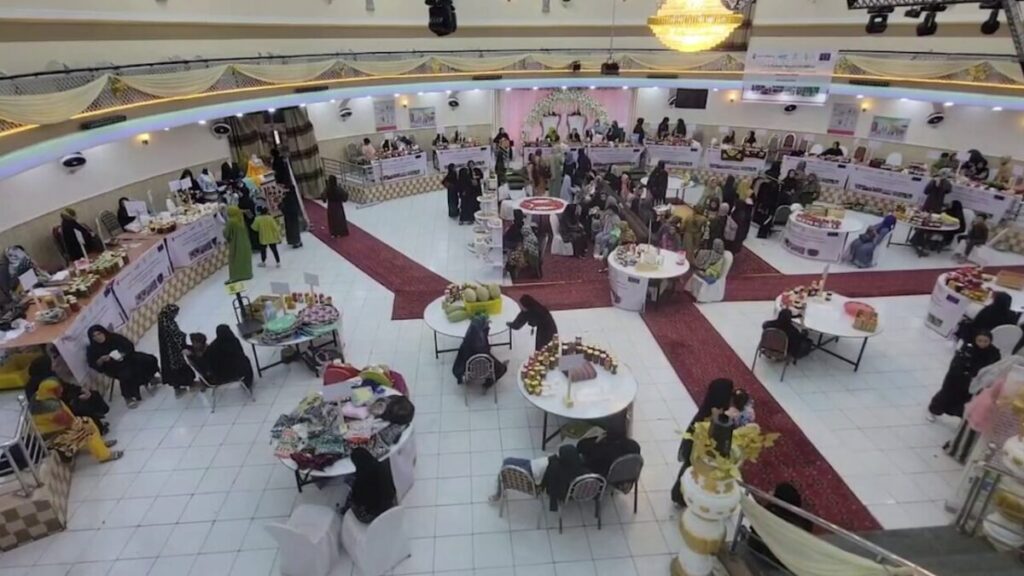
A four-day exhibition of handicrafts and domestic products from Afghanistan, titled "Victory and Economic Progress of Afghanistan," has been held with significant participation from women and artisans from various provinces at the Afghanistan International Exhibition Center in Kabul. The organizers of the "Victory and Economic Progress of Afghanistan" exhibition stated that the aim of the event is to showcase domestic products, promote women's industries, and expand the private sector. Some women entrepreneurs at the exhibition expressed that the government's restrictions on their trade have had a severely negative impact. Most participants in this exhibition were women. Women traders and artisans who attended from different provinces complained that their handicrafts lack a domestic market, attributing this to insufficient public awareness. They are calling on the interim government and foreign institutions to market women's handicrafts abroad. The participating women criticized the restrictions imposed by the current government on women, stating that the requirement to travel with a male guardian, even on short trips, has adversely affected their trade and increased business costs. They emphasized that the current government does not allow them to travel without a male guardian, which raises travel expenses and costs associated with participating in exhibitions. Sohaila Omari, a producer of handicrafts, stated: "When the forces of the interim government want us not to come to the exhibition without a male guardian and do not allow us to come alone, we want to change this mindset. Here, all participants are women. We want women to be able to participate in exhibitions without a male guardian." The women participants, numbering nearly 200, showcased their handicrafts, embroidery, clothing, and other products. Some of these women mentioned that booth rental fees are high, and given the low turnout at the exhibition and lack of a sales market, entrepreneurs struggle to cover these costs. Zahra Davoodi, a participant, expressed hope that this exhibition would create opportunities for securing contracts. She added: "I have handicraft and food products, but unfortunately I lack proper space and facilities; there are few tools, and only two workshops. We want our projects to increase through this exhibition." It should be noted that over the past three years, several small and large national and international exhibitions have been held in Kabul to support domestic products. Additionally, some artisans cite the importation of similar goods, visa restrictions for travel, and challenges related to raw materials as key obstacles in their work. They have indicated that the market for imported foreign goods remains stronger in the country compared to domestic products. While women have showcased their handicrafts, the government has imposed severe restrictions on girls and women over the past two years. Currently, girls and women are unable to attend school or university. This action by the current government has resulted in millions of girls being deprived of education. Moreover, women are banned from going to sports clubs, restaurants, public baths, being examined by male doctors, traveling without a male guardian, and working in local and international non-governmental organizations as well as United Nations offices in Afghanistan.

Read More


2 years ago - 604 Visits

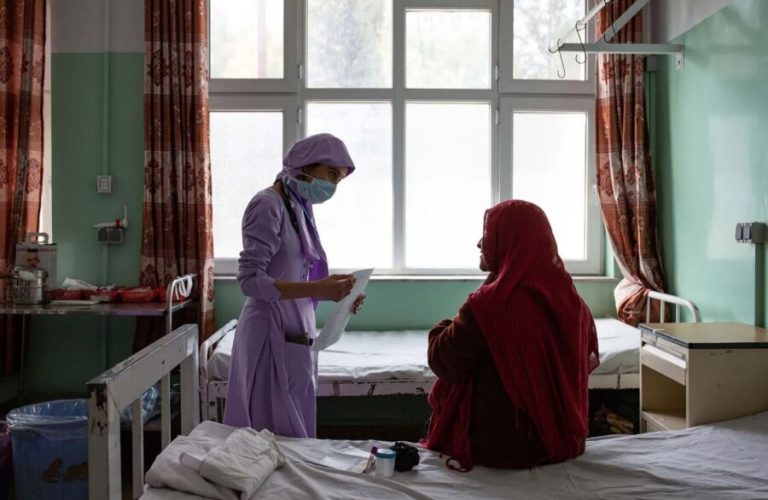
The United Nations Population Fund (UNFPA) has warned of the high maternal mortality rate in Afghanistan, stating that the healthcare system urgently requires 18,000 midwives. The fund cautioned that if this need is not met, the lives of many women will be at risk. Afghanistan has one of the highest maternal mortality rates in the world. The UNFPA emphasized that midwives can meet about 90% of the immediate reproductive health needs of mothers, newborns, and adolescent girls. According to the report, there is also a global need for approximately 900,000 additional trained midwives. In Afghanistan, there is an urgent need for 18,000 skilled midwives to address the demands of hospitals—a shortfall that could endanger many lives if not compensated. The UNFPA noted that in 2021, it supported over 70 family health clinics in Afghanistan; however, this number has now increased more than sixfold to 477 clinics despite a highly challenging operational environment. These clinics have helped over five million Afghans access vital health services, especially in remote and difficult-to-reach areas. High Maternal Mortality Rates in Afghanistan The UNFPA report states that Afghanistan has long had one of the highest maternal mortality rates in the world, with one woman dying every hour due to complications from pregnancy and childbirth. According to the fund, these deaths are largely preventable with skilled midwifery care. The UN Children's Fund reported that for every 100,000 births, 638 mothers lose their lives during delivery, attributed to poverty, limited access to healthcare services, and gender inequality. The fund highlighted the restrictions imposed by the caretaker government on women's education, work, and travel, stating that the outlook for women and girls—and future generations in Afghanistan—appears increasingly perilous.

Read More


2 years ago - 1085 Visits

The Ministry of Justice of the caretaker government of Afghanistan has announced that Mullah Haibatullah Akhundzada, the leader of this government, has ratified the "Law on Promotion of Virtue and Prevention of Vice," which is now in effect in the country. In a statement, the ministry said that this law consists of a preamble, four chapters, and 35 articles, and has been published in the official gazette. According to this law, covering the entire body of women is mandatory, covering the face due to fear of temptation is necessary, and women's voices are considered part of "awrah" (that which must be concealed). The statement mentions that the Ministry of Promotion of Virtue and Prevention of Vice and its officials are responsible for implementing this law in accordance with Sharia and Hanafi jurisprudence. It should be noted that Article 13 of this law, which contains eight clauses, is dedicated to "Rules Regarding Women's Hijab." According to the announced law, the first clause states that "covering the entire body of a woman is mandatory," while the second clause mentions that "covering a woman's face due to fear of temptation is necessary." The third clause emphasizes that "the voice of women (singing songs, reciting poetry, and reading in gatherings) is considered awrah." Additionally, the fourth clause states that "women's clothing should not be thin, short, or tight." The fifth clause mandates that "Muslim women are obliged to conceal their bodies and faces from non-mahram men." The sixth clause also states that "the covering of Muslim women and righteous women from non-believing and immoral women due to fear of temptation is obligatory." In the seventh clause of Article 13, it is stated that "the gaze of adult non-mahram men at women's bodies and faces and the gaze of adult women at non-mahram men is forbidden." The eighth clause stipulates that "if an adult woman leaves her house for a necessary need, she is obliged to cover her voice, face, and body." Furthermore, another section of this law explains the responsibilities of the officials in the Ministry of Promotion of Virtue and Prevention of Vice regarding media and press. It should be noted that Article 17 of this law states that an official must ensure that media representatives do not publish content that contradicts religion and Sharia, does not insult or demean Muslims, and does not contain images of living beings. Women Without Mahram and Transportation This law prohibits playing music in vehicles, transporting uncovered women, and transporting women who do not have a legally recognized adult male guardian (mahram). According to this law, celebrations such as Nowruz (Persian New Year), Yalda Night, fireworks, trimming or shaving beards, wearing ties, and grooming hair are deemed contrary to Islamic Sharia; allowing women's voices to be heard outside the home and viewing images and videos of living beings on computers and mobile phones are categorized as specific "vices," and it is stated that officials are responsible for preventing them. This law also outlines penalties for individuals who do not adhere to the principles of promotion of virtue and prevention of vice as per this law. According to this law, offenders will first receive a warning, followed by a reminder of divine punishment. Subsequently, they may face verbal reprimands, fines, detention from one to 24 hours or from one day to three days in public jails, and finally penalties deemed necessary by the official that do not require judicial proceedings. It should be noted that over the past three years, the Ministry of Promotion of Virtue and Prevention of Vice has imposed extensive restrictions on fundamental freedoms for citizens, especially women, repeatedly detaining women and young girls from streets on charges of "improper hijab."

Read More


2 years ago - 836 Visits

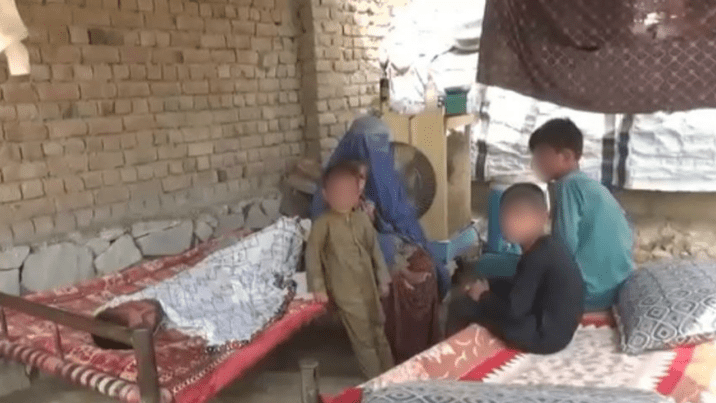
Local media reports indicate that members of a family in Nangarhar province, facing severe poverty and debt, have been forced to "sell" their two daughters. Reports state that this ten-member family is currently living in a "ruin" in the sixth district of Jalalabad city, the capital of Nangarhar province. Rahima, the mother of the children, told local media that her husband was injured in a traffic accident some time ago and is now paralyzed, lying in a corner of their home. She emphasized that they are facing multiple economic challenges and have borrowed 500,000 Afghanis from their relatives and friends for her husband's treatment. She added that due to economic difficulties and the need to pay off their debts, she has been compelled to put her children up for sale. Rahima appeals to members of the interim government and wealthy individuals to help her and her family so that she does not have to sell her children. She says, "If the government and people help us, our problems will be solved. If they do not help, I will be forced to sell my daughters to resolve my family's issues and get out of debt because I have no other option." Some young people and activists in Nangarhar have launched a campaign on social media to collect aid for this family. They are urging people to help this family so that their problems can be resolved. It should be noted that after the current government's takeover of Afghanistan, poverty levels in the country have increased. According to reports from the United Nations, 23.7 million people are in need of humanitarian assistance. Based on these statistics, over 12 million people in Afghanistan do not know where their next meal will come from.

Read More


2 years ago - 1873 Visits

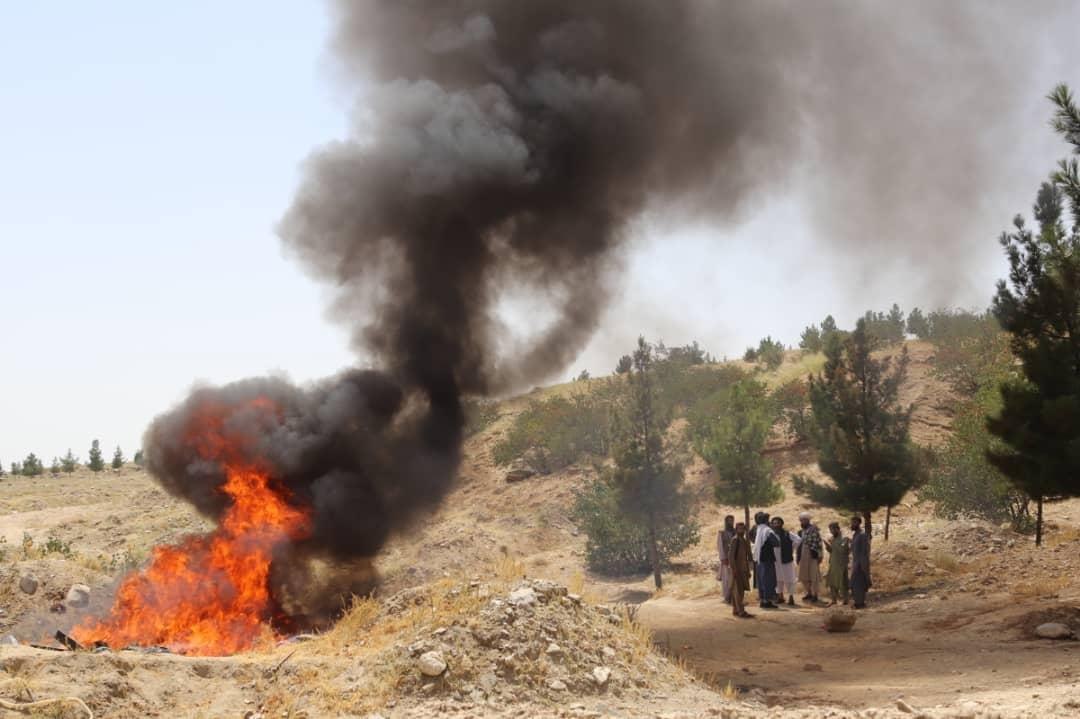
The Ministry of Promotion of Virtue and Prevention of Vice of the interim government has recently announced that in the past year, it has destroyed 21,328 musical instruments across Afghanistan. Mohibullah Makhloq, head of planning and legislation for this ministry, shared these statistics during a press conference in Kabul today (Tuesday, August 30), highlighting them as one of the ministry's achievements. He also mentioned the "reform" of audio, visual, and print media broadcasts, stating that 90% of media broadcasts have been "reformed" in the past year. He noted that the prayer times have been synchronized to a single schedule and that 460 loudspeakers have been installed for broadcasting the call to prayer throughout Kabul. The head of planning and legislation for the Ministry of Promotion of Virtue and Prevention of Vice also reported on the inspection of personal computers in markets across the country, stating that over the past year, 25,647 "immoral films" have been deleted from these computers. He mentioned the arrest of 448 "fortune tellers" and 528 "sorcerers," stating that these individuals have been referred to judicial authorities. According to the provided statistics, officials from this ministry have inspected the activities of 27,518 government and non-government offices, 419,369 mosques, 96,355 educational and health centers, 15,575 sports clubs, 68,979 hotels and restaurants, 39,218 baths and barbershops, and 500 tailoring shops to ensure compliance with the ministry's directives and have taken "necessary actions." This comes amid reports over the past year of musical instruments being collected and burned by the interim government in various provinces. The group considers listening to music "haram" (forbidden) and views it as a vice; thus, they collect and destroy musical instruments. Hijab In today's press conference, this official from the Ministry of Promotion of Virtue and Prevention of Vice stated that a draft proposal for "observing Islamic hijab by women" has been prepared and approved. He added that this proposal was developed based on the directive of Hibatullah Akhundzada, the leader of the interim government, and has been approved by him. He emphasized that the Ministry of Promotion of Virtue and Prevention of Vice has a "military directorate," which has also prepared a draft for its organization and activities. It should be noted that military personnel and inspectors from the Ministry of Promotion of Virtue and Prevention of Vice have repeatedly detained women and young girls in various provinces over the past year, including Kabul, on charges of "improper hijab." For instance, in the month of Dalwa last year, dozens of young girls were detained from the Dasht-e-Barchi area in western Kabul and Khair Khana in northern Kabul for alleged "improper hijab." The detention of these girls faced widespread backlash and condemnation, with several prominent Shia scholars rejecting the accusations of improper hijab against girls in western Kabul.

Read More


2 years ago - 890 Visits

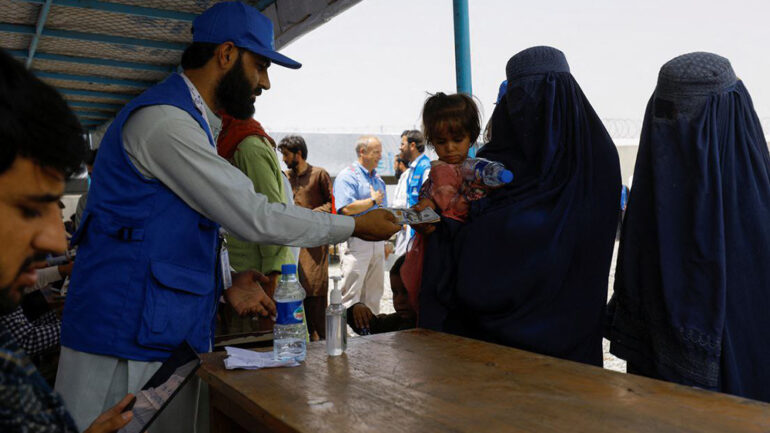
The UK Embassy for Afghanistan has announced, on the occasion of World Humanitarian Day, that over 2.7 million people, including 1.3 million women, have received assistance to improve the difficult humanitarian situation in Afghanistan over the past year. In a message shared on their X account, the embassy reported on their continued support for the people of Afghanistan under the interim government's rule. Part of the statement reads: "We will continue to work with our partners to improve the challenging humanitarian situation faced by the people of Afghanistan, especially women." Yesterday, August 19, was World Humanitarian Day. The United Nations designated this day in memory of 22 of its staff members who were killed in a bombing in Baghdad in 2003. This year's observance comes at a time when women and girls across Afghanistan are facing serious challenges in accessing humanitarian aid due to restrictions imposed by the interim government. According to UN statistics, 23.7 million people require humanitarian assistance. Additionally, the Women, Peace and Security Working Group previously reported that about 80% of those in need of humanitarian aid are women and girls. The World Food Programme has also warned about the high number of people in need in Afghanistan and a lack of funding, stating that they will be unable to provide emergency assistance to 11 million people.

Read More


2 years ago - 676 Visits

OCHA, the United Nations Office for the Coordination of Humanitarian Affairs, has recently declared Afghanistan, under the rule of the interim government, as one of the five "dangerous" places globally for aid workers. In a statement released today (Monday, August 29), the organization noted that despite a decrease in conflict since August 2021 in Afghanistan, the restrictions imposed on women and girls by the current government have posed serious challenges for humanitarian staff. OCHA's statement reads: "The restrictive measures of the interim government targeting women and girls limit their access to education, social life, services, and employment, including humanitarian work, creating significant barriers. Humanitarian workers must constantly navigate these challenges to continue their efforts." The UN humanitarian coordination office emphasized that currently, over 35,000 staff from international aid organizations are working in various sectors in the country, including education, health, mine clearance, and food assistance. OCHA added that during 2023, international staff provided services to 32.1 million people in Afghanistan. Furthermore, it mentioned that during this period, 26.3 million people received food and livelihood assistance, 16.5 million benefited from health and medical services, and 9.9 million accessed safe drinking water services. The UN humanitarian coordination office also stated that last year, 5.7 million children and pregnant or breastfeeding women received nutritional support, 3.5 million children received protective services, 2 million children received educational services, and 1 million children received emergency shelter and non-food items. According to information from the UN Office for the Coordination of Humanitarian Affairs, aid organizations are set to assist 17.3 million individuals in need across various sectors this year. This international agency has once again warned about the lack of sufficient funding for providing aid to those in need in the country. It is worth mentioning that just a few days ago, this international organization also announced that Afghanistan under the control of the interim government is facing a "severe humanitarian crisis."

Read More


2 years ago - 658 Visits

The World Food Program has recently announced that 90% of households headed by women in Afghanistan do not have enough food to eat. In a message posted on its X account, the organization stated that food assistance from the World Food Program is a last resort for women who are the heads of their families. The United Nations' World Food Program also expressed concern about the ongoing restrictions on women and girls in Afghanistan, noting that women are deprived of many aspects of life. It continued by stating that the existing restrictions on female heads of households have resulted in limited options for feeding themselves and their children. The organization mentioned, "Out of every 10 households headed by women in Afghanistan, 9 families do not have enough food to eat." This concern arises as women and girls in Afghanistan face severe restrictions imposed by the caretaker government. In addition to other limitations, the caretaker government has banned women from working, which has led to an increased need for families, especially those headed by women. According to United Nations statistics, 23.7 million people in Afghanistan are in need of humanitarian assistance. Previously, the Working Group on Women, Peace, and Security stated that 80% of those in need are women and children.

Read More


2 years ago - 1108 Visits

The campaign of Kamala Harris, the Democratic nominee for the upcoming U.S. elections, has announced the appointment of Nasreen Barakzai, an Afghan-American attorney, as an advisor on Muslim and Arab community affairs in the campaign. NBC News reported, citing Harris's campaign, that Nasreen Barakzai has worked since 2021 until July of this year as a political advisor on issues related to Muslims, Arabs, the Gaza conflict, reproductive rights, voting, and democracy in the office of Kamala Harris, the Vice President of the United States. Campaign officials stated that Ms. Barakzai will hold a similar role in Kamala Harris's election campaign. She has previously worked as an advisor to the Vice President of the United States. Muslim Americans, particularly Arabs, are dissatisfied with the Democratic Party and Kamala Harris due to Joe Biden's policies regarding the Gaza conflict and his government's strong support for Israel. These communities believe that Kamala Harris will continue Biden's policies regarding Gaza and Israel. The primary duty of this Afghan-American advisor in Kamala Harris's campaign will be to engage and consult with Muslim communities, especially Arab Americans, and to garner their support for Harris's election campaign. In a statement from Kamala Harris's campaign, Ms. Barakzai said: "I am honored to continue my work with the Vice President and will advise on a wide range of important issues in this election, from democracy and reproductive rights to Muslim and Arab affairs." Who is Nasreen Barakzai? According to available information, Nasreen Barakzai was born in 1979 in Kandahar province in southern Afghanistan during the Soviet invasion. Ms. Barakzai told Glamour magazine that her father and uncle were captured during that time and went missing. Following this, she and her family migrated to Pakistan to escape the Soviet bombings when she was about two years old. After living in Pakistan for three years, she immigrated to the United States in 1985 under a refugee resettlement program and graduated from Berkeley Law School in California in 2005. Before joining the Vice President's office in 2021 as an advisor to Kamala Harris, she worked as a legal expert and national security attorney with the American Civil Liberties Union (ACLU). Nasreen Barakzai has also served as a national security and civil rights attorney at the Asian Americans Advancing Justice organization. According to a report by Al-Monitor, during her work with this organization, she was responsible for defending student protests supporting Palestine and advocating for them against pressures from pro-Israel Jewish students. The Jerusalem Post has claimed that Ms. Barakzai referred to Jewish students' concerns about anti-Semitism on U.S. campuses as "organized legal bullying" in her statements and writings. In response to complaints from Jewish students against several U.S. universities due to "hostile anti-Israel rhetoric on campus," she stated that these complaints were attempts to silence pro-Palestinian activism. The Israeli publication reported that Ms. Barakzai was one of the attorneys who halted investigations by the U.S. Department of Education's Civil Rights Office regarding complaints of anti-Semitism at three California universities, including Berkeley. Her biography on the website of Asian Americans Advancing Justice indicates that she has experience working with law firms Boies, Schiller, and Flexner on multi-billion dollar litigation. This Afghan-American attorney has also worked as a law clerk for William F. Fletcher, a judge on a California appellate court. Additionally, this advisor to Kamala Harris has teaching experience at Stanford Law School.

Read More