Author: رسانه‌ای گوهر شاد

2 years ago - 1906 Visits

Manijeh Talash, an Afghan athlete and member of the refugee team participating in the 2024 Paris Olympics, has been disqualified from the games for displaying a political slogan ("Free Afghan Women"). The India Today newspaper reported today (Saturday, August 20) that Ms. Talash competed against Igor India from the Netherlands yesterday and showcased the phrase "Free Afghan Women," which was boldly written on her blue cape, after the match. This Afghan athlete not only lost the breakdancing competition against "India Sardarju" from the Netherlands but has also been removed from the 2024 Paris Olympics. The reason for the disqualification of this Afghan female athlete is cited as a violation of Olympic rules. According to Olympic regulations, displaying political messages during competitions is prohibited. Article 50 of the Olympic Charter forbids any form of political, religious, or racial demonstrations or propaganda at the Olympic venue or other locations. Although Ms. Talash was disqualified before the return matches, she managed to convey her message regarding women's rights in Afghanistan on one of the largest sports stages. Twenty-one-year-old Manijeh Talash, who fled to Spain following the current regime's takeover in Afghanistan, is the first break dancer from Afghanistan to participate in the Olympics. She lost to her Dutch opponent and told reporters after the match that she did not leave Afghanistan out of "fear of the Taliban." According to CNN, she added: "I left Afghanistan because I want to do everything I can for Afghan girls, for my future life, and for everyone."

Read More


2 years ago - 799 Visits

The American Bar Association has urged all governments to recognize and prevent genocidal actions against the Hazara people and other persecuted minority groups in Afghanistan. In a report to the U.S. Congress, the association stated that the Hazara people have been victims of violent acts and indescribable mass killings by various rulers in Afghanistan since the late 19th century, and this trend continues to this day. The American Bar Association called for action from the Office of Global Criminal Justice at the U.S. Department of State to promote justice and accountability efforts to end impunity for genocide in Afghanistan. Additionally, the association has urged the U.S. Congress to strengthen national, regional, and international frameworks aimed at preventing mass atrocities in Afghanistan and protecting at-risk groups such as the Hazaras. The association provided a brief overview of certain events that it claims have contributed to the worsening human rights situation for the Hazara people and equate to genocide. The report noted that the first recorded instance of a brutal massacre against the Hazaras occurred during the reign of Abdur Rahman Khan, a Pashtun ruler from 1880 to 1901, during which nearly 60% of the Hazaras were massacred and displaced to neighboring countries and Central Asia. The report stated that Abdul Rahman Khan classified the Hazaras as "infidels," and through rape and murder, he depopulated Hazara regions and issued royal decrees allowing Pashtun nomads (Kochis) to use Hazara lands. The American Bar Association emphasized that the discrimination and dehumanization employed by Abdul Rahman Khan to justify the persecution of the Hazaras were again utilized by the current regime in the 1990s. Afshar Massacre Also, the American Bar Association report quoted Human Rights Watch as saying that during the jihadist organization's wars from 1992 to 1993, there was "compelling evidence" that the factions regularly and deliberately targeted civilians and civilian areas for attack. And they shot at civilian areas recklessly and indiscriminately. According to this report, in February 1993, Jamiat-e-Islami and Ittihad-e-Islami forces clashed with Hizb-e-Vahdat forces in Afshar area of ​​Kabul. Although it is said that Hizb-e-Vahdat forces fled the area, Jamiat and Ittihad factions during the ground attack on Hazaras attacked. The American Bar Association wrote that other reports indicated that elderly people, women, children and even their dogs were beheaded and their bodies dumped in wells. This is in addition to eyewitness accounts of rape, torture, kidnapping, looting, and forced labor. Massacre of Mazar-e-Sharif The American Bar Association's report on the killing of mostly Hazara civilians by the forces of the current government in Mazar-e-Sharif states that although the Hazaras were persecuted by the Rabbani government (1992-1996), the re-emergence of the current government at that time created other major problems for the security of this ethnic group created. In this report, citing Human Rights Watch, it is estimated that between 2,000 and 5,000 civilians were "systematically and brutally executed" in the city of Mazar-e-Sharif in August 1998 during the reign of the current government at that time. Experts noted that the violence was "a killing spree fueled by racial and religious prejudices." Yakavelang Massacre in 2001 Also, in a part of the report of the American Bar Association, it is stated that in January 2001, the forces of the current government at that time, conducted a search operation in Yakavalang Bamyan and arrested 300 civilian men. According to this report, these people were taken to certain gathering points and then shot by the firing squad in public view. The association stressed that the current government at the time intended these heinous acts as "collective punishment" for local residents who collaborated with opposition forces. The Continuation of Acts of Genocide The American Bar Association said in its report that the genocide of Hazaras continues to this day. According to the report of this association, since the time of Abdul Rahman Khan, many of those who held power in Afghanistan, including the current government and newer factions such as ISIS Khorasan, have continued to commit crimes against Hazaras. Even in other countries, Hazaras are no longer safe and are at risk of violence and forced exile by other governments in the region, the report said. Conflict between Hazaras and Nomads Also, in the report of the American Bar Association, the conflict in Hazarejat, especially Ghazni and Wardak Square, between the Pashtun nomads and the Hazaras over grazing land is also mentioned. The report states that Abdul Rahman Khan's actions in confiscating land from the Hazaras and giving it to the nomad through a royal decree had lasting and damaging effects on the Hazara community. Experts believe that the current administration continues to exploit historical events to continue patterns of violence against Hazaras. Forced Displacements The American Bar Association's report states that forced displacements have become a common tool of the caretaker government against the Hazaras. The report mentions that thousands of Hazaras from the provinces of Helmand, Kabul, Maidan Wardak, and Balkh have been forcibly removed from their homes over the past three years. According to the report, in 2021, it is estimated that more than 2,500 Hazara families were compelled to leave their homes, and no legal recourse was provided for them to contest the orders. The report highlights the violence against Hazaras in Jowzjan, noting that these people are facing forced displacement. Since the return of the caretaker government to power in Afghanistan, multiple instances of killings of residents in Hazara-dominated areas of the Khass Urozgan district have been reported.

Read More


2 years ago - 799 Visits

Naseer Ahmad Faiq, the head of Afghanistan's mission to the United Nations, condemned the behavior of Iranian police towards Afghan migrants as contrary to accepted global principles and immigration laws. Mr. Faiq stated that the torture of an Afghan teenage migrant by police in Damavand County, Iran, is inhumane and un-Islamic. According to reports from international media, a 15-year-old Afghan boy named Seyed Mahdi was injured due to torture by Iranian police, resulting in a broken neck. Additionally, images and videos obtained by the Goharshad media outlet show a plainclothes officer in the village of Abasrd in Damavand County holding Seyed Mahdi's hands and feet while another officer presses his knee against the boy's neck. The images of this Afghan migrant's torture have garnered widespread attention on social media. In response to this incident, the head of Afghanistan's mission to the United Nations wrote on his X account: "The actions and conduct of the Islamic Republic of Iran's police towards Afghan refugees and migrants, especially those with legal documents, are against internationally accepted principles and immigration laws." Mr. Faiq described the torture of Afghan migrants by Iranian police as "inhumane" and "un-Islamic," calling for serious measures to prevent and address such incidents. He also expressed gratitude to Iran for sheltering millions of Afghan migrants and urged Iranian authorities to take necessary steps to prevent the recurrence of such events. It is noteworthy that the mistreatment of Afghan migrants by Iranian police, particularly the breaking of a young refugee's neck, has sparked widespread reactions among Afghan citizens. The young refugee from Daykundi is currently hospitalized.

Read More


2 years ago - 1261 Visits

Zakiya Khodadadi, a female athlete from Afghanistan who left the country after the return of the caretaker government, is seeking to win a gold medal at the 2024 Paralympics, which is part of the Olympic events in Paris. Ms. Khodadadi stated that she competes in the name of the women and girls of her country who have gradually been deprived of their social, educational, and political rights over the past three years. Associated Press reported that this Paralympic taekwondo athlete made history in 2021 in Tokyo by becoming the first Afghan woman to participate in an international sporting event after the current government's takeover. Khodadadi was banned from competing when the caretaker government regained power. She was allowed to represent her country after leaving Afghanistan and at the request of the international community. In a conversation with the Associated Press, this female athlete said, "It is difficult for me because I want to compete with my country's flag; however, life has been forbidden for all girls and women in Afghanistan. Today I am here to win a medal in Paris for them. I want to show strength to all women and girls in Afghanistan." The report noted that Khodadadi began practicing taekwondo at the age of 11. She trained secretly in a gym in her hometown of Herat because there were simply no other opportunities for women to safely engage in sports in Afghanistan. According to the Associated Press, despite the restrictive culture surrounding her, her family has allowed and encouraged her to be active. She mentioned that her determination to compete in Afghanistan was fueled by her disability. Khodadadi competes for the Refugee Paralympic Team, while other athletes like Kimia Yousofi, an Olympic runner, were seeking medals under the Afghan flag, managing to secure the 31st position among 36 athletes. Zakiya Khodadadi is set to compete for the Refugee Paralympic Team.

Read More


2 years ago - 657 Visits

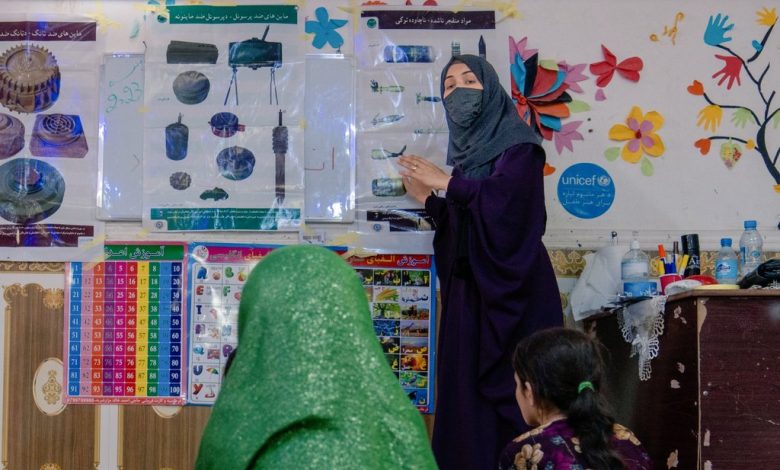
The humanitarian sector of the United Nations has stated that the involvement of women and girls in Afghanistan in humanitarian aid processes is essential and must be ensured. In a message shared on its X account, the organization quoted Nagina Yari, head of the Women’s Advisory Group of the Humanitarian Country Team in Afghanistan, emphasizing that the participation of Afghan women and girls in humanitarian aid processes secures their rights. The UN humanitarian sector asserts that women are powerful agents of change, and their presence is crucial for the success of humanitarian responses. It continues to state that without meaningful participation and support for women in this process, the involvement of women and girls will also be limited. Nagina Yari highlighted the importance of enhancing women's roles in decision-making, stating that donors must support women and base strategies on their recommendations. Ms. Yari added that engaging with women leads to better outcomes and protects their rights. While the UN humanitarian sector emphasizes the participation of women and girls, according to UN statistics, 23.7 million people in Afghanistan require humanitarian assistance, with approximately 80% being women and children. However, the current government has prohibited women and girls from working in international organizations, including UN offices. Previously, various UN agencies have stated that the ban on women's work has posed challenges to the humanitarian aid process for those in need.

Read More


2 years ago - 639 Visits

The World Food Program of the United Nations has expressed concern over budget shortages within the organization, stating that this summer it has removed 600,000 pregnant women in Afghanistan from the list of recipients of nutritious food due to a lack of funds. It further noted that this year, 1.6 million pregnant and breastfeeding women in Afghanistan have received nutritious food to prevent malnutrition for themselves and their children. On Tuesday, August 7, the World Food Program reiterated its concerns about budget shortages in a message posted on its X account. This comes at a time when the World Food Program had previously stated that it could not provide emergency food assistance to 11 million people in need due to budget constraints. According to United Nations statistics, 23.7 million people in Afghanistan require humanitarian assistance, with approximately 48% of the population living below the poverty line. It should be noted that following the return of the caretaker government to power and the imposition of restrictive policies regarding the rights and freedoms of women and girls, as well as work limitations, access to humanitarian aid for them has been hindered.

Read More


2 years ago - 893 Visits

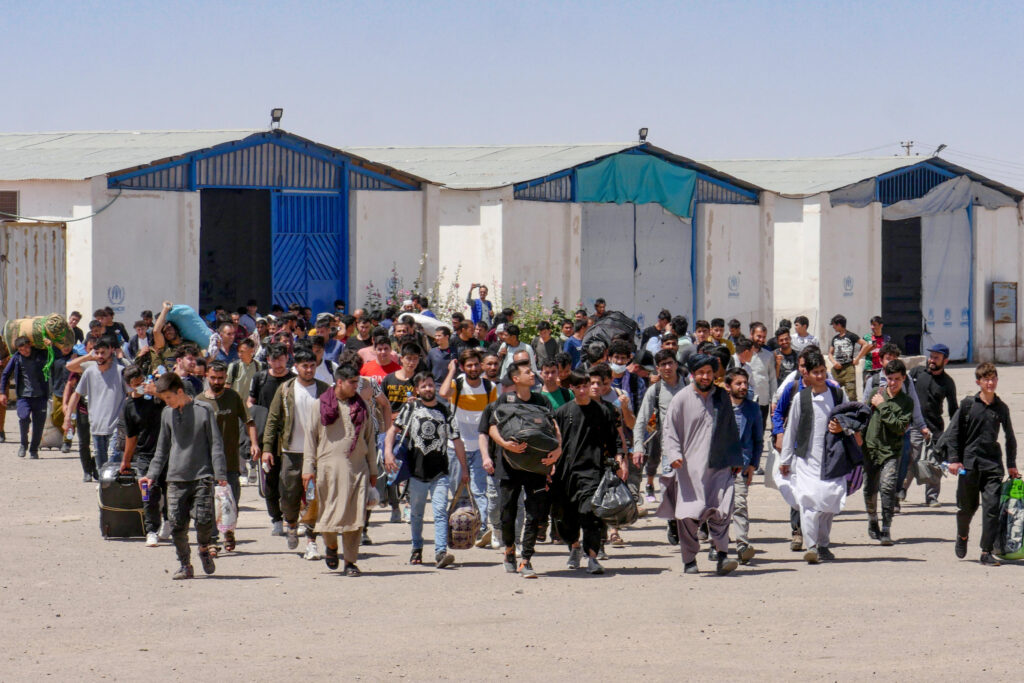
Following the protests and harassment of Afghan migrants in Iran, particularly in Tehran, the human rights organization Hangaw has warned about the increasing governmental and social racism towards Afghan migrants in the country, describing the situation as "catastrophic." In a report, this human rights organization stated that in recent months, there has been a wave of rising anti-Afghan racism, both at the governmental and societal levels, observable within Iran. The report noted that this racism includes discussions surrounding the expulsion of Afghan migrants in the context of Iran's presidential election debates, as well as a growing demand for their expulsion on social media platforms. Hangaw emphasized that many Afghan citizens, despite having lived and worked in Iran for decades, do not possess valid residency cards. The report indicated that Afghan migrants are not allowed to reside in 16 provinces of Iran, and outside of Tehran, Alborz, and Qom provinces, they are only permitted to stay in certain districts. It should be noted that tensions between Iranian citizens and Afghan migrants escalated following the killing of an Iranian individual. As days pass, there is an increasing wave of anti-migrant sentiment and opposition towards Afghan nationals across various regions in Iran. In recent weeks, there has been a surge of violence and hostility against Afghan migrants in the capital and several districts of Tehran. In many cases, Afghan migrants have faced insults, humiliation, beatings, and knife attacks from Iranian citizens.

Read More


2 years ago - 826 Visits

Sources from Afghan female students in Bangladesh indicate that following the escalation of political developments and chaos in the country, hundreds of Afghan female students are concerned about their security situation and face an uncertain future. At least three Afghan female students in Bangladesh stated today (Tuesday, August 7) in an interview with the media outlet Goharshad that around 600 Afghan female students are currently in Bangladesh and are experiencing poor mental health due to the political turmoil in the country. The source mentioned that most of these girls went to Bangladesh on scholarships offered by the country to continue their education at the Asian University for Women. One student said that since the start of student protests in Bangladesh on July 13, hundreds of Afghan female students have not been allowed to leave their dormitories and are worried about their safety. This student stated: "They are not allowed to leave the dormitory. The security, mental health, and psychological condition of Afghan female students are not good at all. Even the female students have not been permitted by the university to speak to the media or express their opinions on social media." Another female student mentioned that these students have not been able to communicate with their families for several days due to internet outages, but they managed to regain internet access since yesterday. The source expressed concern, emphasizing that there is no diplomatic entity available to address the challenges faced by these students. The source added: "These girls cannot return to Afghanistan either, as they are worried that the caretaker government will prevent their return." According to the source, those students whose countries have embassies in Bangladesh have spoken with government officials of that country and have been warned about ensuring the safety of students; however, Afghan girls have no one to check on them. This comes as Sheikh Hasina, the Prime Minister of Bangladesh, resigned and left the country yesterday after weeks of student protests that escalated into deadly nationwide unrest. Ms. Hasina fled to India by helicopter after her residence in Dhaka was attacked by protesters. Additionally, two days ago, over 90 people, including at least dozens of police officers, were killed in clashes in Bangladesh. The unrest began last month with calls to abolish quotas in government jobs and has since turned into a campaign of civil disobedience. According to reports, at least 300 people have lost their lives during the recent month of protests.

Read More


2 years ago - 686 Visits

The Afghanistan Journalists Center has recently announced that the Ministry of Communications and Information Technology of the interim government has suspended the operating licenses of 17 radio and television networks in Nangarhar due to their failure to pay "frequency taxes." In a statement released today (Monday, August 7), the center said that the Ministry of Communications has warned these media outlets that they will not be allowed to operate until they pay their overdue taxes. The statement mentioned that the Telecommunications Regulatory Authority (ATRA), which operates under the Ministry of Communications, has verbally and in writing communicated the decision to suspend these media outlets to their owners. It further stated that ATRA emphasized that due to the refusal of local media owners in Nangarhar to pay "frequency taxes" and the "non-renewal of frequency licenses," local radio and television stations in Nangarhar will not be permitted to operate based on Article 37 of the Telecommunications Services Law. Additionally, the Afghanistan Journalists Center, citing its sources in Nangarhar, reported that local media in this province, being a first-class province, are required to pay 108,000 Afghanis annually for frequency license renewal and an additional $25 as ancillary costs. The center stressed: "All local media are indebted in this regard, with their debts ranging from one year to over ten years." Part of the statement noted that currently, radio and television stations must obtain separate licenses not only from the Ministry of Communications but also from the Ministries of Information and Culture, Industry and Commerce, and even municipal authorities, paying separate fees for each of these licenses. Furthermore, local media officials in Nangarhar have informed the Afghanistan Journalists Center that their economic problems have doubled since the interim government regained control over Afghanistan, and advertising—once their main source of income—has decreased unprecedentedly. They stated that they do not have the financial capacity to cover operational costs and the multiple taxes imposed by the Taliban. The center expressed serious concern over the suspension of local media activities in Nangarhar and urged ATRA to forgive their debts in light of the economic difficulties faced by local media, extend their operating licenses, and adjust and implement the annual frequency license tax considering the economic challenges of these media outlets. It is worth noting that since regaining control over Afghanistan, the current government has imposed extensive restrictions on media activities and journalists in the country.

Read More


2 years ago - 1018 Visits

Fariba Hashemi, an Afghan cyclist who will represent Afghanistan at the 2024 Paris Olympics, says she is doing her utmost to achieve a good result and to represent the 20 million women of Afghanistan in this global competition. According to a report by France-Press, Fariba Hashemi and Youldoz Hashemi will raise the flag of a fallen country at the Paris Olympics. Fariba Hashemi is one of six representatives from Afghanistan in cycling at the 2024 Paris Olympics. The report states that the selection of the six-member team, which includes three men and three women, is a deliberate display of equality in response to the current government's strong opposition to women's participation in professional sports since it regained power in 2021. Youldoz and Fariba were in Kabul during the fall of Afghanistan and, with the help of world champion Italian cyclist Alessandra Cappelluto, managed to escape the besieged city with a few other cyclists. Fariba Hashemi expresses her astonishment at the return of the current regime. She emphasized, "When the Taliban took power in my country, I was in Afghanistan. After three or four days, they took control of all of Afghanistan. I was not only worried about myself; I was worried about my people, worried about everything. Because the first time they came to my country [in 1996], they stopped everything for women—everything: school, sports. What was left for women? They closed everything." Fariba hopes that her performance at the Paris Olympics, or even her presence there, will help combat the notion that women and girls have no place in the world of professional sports. This Afghan cyclist stressed, "You can change this mindset together." She aims to demonstrate that cycling is a good activity that everyone can participate in. This sport is not just for men; it is also for women and girls. It is worth noting that the Hashemi sisters are representing Afghanistan while the current government has imposed many restrictions on the fundamental freedoms of women and girls since taking power, including a ban on girls' sports.

Read More