Author: رسانه‌ای گوهر شاد

8 months ago - 459 Visits

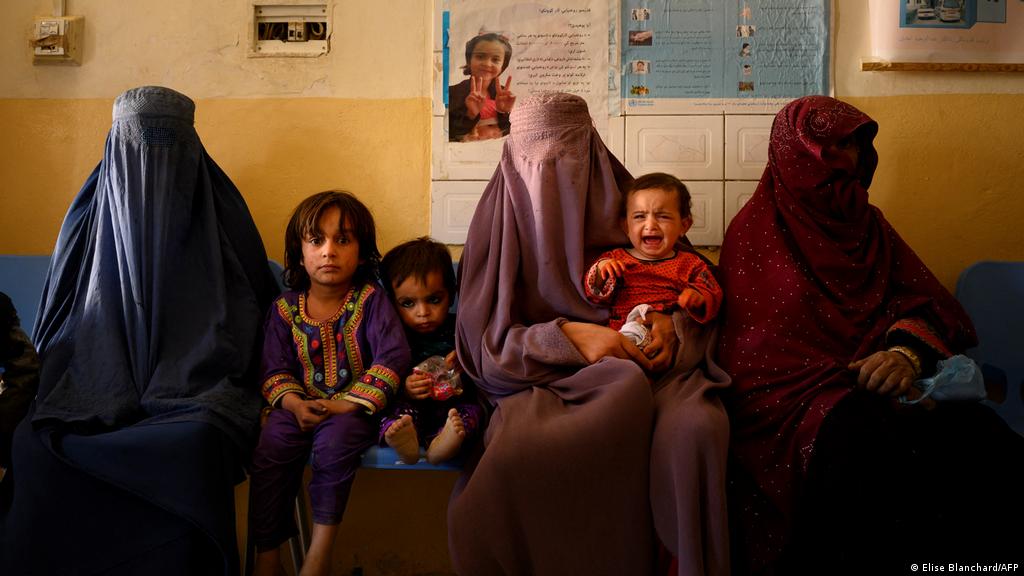
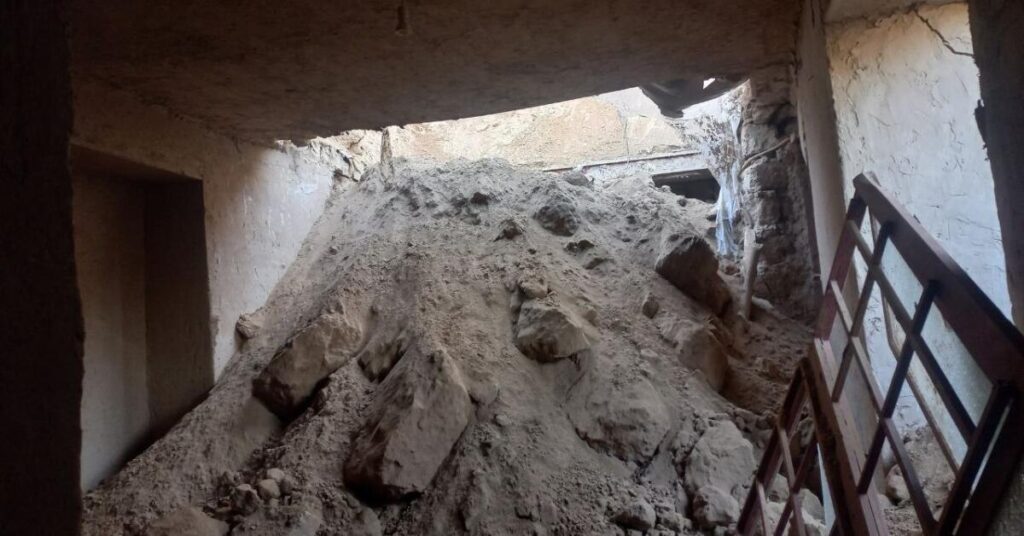
One week after the deadly earthquake in eastern Afghanistan, the World Health Organization (WHO) has announced that a shortage of vehicles for transporting patients and a lack of female health workers have hindered medical care for the earthquake’s injured. The organization stated on Sunday (September 7) in a report that restrictions imposed by the caretaker government on the movement of female staff also disrupt women’s and children’s access to healthcare. The report added that access to remote mountainous areas remains a major challenge, as landslides triggered by powerful aftershocks have blocked main roads. According to WHO, it is estimated that 84,000 people have been affected, with at least 2,205 deaths, 3,640 injuries, and 6,782 houses destroyed. Among the injured, 58 percent are men and 42 percent are women and girls. The report also highlighted that more than 10 percent of the injured are children under the age of five. WHO further stated that it has deployed six mobile health teams to the hardest-hit and most remote villages in Nurgal district of Kunar province, providing emergency services including trauma care, maternal and child health, counseling, and referrals. The organization noted that ambulance systems, facing severe shortages of functional vehicles, fuel, and trained staff—including female health personnel—are limiting timely access to higher-level care for critical cases. The report added that Afghanistan’s fragile healthcare system is also struggling with severe shortages of medicine and staff, particularly female health workers. WHO said that to scale up life-saving interventions and ensure access to the most vulnerable communities, an additional $4 million is urgently needed. This comes a week after the deadly earthquake struck eastern Afghanistan, with Kunar province suffering the highest number of casualties and damages.

Read More


8 months ago - 350 Visits

Save the Children has recently announced that last Sunday night’s deadly earthquake in eastern Afghanistan has affected more than 260,000 children. In a report, the organization stated that 280 children have been left without parents as a result of the earthquake, while continuous aftershocks have terrified those who lost their homes and families. The report further said that the earthquake destroyed more than 5,000 houses, forcing families to sleep either in tents or in the open air. Save the Children also emphasized that some of these families are using old rice sacks as bedding. The report quoted Samira Syed Rahman, Advocacy Manager of Save the Children in Afghanistan, as saying: “With homes destroyed and many relatives and loved ones killed or injured, children are bearing the heavy burden of loss. The aftershocks constantly remind them of the terror they experienced during the earthquake.” She added: “In just a few seconds, everything was taken away from thousands of children. Every family I saw in Kunar had lost several members. This is a horrific time for children. The fear and grief they carry will not disappear with the clearing of debris.” One earthquake survivor in Kunar told Save the Children: “In our village, there are families who have lost 11 members. Another neighbor lost 15, and yet another lost five. We have many families like these.” The advocacy manager of Save the Children said the organization is providing urgent mental health support to children, but immediate and sustained funding is required, and donors must act now. She stressed that the lives and future of children in Kunar depend on the help and action of the international community. The 6.0-magnitude earthquake that struck eastern Afghanistan on Sunday night caused the most casualties and destruction in Kunar province. According to the interim government’s figures, 2,205 people lost their lives and 3,640 others were injured in Kunar. Government officials also announced that 6,782 houses were destroyed in Kunar due to the earthquake.

Read More


8 months ago - 432 Visits

International media have reported that the first volleyball club for Afghan girls, AFCAN-NCC, has been launched in Toronto, Canada. According to the organizers, the opening ceremony was held with the support of volleyball coaches, the president and members of AFCAN, players, and volleyball enthusiasts. The event marked the beginning of a new chapter for Afghan women’s volleyball in Canada. At the ceremony, the club’s leaders and players emphasized the resilience, unity, and indomitable spirit of Afghan women athletes. The leadership of the AFCAN Volleyball Association also pledged to support the first women’s club, AFCAN-NCC, through training, educational, and developmental programs in order to further enhance their technical and professional skills. The statement concluded by noting that this team is more than just a sports group; it represents a movement for opportunity, empowerment, and the recognition of Afghan women’s abilities in the sports arena. It should be noted that since the rise of the current government in Afghanistan, strict laws have been imposed against women: their presence in stadiums has been banned, and participation in many sports has been prohibited for women.

Read More


8 months ago - 423 Visits

Amid the ongoing arrests and deportations of Afghan migrants from Pakistan, the country’s police have arrested Fatema Bakhtiari, a human rights activist. In a video message sent to Gowharshad Media, Bakhtiari stated that she was arrested on Wednesday night, September 12, and transferred to a “camp.” She did not specify in the video from which city she was detained. In the footage, visibly worried and in tears, the activist appealed to international organizations and refugee support groups for help. Bakhtiari claimed in the video that she had recently been living in hiding but was still detained by Pakistani police. She also expressed concern about being deported to Afghanistan. It is worth noting that in recent months, Pakistan has intensified the arrest and deportation of Afghan human rights defenders, protesting women, and former military personnel. The Pakistani government’s deportation of Afghan migrants has sparked a wave of criticism from human rights defenders and organizations, who have called for the expulsion to be halted. The government of Pakistan has set September 1 as the final deadline for return, which also includes holders of the PoR (Proof of Registration) cards.

Read More


8 months ago - 271 Visits

The UN Refugee Agency (UNHCR) has recently warned that the recent earthquakes in Afghanistan have placed women, children, people with disabilities, and the elderly at greater risk and vulnerability. In a statement posted on its official X account, the agency wrote that the shortage of female aid workers has made addressing the needs of women and girls an urgent necessity. The UNHCR further emphasized that Afghanistan was already facing severe drought and the return of millions of Afghan migrants from neighboring countries, and now the earthquakes have deepened the humanitarian crisis. The international agency added that millions of people in the earthquake-affected areas are in urgent need of shelter, food, and medical care, and without international assistance, many lives are at risk. The agency has called on the international community to urgently deliver humanitarian aid to those affected. This call for the participation of women and girls in social and health services comes as a 6-magnitude earthquake struck eastern provinces of Afghanistan last night. More than 1,400 people were killed and over 3,000 others injured in the quake. More than 5,000 homes were also destroyed in the earthquake.

Read More


8 months ago - 350 Visits

Zabihullah Mujahid, spokesperson for the de facto government, announced that the death toll from the earthquake in Kunar has risen to 1,411. In a message posted on his X account today (Tuesday, September 2), Mr. Mujahid also stated that the number of injured in this deadly earthquake in eastern Afghanistan has reached 3,124. He further emphasized that 5,412 houses in the districts of Nurgal, Suki, Chapa Dara, Pech Dara, Watapur, and Asadabad of Kunar have been destroyed. However, moments earlier, the Afghan Red Crescent Society, which is under the administration of the de facto authorities, reported the earthquake death toll in Kunar at 1,124. The Afghan Red Crescent added that more than 8,000 houses have been destroyed in eastern Afghanistan due to the earthquake. The organization also noted that many people remain trapped under the rubble of their homes. Yesterday, officials reported 800 deaths and around 3,000 injuries. Meanwhile, local sources in Kunar told Goharshad media that rescue operations face serious challenges due to difficult access roads. The source emphasized that rescue teams from various agencies have not yet been able to reach some areas of Mazaar Valley in Nurgal district. It should be noted that a 6.0-magnitude earthquake struck the eastern provinces of Afghanistan last night. Nevertheless, international organizations and government officials have stressed the importance of delivering aid and services to the families of the victims and the injured.

Read More


8 months ago - 284 Visits

The United Nations Women’s Division has recently announced that, according to a survey conducted by the organization, 92 percent of Afghans support the education of women and girls and oppose the stance of the de facto authorities on banning girls’ education. In a statement, the agency said the survey was conducted through door-to-door interviews, covering the views of 2,190 Afghan citizens on girls’ education. The findings show that in rural communities, 87 percent of men and 95 percent of women support girls’ education, while in urban communities, 95 percent of both men and women are in favor. The statement quoted Susan Ferguson, UN Women’s Special Representative in Afghanistan, as saying: “Almost always the first thing girls tell us is that they are eager to learn and only want a chance to go to school.” Ferguson further emphasized: “Families have also said they want their daughters to have this dream. They know that literacy and learning can change the trajectory of a girl’s life in a country where half of the population lives in poverty.” Sophia Calthorpe, Head of Humanitarian Affairs at UN Women, also said in a press conference that support for girls’ education among both men and women in Afghanistan’s rural and urban communities is “remarkable.” She stressed that nine out of ten people included in the survey said they oppose the current government’s restrictions on girls’ education, adding that these restrictions do not reflect the views of the people. According to findings from the UN Women’s Gender Alert report, 92 percent of respondents said that access to secondary education for girls is essential. The report also stated that among men, 63 percent described a father who supports his daughter’s education as “pious,” which reflects their deep alignment with the right to education for girls. UN Women further warned of the consequences of banning girls’ education and the restrictions imposed by the de facto authorities. According to UN Women’s report, the impact of these restrictions goes beyond the economy and systematically undermines women’s ability to envision a future in which they can work, lead, and participate. The Head of Humanitarian Affairs at UN Women called for concrete responses to Afghan women and girls in the face of these restrictions, describing the situation as one of the world’s greatest “tests” in the field of gender equality.

Read More


8 months ago - 289 Visits

UN experts have recently warned against the imminent expulsion of Afghan refugees from Pakistan, saying that women and girls are among the most vulnerable groups who would face serious risks if forcibly returned to Afghanistan. In a statement, the experts noted that while millions of Afghans are on the verge of deportation from Pakistan, Afghanistan itself is grappling with severe crises and is unprepared to absorb such a large wave of returnees. The statement said that millions of Afghans in Pakistan are at risk of being sent back to a country facing a deep humanitarian crisis, where women and girls are deprived of their most basic rights, including freedom of movement, education, and employment. The experts further warned that mass deportations from Pakistan would halt the education of thousands of Afghan children and adolescents—particularly girls, who are already banned from schooling beyond grade six in Afghanistan. They added that women heads of households, as well as those without a male guardian, would be placed in especially difficult situations if deported, since they lack both safe shelter and support networks to ensure their security and livelihoods. According to the UN experts, the principle of non-refoulement is a binding obligation under international law, and no country has the right to return individuals to places where their life or freedom would be at risk. They called on the Government of Pakistan to immediately halt the deportation plan and honor its international commitments. The statement also stressed that Afghan women and girls, already suffering under the restrictions imposed by the de facto authorities, face a heightened risk of exclusion, and deportations would further endanger their lives and futures. While appreciating Pakistan’s decades-long hosting of millions of Afghan refugees, the experts urged the international community to step up support for Afghan women and girls and take greater responsibility in their resettlement. It should be noted that on July 31, the Pakistani government announced that under the “Illegal Foreigners Repatriation Plan,” all Afghans—including holders of Proof of Registration (PoR) cards—must leave the country by September 1.

Read More


8 months ago - 472 Visits

The United Nations’ women’s section has recently declared that four years after the caretaker government took power in Afghanistan, the rights and dignity of women and girls have been systematically violated. In a newly published report, the body stated that none of the imposed restrictions have been lifted, and with each new decree, women have been further erased from social life. It also noted that girls in Afghanistan are deprived of education beyond the age of 13. The report added that women and girls have been excluded from most jobs and political activities, and in many areas, they are not even allowed to move around without a male companion. The UN Women’s division further warned that banning women and girls from medical education, restrictions on treatment by male doctors, and the decline in foreign aid have left women without access to essential healthcare. The organization stressed that the consequences of this situation are shocking, leading to increased maternal mortality, the rise of forced child marriages, and a surge in violence against women. While praising the courage and resilience of Afghan women, the UN body urged the international community not to remain silent in the face of this crisis. The report emphasized that supporting women and girls in Afghanistan is an urgent necessity. This comes as the current government, after taking power, has banned women and girls from education. In its latest restriction, it shut the doors of medical institutes to female students, even as Afghanistan’s healthcare sector suffers from a shortage of personnel. This action has left millions of schoolgirls deprived of education. In addition, women have been barred from going to gyms, restaurants, public baths, receiving checkups from male doctors, traveling without a male guardian, and working in domestic and international NGOs — even including UN offices in Afghanistan.

Read More


8 months ago - 503 Visits

The Ministry of Higher Education of the caretaker government has recently announced that 18 subjects have been removed from Afghanistan’s academic curriculum, and the teaching of 66 other subjects will only be permitted after “revisions” and “reforms.” The ministry stated that the reason for this decision is the “inconsistency of certain subjects with the principles of Sharia and the policy of the Islamic Emirate,” and conveyed it through an official letter to public and private universities. According to the letter, subjects such as Afghanistan’s Constitutional Law, Women’s Sociology, Good Governance, Human Rights and Democracy, History of Religions, Moral Philosophy, Sexual Harassment, and The Role of Women in Public Communication have been completely removed from the curriculum. The ministry argued that these subjects contradict the religious and political views of the government. Additionally, the teaching of 66 other subjects in the fields of political science, law, international relations, sociology, psychology, and media is conditional on revision and modification. The letter specifies that this list includes topics such as Public and Islamic International Law, Fundamentals of Foreign Policy, History of Western Political Thought, International Security, Non-Governmental Organizations and Civil Society, Demography, Human Development, General Psychology, Psychopathology, Media Literacy, and Theories of International Relations. It was emphasized that universities are obliged to stop teaching the banned subjects, while the conditional ones must be taught “critically and reformatively.” It is worth noting that since the return of the current government to power, numerous restrictions have been imposed on education in the country, with many academic disciplines and subjects either entirely removed or placed under severe limitations. It should also be mentioned that in August 2022, Mullah Hibatullah Akhundzada, the leader of the current government, ordered the creation of a “Curriculum Review Directorate” to initiate the process of “Islamicization” of academic content. Furthermore, in August 2024, Nature, one of the world’s most prestigious scientific research journals that monitors the state of universities, reported—citing a 78-page document—that some artistic and cultural disciplines, including music and visual arts, are to be removed from university programs in Afghanistan and replaced with agricultural and religious subjects.

Read More