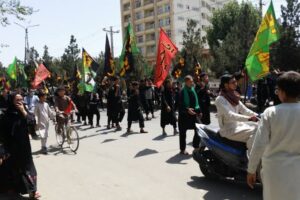
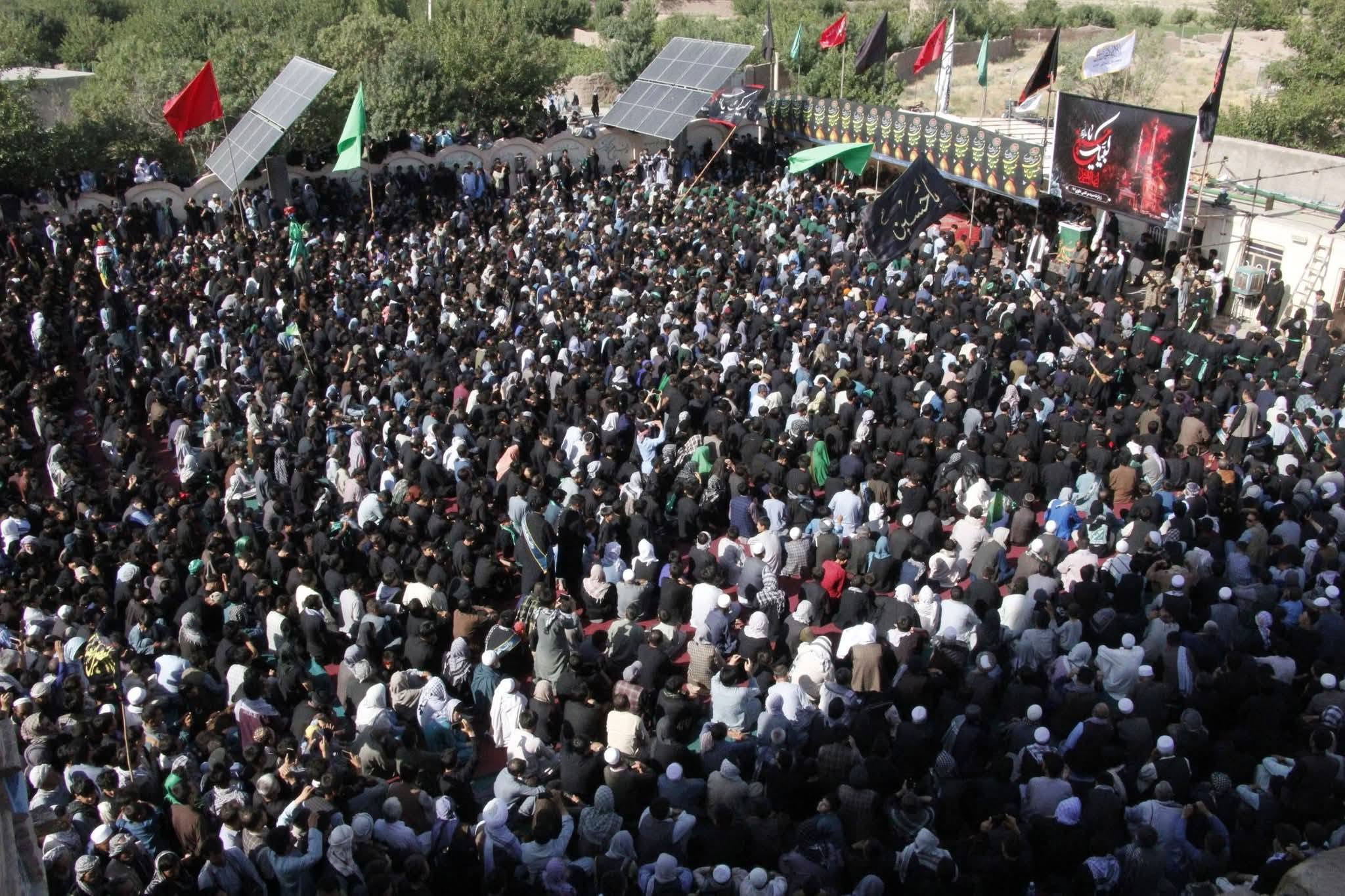
The mourning ceremonies for Ashura were held day (Friday, June 26) in several provinces of Afghanistan, widely attended by women, men, and children despite the restrictions imposed by the interim government in mosques and mourning halls.
In the Shia-populated areas of Herat, including the Al-Mahdi neighborhood, the Andisheh neighborhood, and the Bakraabad region, people held mourning and chest-beating ceremonies.
In Kandahar and Kabul, Shia communities also conducted mourning ceremonies in mosques and mourning halls.
This year’s Muharram mourning ceremonies, like in previous years, were accompanied by government restrictions. The current government cut telecommunications services in the capital early this morning.
The Afghan Shia Ulema Council announced yesterday in a statement that the current government has arrested some mosque and mourning hall officials “for raising mourning symbols.”
The council’s statement mentioned that the interim government has removed flags and mourning symbols from some mosques and Hussainiyas, “contrary to the agreements and resolutions of the designated committee for Muharram.”
Additionally, people criticized the government’s restrictions and called for freedom and respect for religious ceremonies. Some political figures also issued condolence messages on the occasion of Ashura.
Hamid Karzai, the former president, posted a message on his X account stating: “Imam Hussein, through a meaningful reform movement, aimed to correct social deviations and invited society to rectify affairs and actions. He stood firm until his last breath for awakening and instilling a sense of responsibility in the people against wrongdoing, leaving behind the historical epic of Karbala.”
He further emphasized: “The people of Afghanistan, like other Muslims, celebrate Ashura and the Hussaini movement, considering the love for the family of the Prophet Muhammad as a factor of unity and brotherhood among themselves, using this opportunity for reform, enlightenment, and strengthening unity and solidarity.”
Abdullah Abdullah, the head of the High Council for National Reconciliation of the previous government, also stated in his message: “Ashura is one of the great and meaningful days in Islamic history, where the lofty values of faith, piety, patience, sacrifice, and perseverance against difficulties have found a lasting manifestation.”
He clarified: “This day calls Muslims to reflect on religious teachings, strengthen the spirit of solidarity, uphold justice, and adhere to human and Islamic principles.”
Ahmad Massoud, leader of the National Resistance Front of Afghanistan, said in a message: “Ashura taught us that standing against oppression is not only a choice but also a faith-based, human, and historical responsibility.”
It is worth mentioning that as of the publication of this news, there had been no message from officials or spokespersons of the current government regarding Ashura.