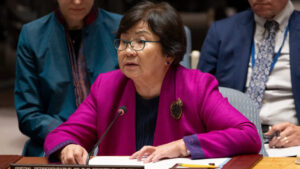
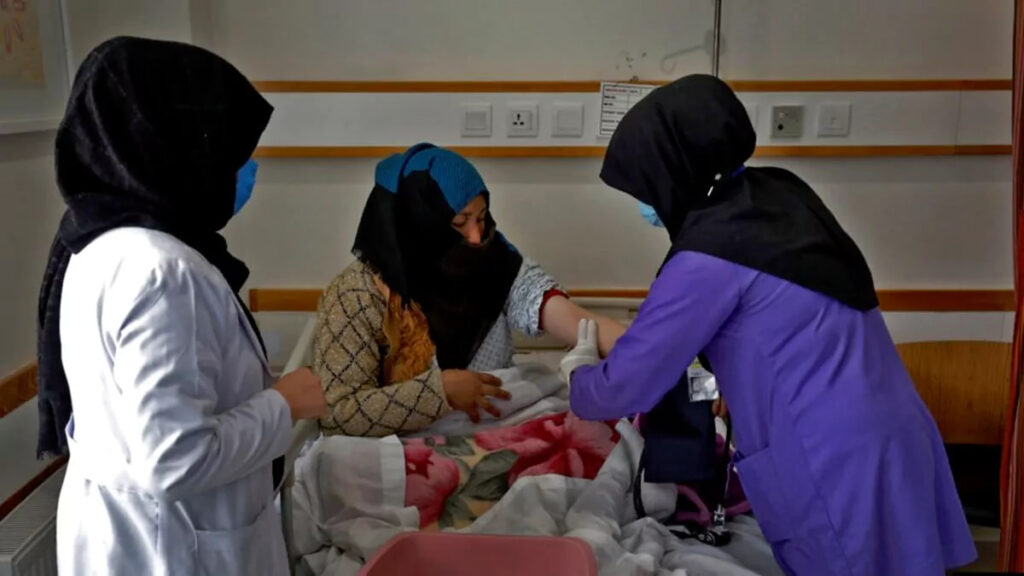
The UN Women’s section reports that nearly one in three women and girls in Afghanistan is complaining about the worsening access to health services.
In a statement, the organization noted that with the ban on education and work for women and girls in Afghanistan, the opportunities for training and employment for female doctors, nurses, and midwives have also been severely limited across the country.
The statement emphasizes that Afghan women and girls have the right to access health services, and the presence of female staff is essential for providing these services.
The United Nations has previously warned that Afghanistan has one of the highest maternal mortality rates in the world, with nearly 600 women dying for every 100,000 live births.
Additionally, OCHA, the UN Office for the Coordination of Humanitarian Affairs, has stressed that investing in the education and hiring of female health workers and strengthening primary health services is vital to reducing maternal mortality.
UNICEF also warned in April that with the continuation of restrictions on girls, Afghanistan will face a shortage of 25,000 female teachers and health workers by 2030.
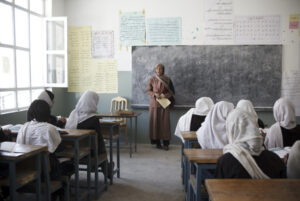
It is worth noting that since taking control of Afghanistan, the caretaker government has deprived women and girls of education and learning opportunities. Furthermore, in its latest restriction, it closed the doors of medical institutes to girls and women, while the health sector across Afghanistan is facing a shortage of personnel.
This action by the current government has resulted in millions of girls being unable to pursue their education.
Additionally, women have been banned from going to gyms, restaurants, public baths, being examined by male doctors, traveling without a male guardian, working in domestic and international NGOs, and even in UN offices in Afghanistan.
According to reports, if this ban continues, nearly four million girls may be deprived of education by 2030.