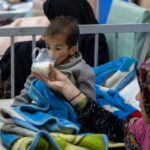
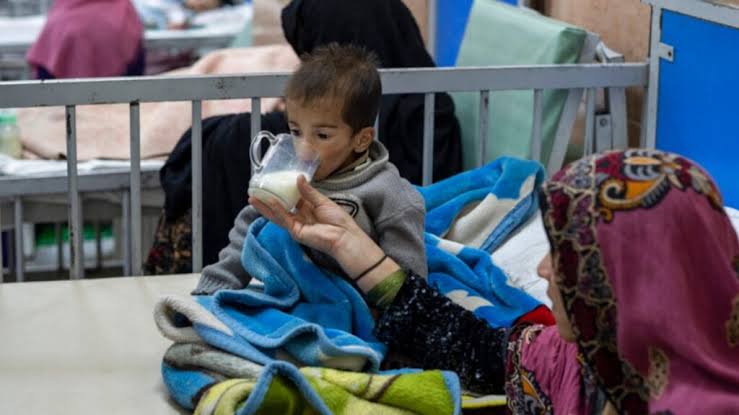
UNICEF, the United Nations Children’s Fund, has warned in its latest quarterly report of the Afghanistan Nutrition Surveillance System that the nutritional situation of children under five in the country is deteriorating, with malnutrition rates increasing in 22 provinces.
In a report released in collaboration with the Afghanistan Nutrition Surveillance System, the organization said that the national rate of acute malnutrition among children reached 12 percent in the third quarter of 2026, compared with 9.3 percent in the second quarter of the same year.
The findings of the assessment show that the number of provinces facing critical nutritional conditions has also increased, rising from 10 provinces in the first quarter of the year to 16 provinces in the third quarter.
Meanwhile, the provinces of Zabul, Kandahar, Helmand, Daikundi, and Nuristan recorded the highest rates of severe child malnutrition.
The report also identified food insecurity as one of the major challenges to children’s health in Afghanistan.
According to the findings, 85.5 percent of children aged 6 to 59 months are experiencing some degree of food insecurity, while nearly half of them face moderate or severe food insecurity.
Another section of the report highlights families’ difficulties in accessing safe drinking water and sanitation facilities. Only 33.5 percent of households reported washing their hands with soap. Furthermore, 45.7 percent of households reported that children under five had suffered from diarrhea during the two weeks preceding the assessment.
The Afghanistan Nutrition Surveillance System, in collaboration with partner organizations and local communities, monitors the nutritional status of children at 465 sites across 401 districts and all 34 provinces of the country. During the latest monitoring round, data on 19,822 children were collected.
These findings highlight continuing concerns about children’s health and nutrition in Afghanistan, a situation closely linked to food insecurity and limited access to essential health and sanitation services.
This comes as OCHA, the United Nations Office for the Coordination of Humanitarian Affairs, previously reported that approximately 3.7 million children in Afghanistan are expected to suffer from malnutrition in 2026, including around 1.3 million children experiencing severe malnutrition.