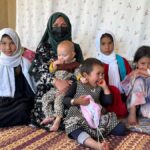
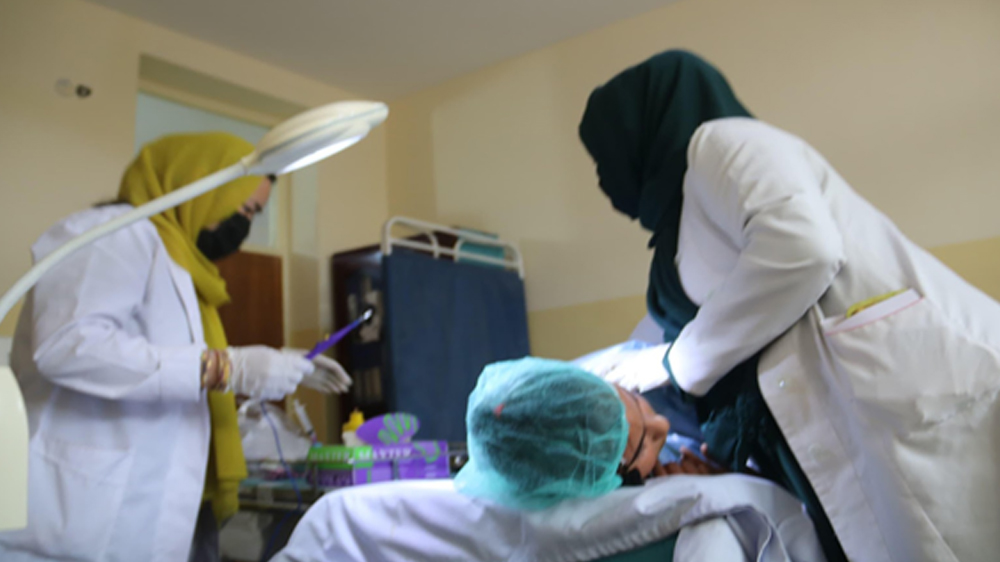
The United Nations has recently announced that the shortage of female doctors in Afghanistan has turned into a crisis, while the caretaker government has banned girls from attending school.
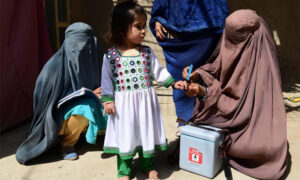
Olga Chervko, a member of the UN Office for the Coordination of Humanitarian Affairs (OCHA), who recently visited Bamiyan, stated that when a female doctor leaves her position, replacing her is often nearly impossible.
She emphasized that this situation severely limits women’s and girls’ access to lifesaving healthcare, including maternal and newborn care, as well as services related to malnutrition and education.
She further added that the restrictions imposed by the current government on girls’ education deprive them of future employment opportunities.
She said, “All the women I spoke with are deeply concerned about their daughters who can no longer go to school and may have no future.”
Additionally, a section of the UN website report mentions that water scarcity is the main reason for conflicts among villagers in Bamiyan province.
Olga Chervko described the condition of remote villages in Bamiyan as “ghost villages,” stating that those who could leave have done so.
She said, “In this particular village in Bamiyan that I visited, I was told that about half of the population had left because there is no water for irrigating the fields, and therefore all the crops they used to grow have dried up. Those who could leave have left.”
According to her, those who remain have no other choice; “They cannot afford to leave.”
This UN representative stated, “One of the men I met had nine family members. He showed me what they eat for lunch. It was essentially a bowl of something resembling rotten potato peels that had been cooked into a soup just to keep the family alive.”
Chervko noted that this bitter reality is faced by many of Afghanistan’s most vulnerable families, imposed upon them due to climate change, drought, widespread malnutrition, and increasing restrictions on women.
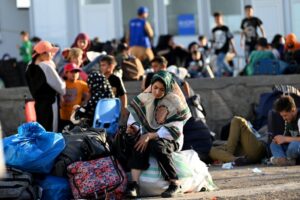
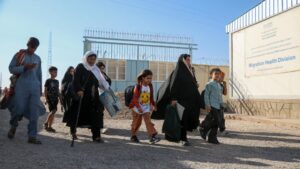
The United Nations reports that this year, 22 million people in Afghanistan require humanitarian assistance due to the consequences of climate change, poverty, unemployment, migration, and internal displacement.