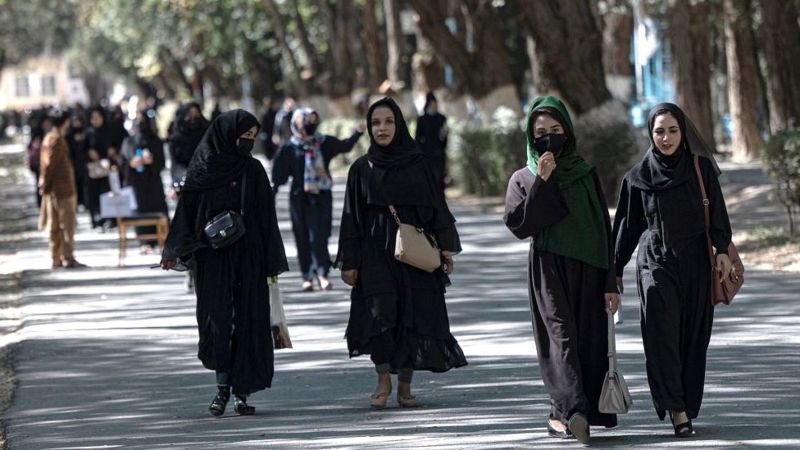
UNICEF, the United Nations Children’s Fund, reports that the ongoing restrictions on girls’ education and women’s work in Afghanistan have resulted in a 0.5 percent decrease in the country’s Gross Domestic Product (GDP).
In a published report, the organization stated that these restrictions have weakened Afghanistan’s human resources, and each year that these limitations continue, a new group of girls is deprived of entering the skilled workforce, leading to significant social and economic consequences for Afghanistan.
UNICEF has warned that the continuation of this situation could also affect children’s health.
The report indicates that mothers’ lack of access to education is linked to an increase in child stunting, reduced vaccination coverage, and decreased prenatal care.
Additionally, it noted that if women’s education and employment were to expand, Afghanistan’s economic growth could increase by an additional 0.5 percent annually.
The organization emphasized that since the ban on girls’ education over four years ago, no girl in Afghanistan has been able to attend school beyond the sixth grade. According to the report, approximately one million girls have directly suffered from this ban so far.
UNICEF has warned that if this prohibition continues, in the next five years, two million girls will be deprived of the right to education beyond primary school.
The report states that in the next 35 years, around 600,000 skilled women will exit Afghanistan’s workforce.
The United Nations Children’s Fund specified that 40 out of 129 universities in Afghanistan are at risk of closure due to decreased revenue and a decline in the number of students and professors, particularly female students and faculty.
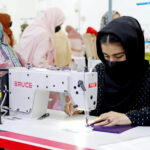
According to the report, the two main sectors where women are still allowed to work are education and health services. However, with the closure of educational opportunities for girls, the number of female teachers and health workers will significantly decline in the future.