Author: رسانه‌ای گوهر شاد

1 year ago - 692 Visits

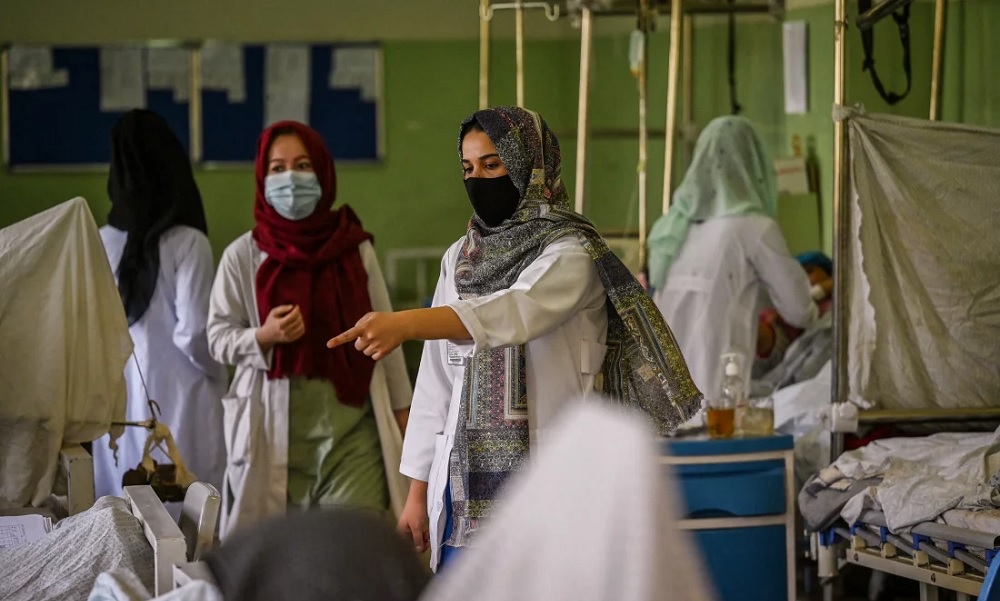
A group of female students at medical institutes in Herat have protested against the recent decision of the interim government, stating that they "will not give up their rights." On Thursday, December 6, they spontaneously gathered in front of the provincial governor's office and condemned the closure of health institutes to female students, chanting slogans such as "Rights, Justice, Education." The protesting students raised slogans like "We will not give up our rights," "Education is our right," "Seek knowledge from the cradle to the grave," and "Rights, Justice, and Education." They called on the interim government officials to revoke the decision banning girls from studying in medical institutes. The protesting girls wrote their slogans in three languages: Dari, Pashto, and English. This protest comes at a time when the current government has recently closed all health institutes to girls until further notice. The government's decision has sparked negative global reactions. Stephan Dujarric, spokesperson for the UN Secretary-General, expressed concern over the decree prohibiting girls from studying in medical institutes in Afghanistan, stating that this order will have a detrimental impact on the country's health system and development. Richard Bennett, the UN Special Rapporteur on Human Rights in Afghanistan, also expressed his shock at the ban on girls' education in medical institutes and urged the Taliban to lift this prohibition. The interim government had previously banned girls' education at secondary and high school levels as well as at universities. The current government's restrictions have left millions of female students without access to education. In addition, women have been prohibited from going to sports clubs, restaurants, public baths, being examined by male doctors, traveling without a male guardian, working in domestic and international NGOs, and even at UN offices in Afghanistan.

Read More


1 year ago - 450 Visits

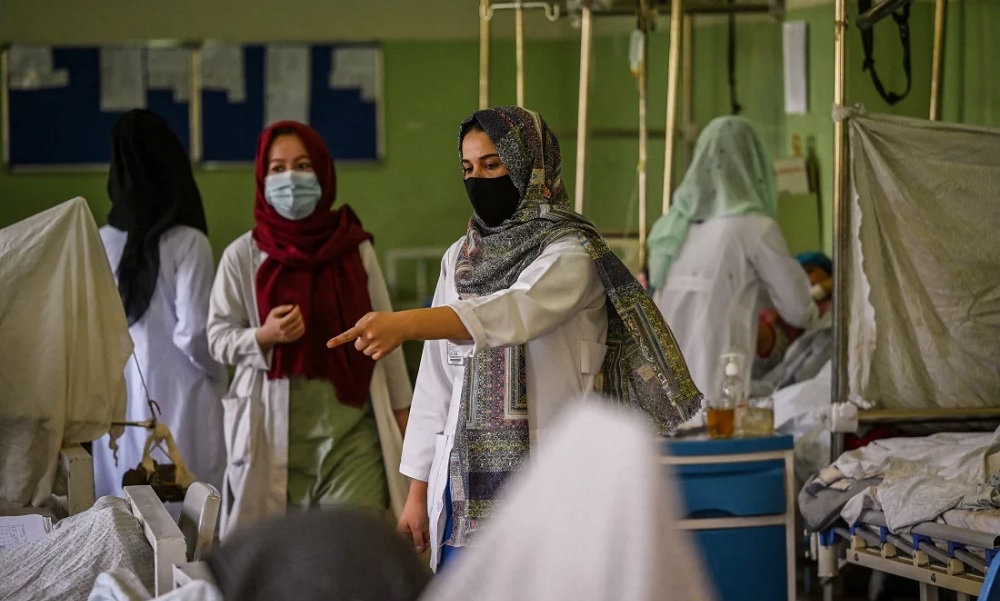
Robert Duxon, the Chargé d'Affaires of the British Embassy for Afghanistan, has described the ban on girls' education in health institutes as another violation of the rights of girls and women to education, expressing concern about this decision. In response to the interim government's decision, Robert Duxon wrote on his X account: "I am deeply concerned by recent reports that the current government is banning health education for women in Afghanistan." This comes as the Ministry of Public Health of the interim government has instructed health institutes to suspend classes for girls until further notice. Officials from the health institutes have stated that this directive was announced verbally during a meeting on Monday, December 3rd. Additionally, some female students in Herat province have told the media outlet Goharshad that they went to the institutes but were not allowed to enter. In several other provinces, female students have also been told not to attend health institutes until the situation is clarified. The British Embassy Chargé d'Affaires emphasized: "This is yet another violation of women's rights to education and restricts greater access to healthcare for Afghan women and children." It is noteworthy that despite the ban on girls attending universities, health institutes had remained open to them. In these institutes, girls were primarily trained in medical fields, including midwifery and nursing. Meanwhile, the interim government has prohibited girls from attending school and university for over three years. The current government's restrictions have resulted in millions of schoolgirls being deprived of education. In addition, women have been banned from going to sports clubs, restaurants, public baths, being examined by male doctors, traveling without a male guardian, working in domestic and international NGOs, and even at United Nations offices in Afghanistan.

Read More


1 year ago - 617 Visits

Author: Mahdi Mozaffari One of the constant concerns of parents is finding appropriate methods to assist their children with academic issues and studies. Given the rapid developments in the educational system, the diversity of teaching methods, and the increasing complexity of textbook content, many parents feel they lack the necessary skills to guide and support their children on this journey. This concern becomes particularly pronounced when parents are not adequately familiar with current educational methods. In such situations, parents seek practical and effective solutions to best support their children in the learning process. Creating a suitable study environment, setting specific times for homework, encouraging and reinforcing a spirit of effort and perseverance in the child, and most importantly, maintaining close cooperation with the child's teacher are among the strategies that can significantly assist parents in this regard. This article will explore each of these strategies in more detail so that parents can play an effective role in their children's educational success. Considerations of Individual Differences among Children Every child is a small, unique world. Just as no two fingerprints are identical, children's talents, abilities, learning speeds, and learning styles also differ from one another. These differences represent a valuable treasure of potentials that, with proper recognition and nurturing, can contribute to a child's flourishing. Parents and educators play a crucial role in discovering and nurturing these differences. Instead of placing children into predetermined molds and comparing them to each other, we should pay attention to each child's strengths and weaknesses. By accurately understanding our child's unique characteristics, we can design educational and developmental programs tailored to them, helping them grow in areas where they have greater talent. For example, a child with artistic talent can participate in painting or music classes instead of being forced to focus hours on mathematics. Paying attention to individual differences not only aids in children's growth and development but also boosts their self-confidence. A child who feels acknowledged and supported, with their talents recognized, will have greater motivation for learning and effort. Additionally, this approach helps reduce stress and anxiety in children as well. Establishing a Study Habit: The Cornerstone of Academic Success Establishing a study habit is the cornerstone of academic success. This habit not only improves a child's grades and performance in school but also enhances their cognitive skills. Setting a specific time each day for studying helps the child make this activity an integral part of their daily routine. Creating a regular routine prepares the brain for learning and increases focus. Choosing a quiet and distraction-free space, such as a designated study corner in the child's room, can provide an ideal environment for studying. Additionally, providing necessary tools such as books, notebooks, and appropriate stationery can motivate the child to study more effectively. It is also crucial to create a realistic and achievable study schedule. This plan should include breaks and time for the child's favorite activities to prevent fatigue and boredom. Learning Effective Study Methods: A Key to Deep Understanding Teaching children various study methods is one of the most effective ways to enhance their learning quality and strengthen their ability to understand and retain information. These methods not only help them grasp concepts better but also make the learning process an engaging and enjoyable experience. One such method is summarization, which teaches the child how to extract important and key information from texts and convert it into simpler and more understandable language. This skill not only strengthens their memory but also assists them in organizing their thoughts and information. On the other hand, using mind maps is a powerful tool for understanding the connections between different concepts. These maps help the child visually organize information and visualize complex concepts in simple, comprehensible diagrams, which is particularly useful for learning concepts with extensive interconnections. Moreover, flashcards are another popular and effective tool for quick review of material and strengthening both short-term and long-term memory. By using flashcards, the child can systematically review concepts and identify their weaknesses in learning. This method is especially beneficial for learning new vocabulary, mathematical formulas, and important dates. Encouraging the child to ask questions related to their subjects and seek answers through various resources is another effective method for active learning. This approach ensures that the child does not become a passive learner but instead engages with curiosity and interest in exploring and understanding concepts deeply. Overall, learning these methods makes the child's study process more effective and purposeful, while also fostering skills that will be valuable throughout their life. Combining these methods with support and supervision from parents and teachers can create a positive and constructive learning experience for the child. Using Diverse Educational Resources: Enriching Learning and Strengthening Conceptual Understanding Utilizing diverse educational resources is one of the best strategies for enhancing children's learning processes, as these resources allow for the examination of concepts from various angles and help them develop a deeper and more lasting understanding of the curriculum. Supplementary educational books, which often include various exercises and additional explanations, can assist children in expanding their skills alongside the main content of their textbooks. Additionally, educational software and interactive applications enable children to learn through more engaging methods such as educational games, digital quizzes, and scientific simulations. This type of interactive learning can help increase a child's motivation and interest, turning learning into an enjoyable experience. Websites and educational platforms also serve as rich and varied sources for self-directed learning. These resources often include instructional videos, explanatory articles, and online quizzes that children can use to strengthen their weaknesses and review concepts. In particular, educational videos can explain complex concepts in a simple and comprehensible manner using visuals, animations, and practical examples. Utilizing such tools helps children learn subjects they may not have fully understood in class through self-study and allows them to engage in additional exercises to solidify their knowledge. Moreover, diverse educational resources can encourage children to experience learning beyond the classroom environment and explore new and creative aspects of the material. This not only enhances their analytical and problem-solving abilities but also transforms learning into an exciting and dynamic activity. Parents and teachers can play a crucial role in enriching the learning process by identifying suitable resources and guiding children to utilize them, thereby creating an environment where children can reach the best version of their capabilities. Encouragement and Appreciation: Fueling Motivation, Confidence, and Sustainable Growth in Children Encouragement and appreciation of children's efforts and progress, no matter how small, play a fundamental role in shaping their motivation and boosting their confidence. This practice not only fosters a sense of value and importance in the child but also encourages them to continue their learning journey and strive harder. When children see that their parents, teachers, or peers recognize and appreciate their efforts, it creates an internal motivation to try again and face challenges. Importantly, the focus should not solely be on final outcomes, such as grades or rankings; rather, emphasizing the effort and perseverance the child has shown is of greater significance. For instance, even if a child does not achieve an excellent score on a test or project, acknowledging the time they spent studying or the effort they made to solve problems can help maintain their sense of satisfaction and motivation. This approach teaches the child that failure or lack of success is a natural part of growth and learning, and that consistent effort and perseverance will ultimately lead to positive results. Furthermore, expressing appreciation in various ways—such as verbal praise, smiles, hugs, or small rewards—can have a profound impact on the child's morale and self-confidence. Collaboration with Teachers: A Strong Bridge between Home and School for Children's Academic Success Close and ongoing collaboration between parents and teachers is one of the fundamental steps in supporting a child's academic progress. This effective communication allows parents to gain precise insights into their child's academic status, strengths and weaknesses, as well as the challenges they face. Teachers, due to their daily interactions with children and familiarity with teaching methods, are valuable sources of information and guidance that parents can use to implement appropriate educational strategies at home. By consulting with teachers, parents can learn how to assist their child in areas where they need improvement while also encouraging them to build on their strengths. In addition, discussing educational approaches and school expectations with teachers helps parents better understand their child's curriculum and assignments, allowing them to act in a way that is coordinated with the school. Teachers can introduce appropriate educational resources and supplementary books to parents, which enables the child to strengthen their learning process at home using suitable tools. Moreover, regular and constructive communication between parents and teachers provides the child with a sense of security and support, as they see that adults are working to help them succeed. This collaboration can be established through participation in parent-teacher meetings, continuous monitoring of academic performance reports, and even periodic calls with the teacher. When parents and teachers act in alignment, not only are the child's academic issues identified and addressed more quickly, but their motivation and confidence also significantly increase. Therefore, a strong and active connection between home and school is key to supporting the child and creating an appropriate environment for their academic success and overall growth.

Read More


1 year ago - 565 Visits

UNAMA, the political mission of the United Nations, states that women and girls with disabilities in Afghanistan are exposed to multiple forms of discrimination and violence, including domestic violence and sexual abuse. In a statement issued on the occasion of International Day of Persons with Disabilities, UNAMA praised the resilience, achievements, and leadership of persons with disabilities worldwide and in Afghanistan, emphasizing the importance of the slogan "Empowering Persons with Disabilities for an Inclusive and Sustainable Future." The statement indicates that this slogan reflects the key role of persons with disabilities in decision-making, policy development, and social leadership. The UN political mission in Afghanistan has urged the caretaker government to recognize the contributions of persons with disabilities to sustainable development in Afghanistan and to support the full implementation of relevant laws and policies, including the Law on the Rights and Privileges of Persons with Disabilities and the Convention on the Rights of Persons with Disabilities. Additionally, the statement highlights the need to strengthen cooperation with organizations representing persons with disabilities and civil society. It states that efforts should be made to amplify the voices of persons with disabilities and to remove systemic barriers that hinder their participation, particularly for women and girls. UNAMA added that despite the inspiration and strong will of persons with disabilities in Afghanistan, many face significant barriers to accessing education, employment, healthcare, and participation in public life. The organization notes that women and girls with disabilities are particularly vulnerable to various forms of discrimination and violence, including domestic violence and sexual abuse. The statement emphasizes the necessity for meaningful changes to address these challenges. Furthermore, Richard Bennett, the UN Special Rapporteur on Human Rights in Afghanistan, also wrote in a message on his X account: "Today, on International Day of Persons with Disabilities, I stand with millions of citizens with disabilities in Afghanistan and call for local and global actions to protect their rights and amplify their voices. Let us strive for inclusion, dignity, and equal opportunities for all." Mr. Bennett urged all stakeholders, including the current government, humanitarian organizations, civil society, and the international community, to support the leadership of persons with disabilities and ensure they have a role in decision-making and future policymaking in Afghanistan.

Read More


1 year ago - 509 Visits

The United Nations has announced in a report that while the number of people living with HIV/AIDS worldwide has decreased by 39%, this figure has increased by 100% in Afghanistan, Egypt, Fiji, the Philippines, Papua New Guinea, and Saudi Arabia. The Joint United Nations Programme on HIV/AIDS (UNAIDS) stated today (Sunday, December 2) in a report on the occasion of World AIDS Day that there are currently 39.9 million people living with HIV/AIDS. The report noted that the number of new HIV infections has decreased by 39% since 2010, and the mortality rate due to AIDS has halved. According to a section of the UN report, despite these global trends, Afghanistan, Egypt, Fiji, the Philippines, Papua New Guinea, and Saudi Arabia have all reported a 100% increase in HIV infections between 2010 and 2023. The United Nations emphasized that if human rights are ensured for all, it would be possible to end AIDS as a public health threat by 2030. Additionally, the UN called on global leaders to choose the path of "rights" so that communities can access HIV prevention, testing, and treatment services inclusively and without discrimination. The report also highlighted that significant progress in combating HIV is directly linked to advancements in protecting human rights. It stressed the importance of gender equality and respect for all individuals. The organization stated that laws that discriminate against individuals based on gender, belonging to key populations, or other social factors hinder access to HIV prevention and treatment services. The UN AIDS division called for the elimination of laws and policies that violate individuals' rights and emphasized the need for legislation that strengthens human rights. This entity believes that adhering to the principles of the Universal Declaration of Human Rights and fostering inclusivity in communities can lead to the end of AIDS and the realization of human security. It is noteworthy that the United Nations commemorates December 1 as World AIDS Day, viewing this day as an opportunity for collective action to ensure the health of all individuals through the protection of human rights.

Read More


1 year ago - 635 Visits

Local sources from Nangarhar province report that the Department of Education in this province has closed local girls' classes supported by aid organizations on the orders of the Ministry of Education. At least two sources said today (Sunday, December 2) that local classes in the districts of Kama, Dur Baba, Rodat, Momandara, Koot, Batikot, and Behsood, which were established with financial support from international organizations, including UNICEF, have recently been shut down. One source stated that the local classes in these districts were closed by the order of the Ministry of Education, and students were dismissed starting yesterday (Saturday, December 1). Another source emphasized that these classes were created by the United Nations Children's Fund (UNICEF) for young girls. The source added that local classes for boys have not been closed and their lessons continue normally. This comes after local classes in Bamyan, Urozgan, Helmand, and Kandahar provinces were also shut down previously. The Ministry of Education has not officially commented on this matter yet. In these educational classes, out-of-school children, including girls, receive education. This situation arises as the rights and freedoms of women and girls have been severely restricted since the Taliban regained control over Afghanistan. In addition to the ban on education for girls above the sixth grade, women and girls have also been barred from attending universities. The current government's restrictions have left millions of schoolgirls without access to education. Additionally, women are prohibited from going to sports clubs, restaurants, public baths, being examined by male doctors, traveling without a male guardian, working in domestic and international non-governmental organizations, and even in United Nations offices in Afghanistan.

Read More


1 year ago - 836 Visits

The management of the Hussainzada trading market in Dasht-e Barchi, located in western Kabul, has made approximately 40 shops available to women and girls engaged in business for free for six months. These forty shops were inaugurated yesterday (Friday, November 29) during a ceremony by Hamza Qasemi, the manager of this trading market. Mr. Qasemi stated, "These shops, located on the third floor of the 'Hussainzada' market, have been provided free of charge to support women who are involved in small businesses." Nafeesa Hairan, one of the shopkeepers in this market, mentioned that various products, including handmade clothes, leather goods, and Hazara handicrafts, are sold in these stores. Mr. Hairan emphasized that the women and girls working in this market send raw materials such as fabric and thread to women in remote areas, creating job opportunities for hundreds of women. He added that the capital of these women varies from 100,000 to 500,000 Afghanis, which they have secured themselves, and their goal is to promote domestic production and self-sufficiency in trade. In this market, job opportunities have been created for over forty women and six men, and buying and selling are open to all. However, some women entrepreneurs have expressed concerns about the lack of a suitable market and have called for the organization of handicraft exhibitions both domestically and internationally. Several of them cite the importation of similar goods, travel visa restrictions, and challenges regarding raw materials as key obstacles to their work. They have stated that the market for imported foreign goods remains stronger than that for domestic products. This initiative comes at a time when the government has imposed severe restrictions on girls and women for over three years. Currently, girls and women are unable to attend school or university. The current government's actions have resulted in millions of female students being deprived of education. Additionally, women have been banned from going to sports clubs, restaurants, public baths, being examined by male doctors, traveling without a male guardian, and working in domestic and international NGOs, as well as even in UN offices in Afghanistan.

Read More


1 year ago - 655 Visits

OCHA, the United Nations Office for the Coordination of Humanitarian Affairs, reports that 23.7 million people in Afghanistan require humanitarian assistance, including 9.2 million children. In a published report, the organization stated that the restrictions imposed on the rights and fundamental freedoms of women and girls are among the factors that have "challenged" the improvement of the humanitarian situation in Afghanistan. The report further mentions that ongoing conflicts, entrenched poverty, high levels of food insecurity and malnutrition, continuous internal displacements, widespread contamination from explosive materials, frequent natural disasters, the outbreak of pandemics, the effects of climate change, and political conditions are additional factors contributing to the difficult humanitarian situation in the country. Additionally, the World Food Programme, in its reports for November, stated that Afghanistan is one of 22 countries worldwide facing a hunger crisis, with 12.4 million people in the country experiencing "severe" food insecurity. The organization noted that many citizens of Afghanistan do not know how they will obtain their next meal. At the same time, in a post accompanied by a video on November 8, the organization mentioned that some families in Afghanistan are marrying off their young daughters due to extreme poverty and hunger.

Read More


1 year ago - 411 Visits

Local media reports indicate that local authorities of the caretaker government in Bamiyan province have closed accelerated educational classes supported by the United Nations Children's Fund (UNICEF) in this province. Reports indicate that these educational classes were established with financial support from UNICEF by the institutions "Afghan Development" and "National Development and Initiative" for girls who had dropped out of school and were below the sixth grade. At least three sources also confirmed that Enayatullah Sahar, the head of education in Bamiyan, instructed the heads of the education department in this province on (Tuesday, November 26) to close all accelerated classes supported by international organizations "until further notice." The reason for this action by the head of education in Bamiyan province is not yet clear. Sources say that around two thousand female students were attending these classes, most of whom were in the fourth and fifth grades. UNICEF has not yet commented on this matter. Additionally, media reports indicate that local officials in Urozgan province have recently closed UNICEF educational classes and those of the Norwegian Refugee Council. Previously, educational classes of aid organizations in Helmand and Kandahar provinces had also been closed. This comes at a time when, following the return of the caretaker government to power in Afghanistan, the rights and freedoms of women and girls have been severely restricted, and in addition to the ban on girls' education beyond the sixth grade, women and girls have also been prohibited from attending universities. The current government's restrictions have resulted in millions of female students being deprived of education. Furthermore, women are banned from going to gyms, restaurants, public baths, being examined by male doctors, traveling without a male guardian, and working in domestic and international NGOs as well as even in UN offices in Afghanistan.

Read More


1 year ago - 700 Visits

Author: Mahdi Mozaffari Since the change of regime in Afghanistan in 2021, religious minorities in the country have faced serious threats and targeted brutal attacks. These religious groups, particularly Shia and Sufi communities, have continuously fallen victim to violence and terrorism. The caretaker government, which is responsible for ensuring the security of all Afghan citizens, has so far failed to prevent such heartbreaking incidents. In the latest example of this violence, a bloody terrorist attack occurred at the shrine of "Sayed Padshah Aqa Sadat" in the Nahreen district of Baghlan province. An armed assailant, using a silenced weapon, opened fire on a group of defenseless worshippers who were sitting on prayer mats, killing ten Sufi followers. Videos released from this tragic incident clearly show that these individuals were engaged in worship and prayer when they became targets of this brutal attack. Factors and Roots of Terrorist Attacks against Shia and Sufi Communities Many terrorist and brutal attacks against religious minorities, often carried out by extremist groups such as ISIS, stem from radical and extremist interpretations of Islam that view any ideological or religious difference as a deviation that must be met with violence. Sufis, due to their beliefs and practices deemed deviant by extremist groups, have consistently been targeted. The numerous attacks by takfiri groups in Afghanistan indicate that these groups have particularly focused their brutal operations against Shia and Sufi communities. The United Nations has repeatedly highlighted the increase in violence against these minorities in Afghanistan in its reports. For instance, in its 2023 report, the organization noted at least four major attacks against Sufis in Afghanistan, resulting in dozens of casualties. Among these attacks are the assault on the "Sahib Khalifa" mosque in Kabul and the "Mawlawi Sikandar Sufi" mosque in Kunduz, both occurring in 2022 with heavy casualties. The suicide bombing at Imam Zaman Mosque in Pul Khumri last year during Friday prayers, which resulted in the deaths and injuries of dozens of Shia individuals, is just one prominent example of these attacks against Shia communities in Afghanistan. The Government's Failure to Ensure the Security of Religious Minorities While it was expected that the caretaker government, as the new rulers of Afghanistan, would ensure the security of all citizens, especially religious minorities, they have not only failed in this regard but have also attempted to restrict the religious freedoms of these groups. Local sources in Baghlan report that the current rulers have not only limited the holding of religious ceremonies for Shia Muslims but have also warned Sufis to refrain from conducting their spiritual gatherings. The current government's failure to secure the safety of Shia and Sufi communities indicates that terrorist networks in Afghanistan are well-organized and capable of carrying out complex operations. It must be noted that the continuation of this trend not only jeopardizes the security of Afghanistan but could also contribute to regional instability. To combat this threat, the international community must exert more pressure on the current rulers of Afghanistan to fulfill their commitments regarding counter-terrorism. Additionally, supporting civil society and human rights activists in Afghanistan can play a crucial role in raising public awareness about the dangers of extremism and terrorism. Reasons for the Government's Failure to Ensure Security One of the main reasons for the government's failure to establish security for religious minorities is its "lack of commitment to international obligations." The caretaker government undertook commitments to ensure the security of all Afghans, including religious minorities, by signing the Doha Agreement. However, in practice, this group has not adhered to many of these commitments. The presence of extremist groups such as ISIS-Khorasan also poses a significant challenge to security in Afghanistan. These groups directly attack religious minorities with their highly extremist ideologies, threatening security in the country. On the other hand, the structural and managerial weaknesses of the current rulers present a major obstacle to ensuring security in the country. The leaders face serious challenges in establishing an efficient and accountable government. The lack of professional security forces, bureaucratic corruption, and insufficient infrastructure have all adversely affected the current rulers' ability to maintain security. Furthermore, the caretaker government's discriminatory policies against religious minorities, especially Shia and Sufi communities, have exacerbated tensions and insecurity. Restrictions such as bans on religious ceremonies, destruction of sacred sites, and discrimination in access to public services have heightened feelings of insecurity and distrust among minorities. These policies not only fail to contribute to the stability and security of the country but also fuel hatred and animosity. Another major challenge faced by the caretaker government in ensuring security is the absence of a strong and centralized governmental structure. The current rulers have come to power as a militia group and lack sufficient experience in managing a complex and multicultural country. This has resulted in decision-making often being based on short-term and group interests, neglecting the interests of the entire country, particularly those of minority groups. Consequences of the Government's Failure to Ensure Security The caretaker government's failure to secure the citizens of Afghanistan, particularly religious minorities, has had widespread and detrimental consequences for the country. These repercussions have not only affected the security and stability of Afghanistan but have also exacerbated humanitarian and social crises. One of the most significant consequences of this failure is the escalation of insecurity and instability in Afghanistan. The ongoing terrorist attacks against religious minorities have created an atmosphere of fear and terror within society, eroding the already limited trust of the people in the government. This insecurity has driven away investments, disrupted economic activities, and hindered the reconstruction of the country. Furthermore, the continuation of this situation could lead to the expansion of activities by other terrorist groups and an increase in security threats in the region. Another important consequence of the government's failure in this regard is the displacement of thousands of Afghan people. Terrorist attacks have forced individuals to leave their homes, resulting in a widespread humanitarian crisis. Internally displaced persons face numerous challenges, including a lack of shelter, food, clean water, and healthcare services. This situation has placed immense pressure on the country's limited resources and exacerbated Afghanistan's economic and social problems. Additionally, terrorist attacks against religious minorities have fueled ethnic and religious tensions in Afghanistan and weakened national unity. These attacks have intensified feelings of animosity and hatred among various ethnic and religious groups, leading to deep divisions within society. This environment has obstructed the establishment of an inclusive and accountable government and contributed to the prolongation of the crisis in Afghanistan. The insecurity and instability stemming from terrorist attacks have also worsened the humanitarian crisis in Afghanistan. The need for humanitarian assistance to provide food, medicine, shelter, and other basic necessities for displaced individuals and victims of these attacks has significantly increased. Moreover, this crisis has complicated access to healthcare and education services, causing serious harm to the future generation of Afghanistan. In addition to domestic consequences, the current government's failure to ensure the security of religious minorities has had international repercussions as well. This situation has created a negative image of Afghanistan in the world and reduced international support for the country. Furthermore, it has led to increased tensions in the region and foreign interference in Afghanistan's internal affairs. Effective Solutions for Ensuring the Security of Religious Minorities The caretaker government's failure to ensure the security of religious minorities in Afghanistan has posed serious challenges for the country. To overcome this situation, a set of solutions at both domestic and international levels is essential. At the domestic level, the government must first fulfill its commitments to ensure the security of all citizens of Afghanistan without any discrimination. This requires creating a safe and stable environment for all ethnic and religious groups. Additionally, the government should enhance its management and security capacities by strengthening its governmental structures. Establishing professional and trained security forces, combating administrative corruption, and creating a fair judicial system are among the necessary actions in this regard. Furthermore, the current rulers should promote a discourse of tolerance and coexistence to help reduce ethnic and religious tensions. Creating equal opportunities for all citizens, respecting human rights, and upholding fundamental freedoms are crucial steps that can strengthen national unity. At the international level, the global community must support efforts to ensure security and stability in Afghanistan. Providing humanitarian assistance, investing in various economic and social sectors, and supporting reconstruction and development programs are actions that can help improve the situation in Afghanistan. Additionally, the international community should encourage the current rulers of the country to adhere to their international commitments through diplomacy and dialogue, emphasizing the importance of respecting human rights and fundamental freedoms. Regional cooperation is also vital in this context. Afghanistan's neighboring countries can contribute to reducing violence and insecurity by playing a constructive role in the peace and stability process. One of the most important strategies for addressing insecurity in the country is to strengthen regional cooperation. Afghanistan's neighboring countries can help reduce security threats in the region by establishing a joint mechanism to combat terrorism and extremism. Moreover, these countries can assist in enhancing stability and security in Afghanistan by supporting the government in various areas. Inclusive dialogue is another significant strategy for resolving Afghanistan's crisis. Creating a dialogue space among all political and social groups in Afghanistan can help find common solutions to the country's problems. Additionally, holding international conferences with representatives from various countries, international organizations, and civil society groups can raise global awareness about the situation in Afghanistan and mobilize effective international assistance.

Read More