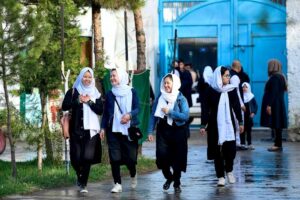
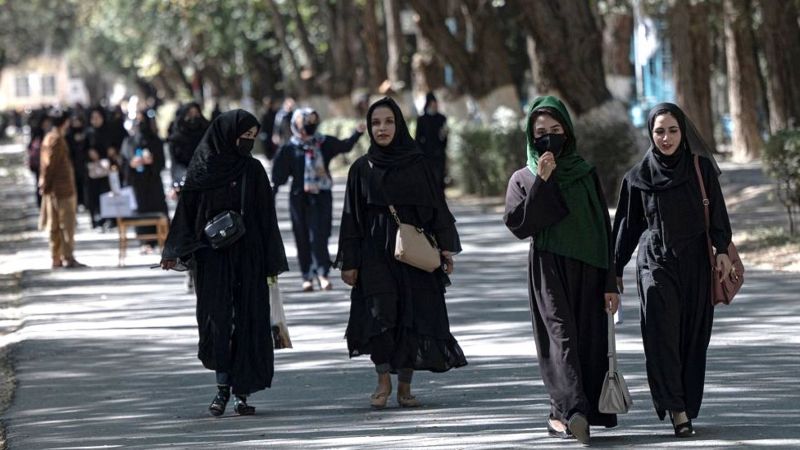
The United Nations Children’s Fund (UNICEF) says that since 2021, more than 2.6 million girls in Afghanistan have been denied access to secondary education.
The agency has warned that the ban on girls’ education has had far-reaching consequences for their future and for Afghanistan’s education and health systems.
The statement says that at the start of each academic year, schools open their doors to only some students, while girls continue to be prevented from pursuing their education.
In its report, UNICEF has shared the stories of several Afghan girls.
Shafiqa, who was just 10 when the de facto authorities returned to power, says she was barred from continuing her education after completing sixth grade. Although she tried to keep learning through art classes and computer lessons, restrictions gradually took away all her educational opportunities.
UNICEF writes that many girls now spend most of their time at home and are cut off from friends, teachers and the learning environment.
The agency adds that reports point to rising isolation and mental health difficulties among girls across Afghanistan.
Rabia, a 14-year-old who dreamed of becoming a nurse, also told UNICEF that being confined to her home had affected her mental health, and that being denied an education had left her feeling hopeless and frustrated.
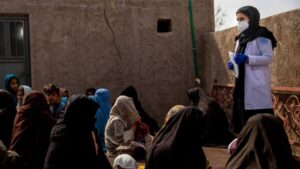
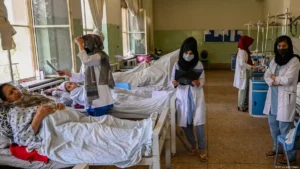
UNICEF has warned that the situation has affected not only girls’ education but also the health sector.
The agency says that while young women’s access to medical studies has been restricted, the number of female health workers has also declined.
According to UNICEF, this has made it difficult for many women—particularly pregnant women—to access health services.
UNICEF has once again called for secondary and higher schools to be reopened to girls, stressing that girls’ right to education in Afghanistan must be restored without delay.