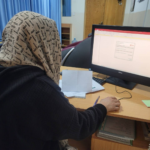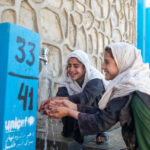

Fatima Sakhi Zada, a 19-year-old girl from Bamiyan, has managed to secure admission to four prestigious universities in the USA, Canada, Kazakhstan, and Malaysia despite the closure of educational opportunities for girls in Afghanistan.
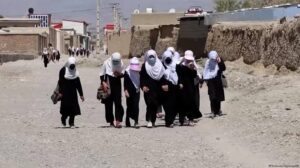
After the closure of girls’ schools in Afghanistan in 2021, Ms. Sakhi Zada was compelled to migrate to Quetta, Pakistan, where she continued her education in one of the special schools for Afghan migrants until the end of the 12th grade.
Alongside her studies, she dedicated herself to learning English and planned for scholarship opportunities.
This achievement has made her an inspiring example for the generation deprived of education.
As a result of her efforts, Fatima Sakhi Zada successfully received admission from the University of New Haven in the USA, the University of Calgary in Canada, Al-Farabi University in Kazakhstan, and Al-Bukhari University in Malaysia. However, despite her acceptance at the University of New Haven, travel restrictions for Afghan citizens to the USA prevented her from starting her studies there.
Ultimately, she chose Al-Bukhari University in Malaysia to continue her education and is currently studying Computer Science and Business Management.
Sakhi Zada has expressed her goal to continue her academic journey and encourage girls deprived of education in Afghanistan. Her story has become a beacon of hope for many girls who have been denied education.
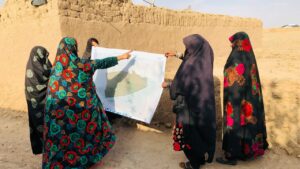
While Fatima Sakhi Zada achieves this success, the current government, after taking control of Afghanistan, has deprived women and girls of education and training. Recently, they imposed further restrictions by closing medical institutes to girls and women, even as the health sector across Afghanistan faces a shortage of personnel.
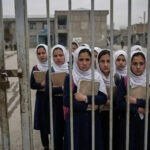
This government’s actions have resulted in millions of schoolgirls being denied access to education.
Additionally, women have been banned from going to sports clubs, restaurants, public baths, being examined by male doctors, traveling without a male guardian, and working in domestic and international NGOs as well as UN offices in Afghanistan.
According to reports, if this prohibition continues, nearly four million girls may be deprived of education by 2030.