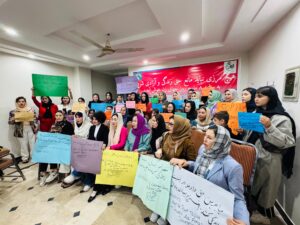
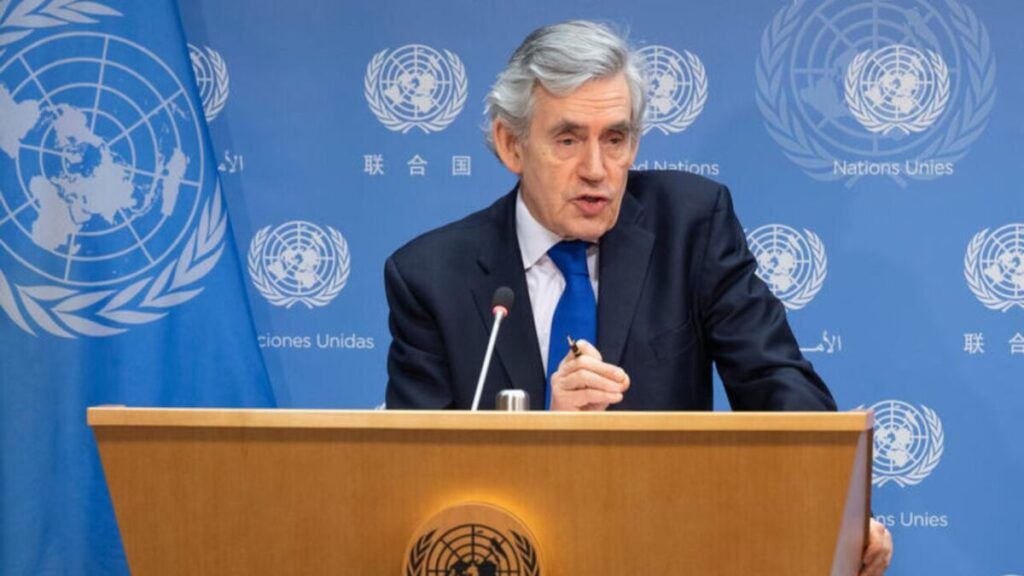
Gordon Brown, the United Nations Special Envoy for Global Education, has recently stated that as a result of restrictions imposed by the caretaker government, more than 2.2 million girls in Afghanistan have been denied access to education, and that the educational and legal conditions of women and girls in the country are steadily deteriorating.
Referring to the ban on secondary and higher education for girls, Mr. Brown said: “What is happening in Afghanistan today has been described by international institutions as a form of gender apartheid, and its scope is expanding at an alarming rate.”
He further emphasized that since the return of the current authorities to power, women have been barred from university education, many government and non-government jobs, and participation in public spaces, and that these restrictions have intensified in recent years.
He warned that the continuation of this trend will have long-term consequences for Afghanistan’s social and economic future.
The UN Special Envoy for Global Education also pointed to the increased engagement of some countries with the caretaker government, noting that this approach, at a time when restrictions on women are intensifying, has raised concerns at the international level.
Brown added that in international forums, including the UN Human Rights Council, discussions are underway about conditioning any engagement with the current authorities on respect for girls’ educational rights, and that some institutions are examining legal avenues to hold government officials accountable.
According to him, despite the absence of an organized opposition force inside Afghanistan, efforts such as informal and underground education, home-based schools, and the continued education of some girls abroad are still ongoing.
The UN Special Envoy stressed that “failing to invest in the education of half of the country’s population severely weakens Afghanistan’s capacity to cope with economic crises, poverty, and food insecurity,” and that this issue will be one of the country’s major challenges in the future.
These concerns are being raised as women and girls have been deprived of their most basic rights for more than four years.