UN Women has recently announced that if the current situation continues, hundreds of millions of women and girls will still be living in extreme poverty by 2030.
In a report, the organization stated that if conditions do not improve, around 351 million women and girls will remain in extreme poverty by 2030, and the world will fail to achieve the goal of gender equality.
Part of the UN Women report notes that this situation is the result of insufficient investment and structural neglect of women’s rights; however, with the necessary investments and actions, improvement is still possible.
UN Women further emphasized that by investing in closing the “gender digital divide,” more than 343 million women and girls could benefit, and 30 million people could be lifted out of poverty.
The organization added that gender equality is the foundation of peace, development, and human rights, and must become a serious global priority.
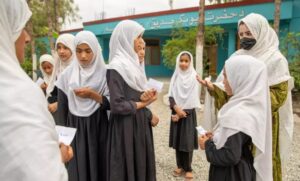
This criticism of the global situation of women comes as the current authorities, after taking control of Afghanistan, have deprived women and girls of education and schooling. In their latest restriction, they have also closed the doors of medical institutes to girls and women, despite the fact that the health sector across Afghanistan is facing a severe shortage of personnel.
These actions by the current authorities have caused millions of female students to be deprived of education.
In addition, women have been banned from going to sports clubs, restaurants, public bathhouses, being examined by male doctors, traveling without a mahram (male guardian), and working in domestic and international non-governmental organizations, as well as even United Nations offices in Afghanistan.