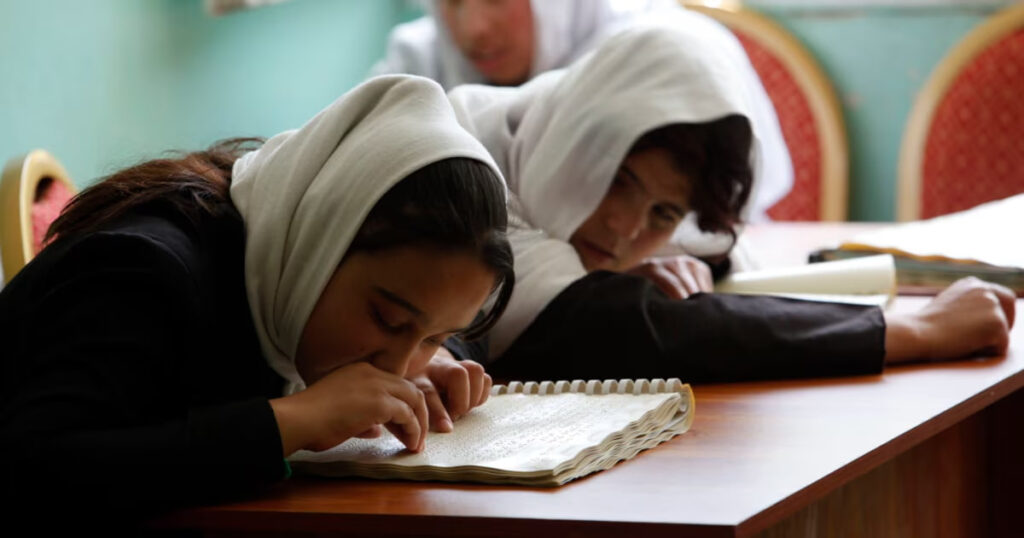
UN Women has recently stated that comprehensive support must be provided to visually impaired women and children worldwide.
In a statement released today (Sunday, Jan 4) on the occasion of World Braille Day, the organization said: “When visually impaired women, girls, and children have equal access to Braille, they are able to write their own stories.”
UN Women emphasized in part of the statement: “Visually impaired women and girls who have access to Braille gain their independence and help shape a more inclusive world.”
The United Nations also noted in a separate statement that even under normal circumstances, persons with disabilities have less access than others to health services, education, and employment, and participate less in society.
The UN added: “Persons with disabilities are more likely to fall into poverty, experience higher rates of violence, neglect, and abuse, and in any society facing crisis, they are among the most marginalized groups.”
World Braille Day has been observed since 2019 with the aim of raising awareness about the importance of Braille as a means of communication and as a tool for the full realization of human rights for blind and visually impaired people.
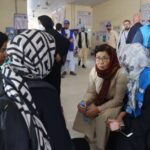
Earlier, UN Women had also stated that women and girls with disabilities in Afghanistan face serious barriers and are being “overlooked.”
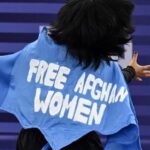
UN Women’s emphasis on supporting visually impaired women and girls comes as the current authorities, since taking control of Afghanistan, have deprived women and girls of education and learning opportunities. Most recently, they have closed the doors of medical institutes to women and girls, despite the fact that the health sector across Afghanistan is facing a severe shortage of personnel.
These actions by the current authorities have resulted in millions of school-aged girls being denied access to education.
In addition, women have been banned from attending sports clubs, restaurants, public bathhouses, being examined by male doctors, traveling without a male guardian (mahram), and working in domestic and international non-governmental organizations, as well as even in United Nations offices in Afghanistan.