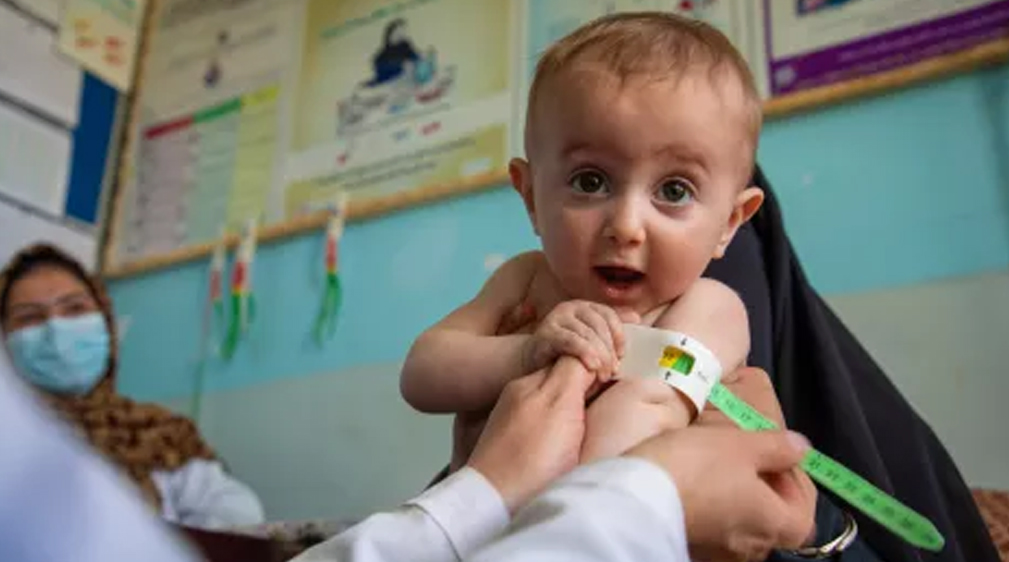
UNICEF, the United Nations Children’s Fund, has said that Afghanistan is facing one of the most severe child malnutrition crises in the world, with around 3.7 million children affected by acute malnutrition each year.
In a statement posted on its X account, the organization said that this situation increases the risk of death for children by up to 12 times.
Referring to the physical consequences of acute malnutrition, UNICEF emphasized that the condition damages children’s brain development in the earliest days of life, weakens the immune system, and makes children more vulnerable to diseases.
The organization further stressed that this crisis has remained largely unchanged in Afghanistan for more than two decades.
Despite warning about declining financial resources, UNICEF said it will continue to support the treatment of children suffering from malnutrition at more than 3,400 health facilities across Afghanistan.
However, the UN Children’s Fund noted that ending child malnutrition requires collective action, sustained funding, and a shared commitment to prioritizing children.
Earlier, the World Food Programme (WFP) of the United Nations in Afghanistan wrote in a report that the country’s food security situation is critical.
According to the report, 17 million people in Afghanistan are facing acute hunger, and about 4 million children are at risk of malnutrition.
The WFP had predicted that child malnutrition would continue to rise and would affect nearly four million children in the near future.
Recently, the United Nations Assistance Mission in Afghanistan (UNAMA) also said in a report that food insecurity remains severe. Rates of malnutrition among women and children have increased by 15 percent, and millions of people will be left without assistance during the coming winter.