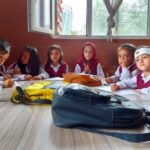
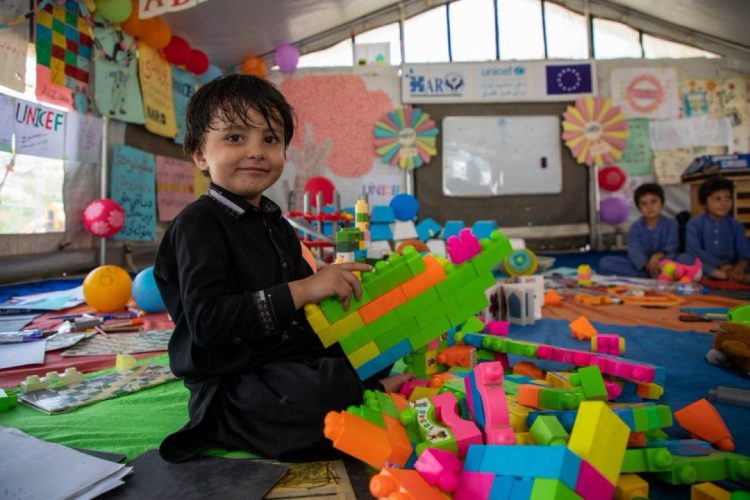
UNICEF, the United Nations Children’s Fund, has recently stated that every child has the right to “dream, play, and grow” in a safe environment.
In a message published on its official X account, the organization wrote that UNICEF-supported safe spaces in Afghanistan not only protect children but also provide essential psychosocial support services.
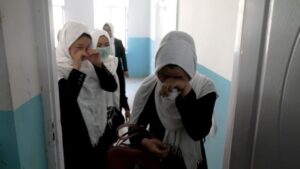
According to available reports, children in Afghanistan face serious challenges due to widespread poverty, ongoing humanitarian crises, restrictions on education, and limited access to healthcare services. As a result, many of them are growing up in high-risk environments.
Meanwhile, the United Nations Children’s Fund had previously reported that in 2026, more than 11 million children in Afghanistan will require humanitarian assistance.
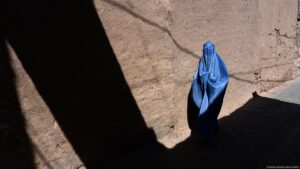
According to the report, the current conditions have placed women, pregnant mothers, children, youth, and marginalized groups at greater risk than ever before.
The World Food Programme had earlier announced that Afghanistan ranks fourth globally in terms of acute child malnutrition. Currently, around five million mothers and children are suffering from malnutrition, and the crisis continues to worsen.
Statistics also indicate an increase in hunger compared to last year, with an additional three million Afghans now facing acute food insecurity.