
The United Nations Development Programme has recently announced that the Taliban government’s restrictions on the work of women and girls have reduced Afghanistan’s Gross Domestic Product by approximately two billion dollars and decreased the per capita income of households by nearly 50%.
In a published report, the agency stated that despite extensive restrictions, most women entrepreneurs remain committed to continuing their economic activities.
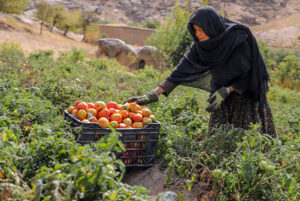
The report noted that the employment rate for women in Afghanistan in 2023 was only seven percent; however, increasing restrictions on women’s employment and mobility have made small businesses one of the few sources of livelihood for about 80 percent of female-headed households.
It further stated that from 2022 until now, approximately 80,000 women-owned businesses have benefited from training, financial assistance, access to new markets, energy, and digital services; support that has led to the creation of over 400,000 job opportunities.
The UN Development Programme emphasized that women and girls’ businesses in Afghanistan have not only generated income but have also become spaces for empowerment, solidarity, psychological support, and the expansion of women’s professional networks.
In a survey of more than 600 women-owned companies, the agency found that the implementation of the “Promotion of Virtue and Prevention of Vice” law in 2024 has made women’s economic activities more difficult.
According to this survey, nearly half of the women reported that this law has increased their business costs and mobility restrictions, while more than a quarter of respondents mentioned strict limitations regarding dress code and gender segregation.
Despite these challenges, 76 percent of women entrepreneurs stated that they intend to continue their activities, with only six percent indicating a likelihood of closing their businesses.
The report also mentioned that difficulties in accessing bank loans, lack of collateral, unregistered assets in women’s names, and insufficient skills in finance, marketing, and management are among the main obstacles to the growth of women’s businesses in Afghanistan.
This comes at a time when the current government, since regaining power in August 2021, has imposed extensive restrictions on education, employment, and the social presence of women.
International organizations have repeatedly warned that these policies not only violate women’s rights but also have severe consequences for Afghanistan’s economy and have brought women’s participation in the labor market to its lowest level in recent years.