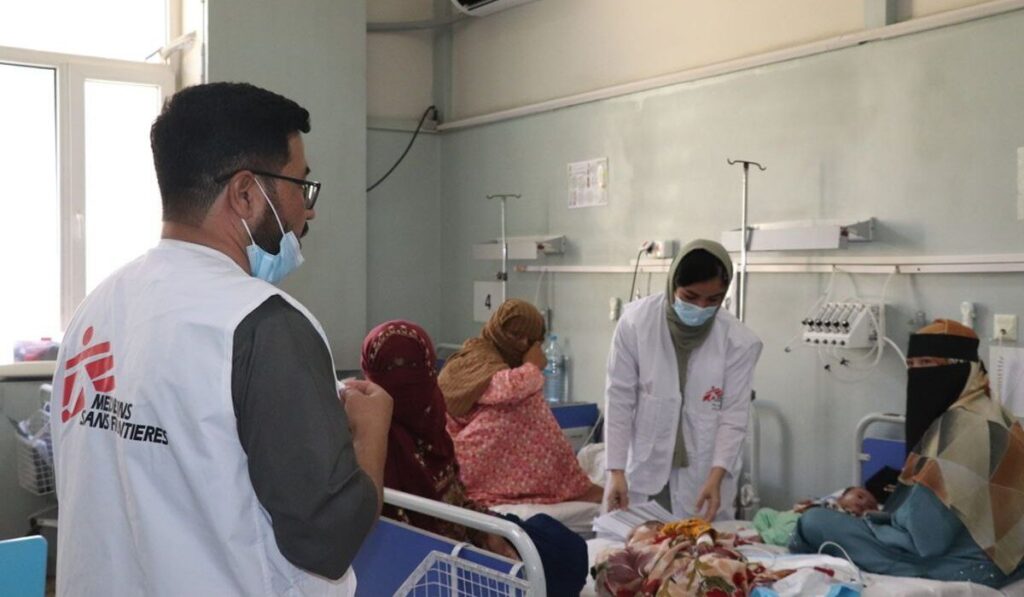
Doctors Without Borders (MSF) has recently announced that families in northern Afghanistan are facing serious challenges in accessing free and quality medical care for their children.
In a report released by the organization, it stated that the shortage of health centers, economic difficulties, and the long distance to medical facilities have had a negative impact on hundreds of thousands of patients.
Part of the report notes that families in northern Afghanistan are forced to travel to remote areas and other cities to find proper treatment. In many cases, children do not recover even after spending large amounts of money and must be taken to another medical facility.
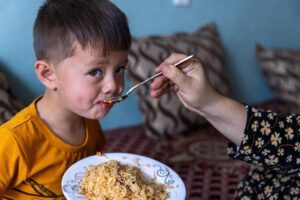
MSF emphasized that accounts from mothers of sick children in Faryab, Dawlatabad, Andkhoy, and Mazar-e-Sharif show that measles, pneumonia, malnutrition, and infectious diseases are among the conditions placing children in critical situations. In some cases, only Abu Ali Sina Hospital in Mazar-e-Sharif has been able to provide free services.
The organization added that in the past two years, it has strengthened this hospital by establishing pediatric intensive care units, neonatal intensive care units, a measles isolation ward, and an emergency department in cooperation with the Ministry of Health. Within just one month, hundreds of critically ill children have been brought to this regional hospital.
According to the report, MSF medical teams have so far triaged more than 360,000 patients and provided medical care for thousands of children, newborns, and patients suffering from measles, pneumonia, malnutrition, and infectious diseases.
The organization says that on average, around 3,000 children are triaged every week in this hospital, and critical cases are quickly transferred to specialized units.
MSF warns that the lack of a clear and effective referral system between health centers is one of the main factors worsening patients’ conditions.
It is worth noting that after the November 3 earthquake in Mazar-e-Sharif this year, emergency aid and medical supplies were also sent to Abu Ali Sina Hospital.
Doctors Without Borders states that continued international support is essential to reduce preventable deaths, prevent the exhaustion of healthcare workers, and ensure medical services for children.